
TL;DR

Get business pricing on garage and car supplies
- Business-only prices and quantity discounts
- Tax-exempt purchasing
- Multiple users, one account, clear invoices
A new portable battery system called ‘Backpack’ allows diesel semi trucks to be converted into hybrid vehicles. The development aims to reduce emissions and fuel costs but faces questions about practicality and safety.
A new device called the ‘Backpack’ has been introduced to convert existing diesel semi trucks into hybrid vehicles. This portable battery system aims to reduce emissions and fuel costs for freight operators, representing a potential breakthrough in retrofitting heavy-duty trucks.
The ‘Backpack’ is a modular, battery-powered unit designed to be attached to diesel semi trucks, effectively adding electric hybrid capabilities without requiring complete vehicle replacement. The system, developed by a startup company, claims to provide a significant reduction in diesel consumption and emissions, with the potential to extend the lifespan of existing fleet vehicles.
According to the company, the device can be installed in a matter of hours and is compatible with most standard heavy-duty trucks. Early tests suggest that trucks equipped with the ‘Backpack’ can operate in hybrid mode, switching between diesel and electric power, which could lead to cost savings and environmental benefits.
However, the company has not yet released comprehensive performance data or independent verification, and regulatory approval processes are still underway. Industry experts are cautious, noting that the system’s real-world effectiveness and safety remain to be fully demonstrated.
Potential Impact on Freight Industry Emissions
If proven effective at scale, the ‘Backpack’ could significantly reduce greenhouse gas emissions from freight transport, a major contributor to climate change. It offers a cost-effective way for fleet operators to adopt hybrid technology without replacing entire trucks, potentially accelerating the shift toward cleaner freight.
Moreover, the device could extend the operational life of existing diesel trucks, delaying the need for complete fleet renewals and easing economic pressures on logistics companies. This innovation might also influence future regulations aimed at reducing emissions from heavy-duty vehicles.
Products Worth Considering

Milwaukee M18 FUEL 18V Lithium-Ion Brushless Cordless 1 in. Impact Wrench Extended Reach D-Handle Kit with Two 12.0 Ah Batteries
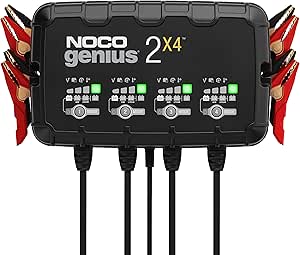
NOCO GENIUS2X4 6V/12V Four-Bank Battery Charger and Maintainer

NOCO Boost GBX75 2500A UltraSafe Jump Starter, 12V Lithium Battery Booster
As an affiliate, we earn on qualifying purchases.
Background on Hybrid Conversion Technologies
Hybrid trucks have traditionally been built from the ground up or converted through complex, expensive retrofitting processes. The introduction of portable, modular systems like the ‘Backpack’ represents a new approach to retrofit existing diesel fleets. Similar efforts have focused on electrification and alternative fuels, but many face high costs and logistical challenges.
Developments in battery technology and regulatory pressures are driving interest in hybrid solutions. However, widespread adoption has been limited by concerns over safety, durability, and regulatory approval. The ‘Backpack’ aims to address some of these barriers by offering a quick-install, portable solution.
Prior to this, attempts at hybrid retrofits have often been costly and complex, limiting their market penetration. The new device could change that dynamic if proven effective and safe in real-world conditions.
Unverified Performance and Regulatory Approval Status
It is not yet confirmed how effectively the ‘Backpack’ performs in long-term, real-world trucking conditions. Independent testing results are pending, and regulatory approval processes are ongoing, leaving questions about safety, durability, and compliance unanswered.
Next Steps for Deployment and Validation
The company plans to conduct extensive field testing across different trucking routes and conditions over the coming months. Pending positive results and regulatory clearance, commercial deployment could begin within the next year. Industry stakeholders and regulators will closely monitor these developments to assess scalability and safety.
Key Questions
How does the ‘Backpack’ system work?
The ‘Backpack’ is a portable battery unit that attaches to diesel semi trucks, providing electric power to supplement or replace diesel engine use during operation, effectively creating a hybrid system.
Is the ‘Backpack’ system safe for long-term use?
Safety data has not yet been publicly released. The company is still in testing phases, and regulatory approval is pending, so safety remains an open question.
Will this system be cost-effective for fleet operators?
The company claims that the system can reduce fuel costs and emissions, but comprehensive cost analyses and real-world performance data are still forthcoming.
When will the ‘Backpack’ be available commercially?
If testing is successful and regulatory approval is granted, commercial deployment could start within the next 12 months.
What are the limitations of this technology?
Current uncertainties include long-term durability, safety, regulatory approval, and whether the system can perform effectively across diverse operational conditions.
Source: rss