Choosing between hardwired and plug-in EV chargers affects your long-term convenience, speed, and installation effort. Hardwired chargers offer faster, consistent charging but require professional installation and are less flexible if you move. Plug-in chargers are easy to set up, portable, and ideal for renters or evolving needs, but they often charge more slowly. We’ll explore the key differences so you can decide which option fits your lifestyle best.
Key Takeaways
- Hardwired chargers offer permanent, hassle-free charging but lack flexibility for relocation or upgrades.
- Plug-in chargers are portable and easy to replace, ideal for renters or frequent movers.
- Hardwired units typically provide faster, more consistent charging suitable for larger EVs.
- Plug-in chargers are simpler to install, requiring only a standard outlet, reducing initial costs.
- The choice impacts long-term convenience based on your need for speed, flexibility, and ease of maintenance.
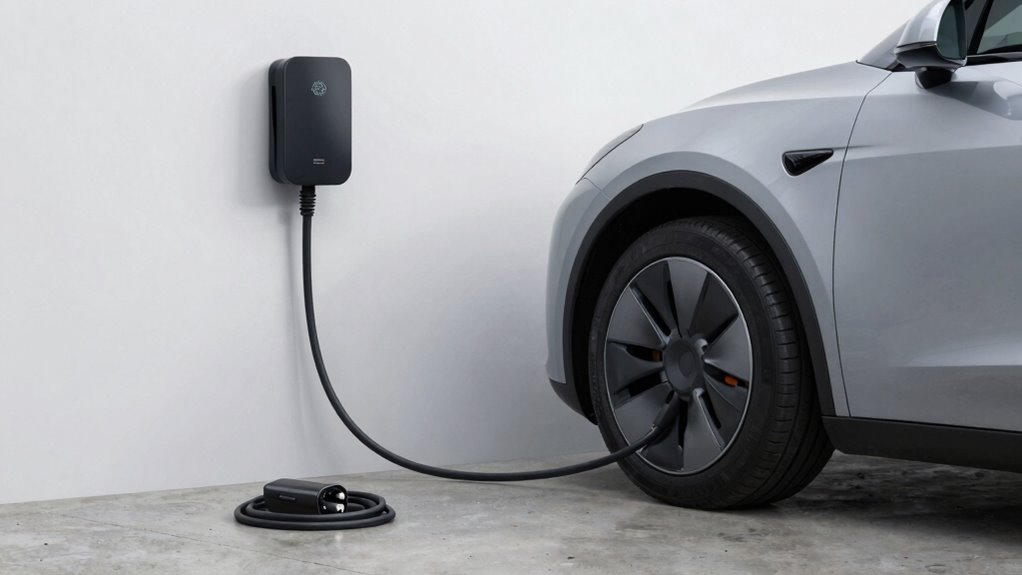
When choosing an electric vehicle (EV) charger, understanding the difference between hardwired and plug-in options is essential. Your decision impacts not only the initial setup but also your long-term convenience. One of the key factors to consider is charging speed. Hardwired chargers typically deliver a more consistent and often faster charging experience because they are usually built for higher power output and are directly connected to your electrical system. If you own a larger or more powerful EV, a hardwired charger might be the better choice to ensure quicker charging times, especially if you need to top off your battery regularly. Conversely, plug-in chargers generally have a slightly slower charging rate, but they’re often sufficient for everyday use, especially if you charge overnight or have a smaller battery capacity.
Hardwired chargers often provide faster, more consistent charging for larger EVs, while plug-in options suit daily, smaller-capacity needs.
Installation complexity is another vital aspect. Hardwired chargers require more involved installation. You’ll need to hire a licensed electrician to run dedicated wiring from your electrical panel directly to the charger, which can involve additional costs and time. This setup is more permanent, meaning once installed, it’s integrated into your home’s electrical system, which can make future upgrades or changes more complicated. On the other hand, plug-in chargers are designed for easier installation. You simply plug them into a standard electrical outlet, making them ideal if you want a quick, straightforward setup or are renting your home. This simplicity reduces upfront costs and allows you to move or replace the charger easily if needed. Additionally, understanding charging infrastructure can help you evaluate which option aligns best with your long-term needs.
Your choice also affects your long-term convenience. A hardwired charger, once installed, offers seamless, always-on charging that doesn’t require you to remember to unplug or plug in daily. It’s a set-it-and-forget-it solution that appeals if you want minimal hassle. However, it’s less flexible if you plan to relocate or want to switch chargers without professional help. Plug-in chargers, while less permanent, give you the flexibility to move the unit around or switch to a different model without much effort. They’re ideal if you prefer a portable solution or anticipate changes in your charging needs over time.
Ultimately, your decision hinges on your priorities. If you value faster charging speeds and a permanent, low-maintenance setup, a hardwired charger might be worth the investment. But if you prefer flexibility, ease of installation, and lower upfront costs, a plug-in charger could serve you better. Both options have pros and cons, and understanding these differences will help you choose the best fit for your lifestyle and long-term convenience.

ChargePoint HomeFlex Level 2 EV Charger J1772 – Fast Smart Battery Power Charging at Home for Electric Automobile Vehicles – Hardwired for Electric Car
- Reliable Home Charging: Builds dependable EV charging stations for home and business
- 24/7 Support: Access round-the-clock assistance for your charger
- Mobile App Control: Manage and monitor charger via ChargePoint app
As an affiliate, we earn on qualifying purchases.
As an affiliate, we earn on qualifying purchases.
Frequently Asked Questions
Can I Switch Between Hardwired and Plug-In Chargers Later?
Yes, you can switch between hardwired and plug-in chargers later, but it depends on your charger compatibility and the electrical setup. You might need professional help to guarantee your system supports future upgrades and that the new charger type integrates properly. Keep in mind, some chargers are designed specifically for one installation type, so verify compatibility beforehand. Planning ahead makes switching easier and ensures your EV charging remains convenient over time.
Which Type Offers Better Resale Value for My Home?
Think of your home as a treasure chest, and the EV charger as its shining jewel. A hardwired charger often boosts resale value and enhances home appeal, making your property more attractive to buyers. It signals modernity and convenience, like a built-in feature. A plug-in charger is versatile but less seamless, offering less impact on resale. Ultimately, a hardwired setup can turn your home into a more desirable, valuable gem.
Are There Safety Differences Between Hardwired and Plug-In Chargers?
You’ll find minimal safety differences between hardwired and plug-in chargers if installed correctly, but some factors matter. Hardwired chargers often provide better stability, reducing the risk of compatibility issues and potential electrical faults, especially with higher charging speeds. Plug-in chargers offer convenience but may face compatibility issues with certain outlets or circuit limitations, which could impact safety over time. Proper installation and adherence to electrical codes are essential for both types to guarantee safety.
How Do Installation Costs Compare Over the Long Term?
Over the long term, hardwired chargers typically have higher installation costs upfront due to their installation complexity, requiring professional wiring and possibly electrical panel upgrades. However, they often prove more cost-efficient over time because they tend to last longer, require less maintenance, and avoid the need for frequent unplugging. Plug-in chargers are cheaper initially, but their potential for wear and tear, along with possible replacement costs, can make them less economical in the long run.
Do Local Regulations Favor One Type Over the Other?
Local regulations often favor plug-in EV chargers because they typically comply more easily with zoning restrictions and electrical codes. Hardwired chargers may face stricter rules due to their permanent installation and potential impact on electrical systems. Before deciding, check your local codes and zoning restrictions, as some areas might require permits or have specific rules that make plug-in chargers a more straightforward option.
Conclusion
Choosing between hardwired and plug-in EV chargers boils down to your lifestyle and future plans. Think of it as weighing the pros and cons of a steady anchor versus a flexible sail—either way, your decision shapes your long-term convenience. So, don’t just rush in; weigh your options carefully. Remember, the right choice will keep your charging experience smooth sailing, ensuring you’re always ready to hit the road without a hitch.