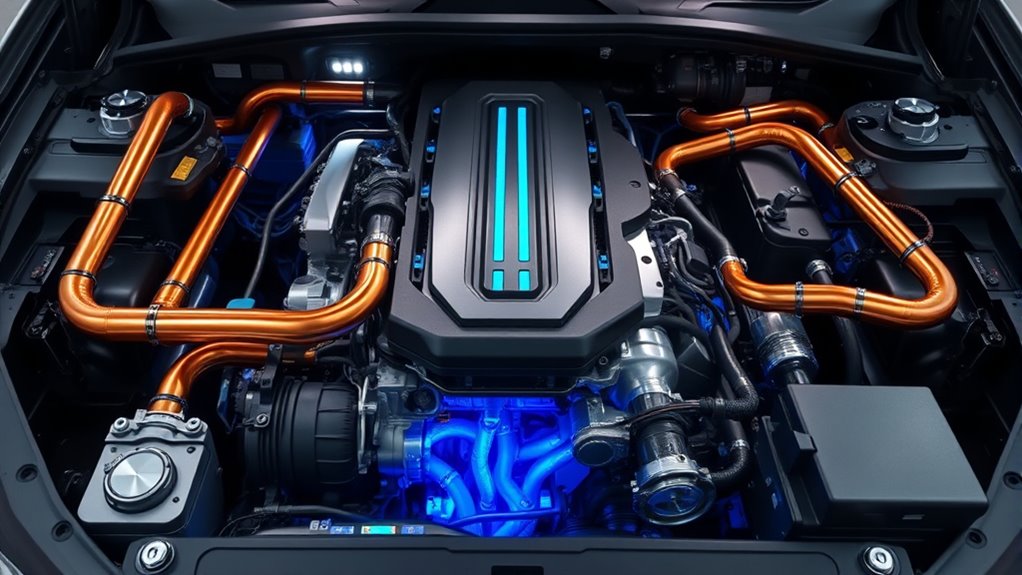

Hybrid cooling systems manage heat from batteries and engines by combining different cooling technologies that adapt to changing conditions. They switch between active methods like liquid coolants and fans, and passive ones such as radiative surfaces, to optimize efficiency and prevent overheating. This flexible approach helps maintain performance, extend component life, and improve fuel economy. Keep exploring to discover how these advanced systems create smarter, more durable thermal management solutions.
Key Takeaways
- Hybrid cooling systems combine active and passive methods to efficiently manage heat from batteries and engines.
- Adaptive prioritization switches between cooling techniques based on real-time temperature demands.
- System integration ensures seamless operation of fans, coolants, heat exchangers, and radiative surfaces for optimal thermal control.
- Advanced technologies like heat pumps enhance heat transfer efficiency, extending component lifespan.
- Intelligent coordination reduces energy waste, improves vehicle performance, and prolongs battery and engine durability.
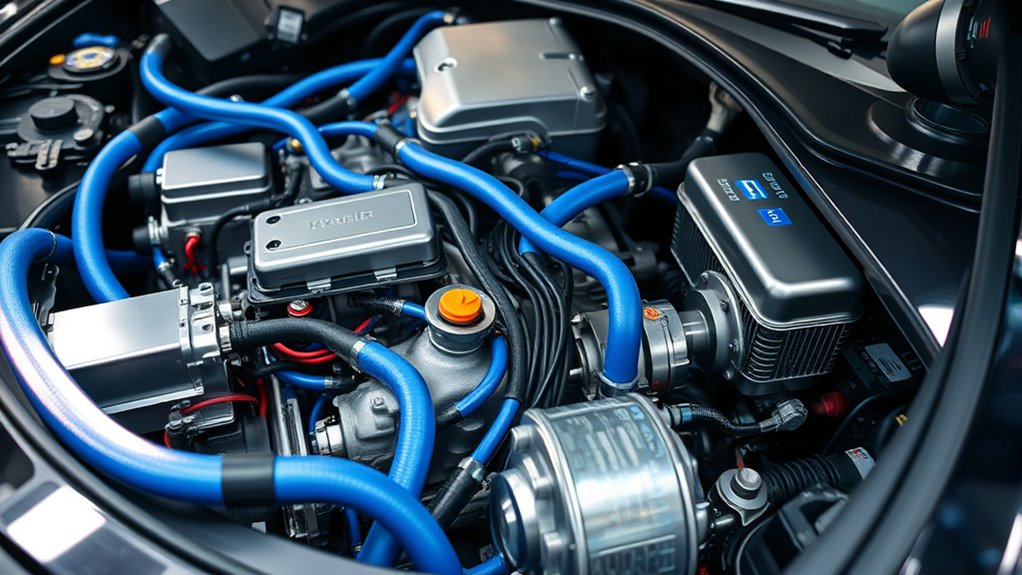
Hybrid cooling systems combine different cooling technologies to enhance energy efficiency and adapt to varying environmental conditions. When it comes to managing heat from batteries and engines, these systems provide a flexible solution that balances performance with energy consumption. Your vehicle benefits from improved thermal management because hybrid systems can switch between cooling methods or operate multiple methods simultaneously, depending on the specific cooling needs at any given moment. This adaptability ensures that critical components stay within ideal temperature ranges, preventing overheating and maintaining performance over the long haul.
Hybrid cooling systems adaptively combine technologies to optimize thermal management and boost vehicle performance.
In practical terms, system integration is key. You’ll find that hybrid cooling systems seamlessly combine active cooling components like liquid coolants, fans, and heat exchangers with passive elements such as radiative surfaces or phase change materials. This integration allows the system to respond swiftly to temperature fluctuations, whether you’re accelerating hard, climbing a hill, or idling in traffic. By intelligently coordinating these components, the cooling system minimizes energy waste and maximizes efficiency. It’s not just about cooling; it’s about creating a cohesive network that constantly monitors and adjusts to keep your batteries and engine operating at their best.
One of the main advantages of hybrid cooling systems is their ability to prioritize cooling methods based on current demands. For example, during high-load conditions, the system might activate more aggressive liquid cooling to rapidly remove heat from batteries and engine components. When the vehicle is cruising at steady speeds, it could rely more on passive cooling strategies, which consume less energy. This smart management reduces unnecessary energy drain and extends the overall range of your hybrid vehicle. You’ll notice that your vehicle maintains consistent performance without the excessive power draw typical of traditional cooling systems.
Furthermore, the system’s integration plays a significant role in simplifying maintenance and enhancing reliability. The components work in harmony, reducing wear and tear caused by abrupt temperature swings. As a result, you experience fewer breakdowns and longer component lifespans. The precise thermal management also helps optimize fuel efficiency, since engines and batteries operate within their ideal temperature ranges, reducing emissions and improving overall environmental impact. The seamless system integration means fewer manual interventions and a more streamlined operation, making your hybrid vehicle both smarter and more durable.
Additionally, advancements in heat pump technology contribute to more efficient cooling solutions by transferring heat rather than generating it, which aligns with energy efficiency principles. In essence, hybrid cooling systems represent a sophisticated approach to thermal management that leverages innovative system integration to keep your vehicle’s critical components cool under all conditions. This technological synergy not only improves performance and energy efficiency but also extends the life of your batteries and engine, ensuring you get the most out of your hybrid driving experience.
Frequently Asked Questions
How Do Hybrid Cooling Systems Impact Overall Vehicle Efficiency?
Hybrid cooling systems improve your vehicle’s overall efficiency by optimizing thermal management of batteries and engines. They reduce excess heat, allowing engines to run more effectively and batteries to perform at their best. This enhanced thermal control minimizes energy loss, boosting your vehicle’s energy efficiency. As a result, you enjoy better fuel economy and longer component life, making your hybrid more reliable and environmentally friendly.
Are Hybrid Cooling Systems More Cost-Effective Than Traditional Systems?
Hybrid cooling systems are more cost-effective than traditional systems because they offer significant cost savings through better component integration. By combining cooling functions for batteries and engines, you reduce the need for separate parts, lowering manufacturing and maintenance costs. This streamlined approach not only saves money upfront but also improves long-term efficiency, making hybrid cooling systems a smarter investment for your vehicle’s overall performance and durability.
What Maintenance Is Required for Hybrid Cooling Systems?
You need to regularly check for coolant leaks and guarantee the radiator is clean to keep your hybrid cooling system running smoothly. For example, a car owner noticed overheating issues and cleaned the radiator, preventing further problems. Maintenance involves inspecting hoses, topping off coolant levels, and cleaning the radiator to ensure efficient heat transfer. Staying on top of these tasks minimizes risks and prolongs your system’s lifespan.
How Do Hybrid Cooling Systems Adapt to Extreme Weather Conditions?
In extreme weather, your hybrid cooling system adapts through advanced thermal regulation features that adjust coolant flow and fan speed to maintain ideal temperatures. Climate adaptation technologies help prevent overheating in hot conditions and freezing in cold environments. By dynamically responding to temperature changes, the system ensures reliable performance, protecting your battery and engine from damage and extending their lifespan despite harsh weather conditions.
Can Hybrid Cooling Systems Be Retrofitted Into Existing Vehicles?
Imagine opening your car’s hood and imagining a new, sleek cooling system fitting seamlessly where the old one once sat. Retrofitting hybrid cooling systems into existing vehicles is possible but comes with challenges. You face compatibility concerns like space limitations and electrical system adjustments, making installation complex. These obstacles require careful planning and expert work to make certain the new system functions properly without disrupting your vehicle’s performance.
Conclusion
In mastering meticulous management, hybrid cooling systems harmonize heat with precision and purpose. By balancing batteries and engines, they boost efficiency, guarantee safety, and extend lifespan. This clever combination creates a cooler, calmer, and more reliable ride. Embrace these innovative innovations, as they not only optimize performance but also pave the way for a greener, greater future. With thoughtful technology at your fingertips, you stay ahead, staying cool, confident, and committed to cleaner driving.