
Hybrid turbocharging combines electric assist with traditional turbocharging to give you a more responsive and efficient engine. It uses an electric motor to spin the turbine instantly, reducing turbo lag and delivering power smoothly. This system not only boosts performance but also helps lower fuel consumption and emissions. By integrating electric components, your vehicle can operate cleaner and more effectively across various driving conditions. Keep exploring to discover how this innovative tech can transform your driving experience.
Key Takeaways
- Hybrid turbocharging integrates electric assist with traditional turbo systems to enhance engine responsiveness and reduce lag.
- Electric motors quickly spin the turbine, providing instant boost and smoother power delivery during acceleration.
- This technology improves fuel economy by reducing engine workload and optimizing boost management.
- It helps lower emissions through efficient operation, energy regeneration, and precise control of turbocharging components.
- Hybrid turbo systems represent a future trend in engine design, balancing power, efficiency, and environmental standards.
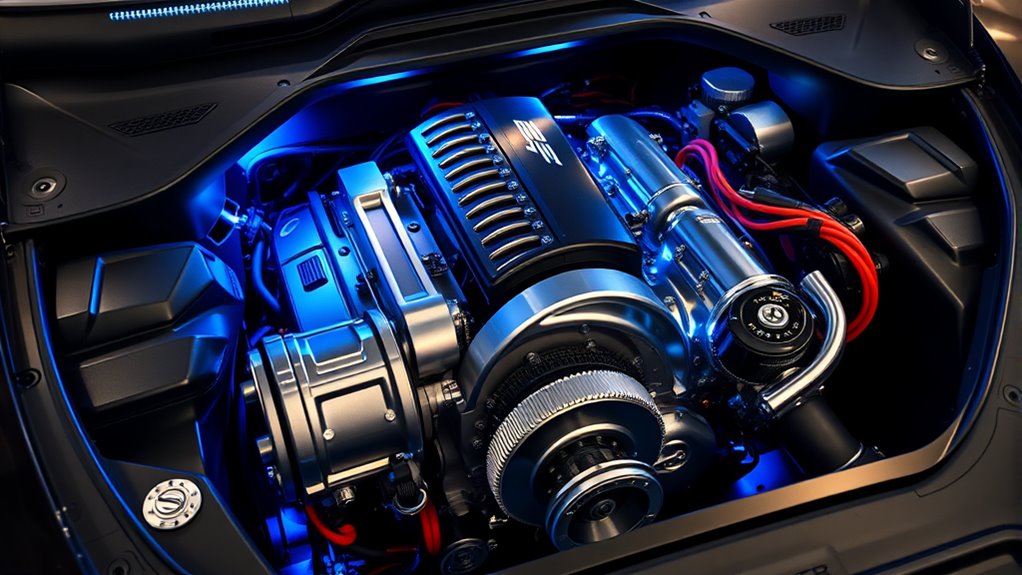
Have you ever wondered how modern engines boost power and efficiency simultaneously? The answer lies in hybrid turbocharging, a cutting-edge approach that combines electric boost technology with traditional forced induction. This innovation aims to deliver more power while reducing fuel consumption and emissions, making your driving experience both thrilling and eco-friendly. By integrating electric components into the turbocharging system, manufacturers are pushing the boundaries of what engines can do, giving you a smoother, more responsive ride.
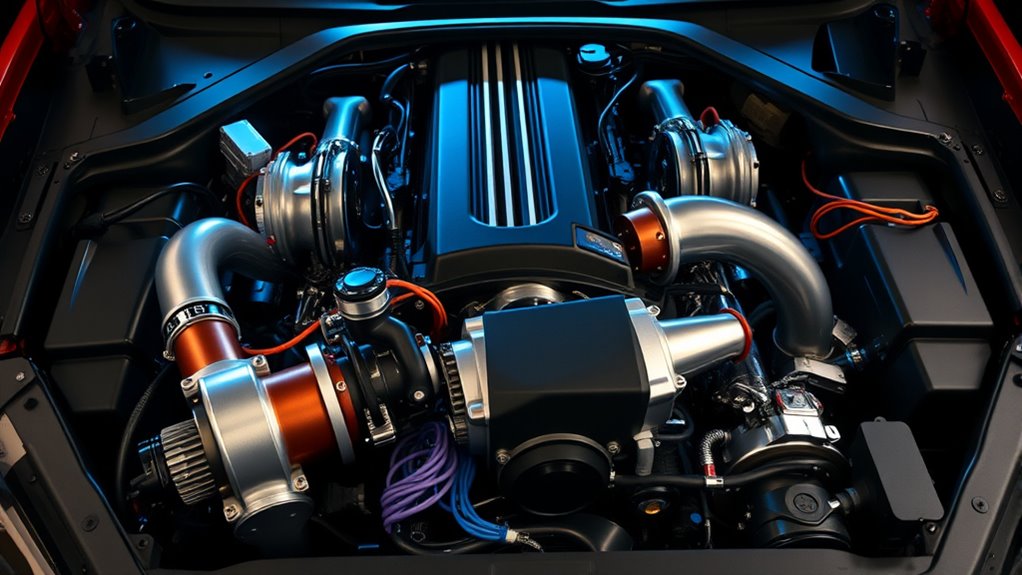
Electric boost plays a vital role in hybrid turbocharging. Unlike conventional turbos that rely solely on exhaust gases, electric assist uses a motor to spin the turbine wheel almost instantly when you press the accelerator. This immediate response minimizes turbo lag, so you feel quicker acceleration and more direct power delivery. Plus, electric boost helps maintain turbo efficiency across a wider range of engine speeds, ensuring that the engine performs at its best whether you’re cruising on the highway or accelerating from a stop. This synergy between electric and traditional methods results in a more adaptable system that can provide consistent power without the need for larger, heavier turbos.
Electric assist reduces turbo lag and maintains efficiency across engine speeds for smoother, more responsive driving.
Turbo efficiency is also considerably improved with hybrid systems. Since electric assist can spool up the turbo faster, the engine doesn’t need to work as hard to build boost pressure. This means less fuel is burned to generate the same amount of power, translating into better fuel economy. Additionally, by reducing the reliance on exhaust gases alone, hybrid turbocharging minimizes turbo lag and enhances overall responsiveness. The system intelligently manages when to deploy electric boost, whether to assist during high-demand situations or to recuperate energy during deceleration. This dynamic management not only improves performance but also reduces the strain on engine components, increasing durability and lifespan.
Another advantage of hybrid turbocharging is its ability to optimize emissions. Because the system can operate more efficiently and precisely, it allows for cleaner combustion and lower pollutant output. This aligns with stricter global emissions standards and helps manufacturers meet environmental regulations without sacrificing performance. Moreover, the regenerative capabilities of electric components mean that during braking or deceleration, energy is captured and stored for later use, further enhancing overall system efficiency.
In essence, hybrid turbocharging represents the future of engine technology. By seamlessly combining electric boost and turbo efficiency, it offers a compelling balance of power, responsiveness, and eco-friendliness. You benefit from quicker acceleration, better fuel economy, and reduced emissions—all wrapped into one smart, innovative system. As automakers continue refining this technology, expect to see more vehicles that deliver exhilarating performance while also respecting the environment.
Frequently Asked Questions
How Does Hybrid Turbocharging Impact Overall Vehicle Maintenance Costs?
Hybrid turbocharging can increase your maintenance costs slightly because you’ll need to monitor both the electric components and the turbo system. However, it often boosts component durability by reducing stress on the engine, potentially lowering long-term repair expenses. You might face higher initial costs for specialized parts, but the overall impact balances out with improved efficiency and less frequent repairs. Staying proactive with maintenance helps maximize these benefits.
Can Hybrid Turbo Systems Be Retrofitted on Existing Engines?
Imagine fitting a new engine part into a finely tuned machine—you might face retrofitting challenges and compatibility issues. You can retrofit hybrid turbo systems on existing engines, but it’s complex. You’ll need to take into account the engine’s design, electronic controls, and space constraints. Compatibility issues may arise, requiring custom modifications and expert expertise. While possible, it’s often a costly and intricate process that demands careful planning and skilled installation.
What Are the Environmental Benefits of Hybrid Turbocharging?
You’ll find that hybrid turbocharging offers notable environmental benefits, such as reducing emissions and supporting renewable energy goals. By combining electric and forced induction, your vehicle uses less fuel and emits fewer pollutants, helping to combat climate change. This technology promotes cleaner air and a more sustainable future, making it an eco-friendly choice that aligns with efforts to cut emissions and harness renewable energy sources effectively.
How Does Hybrid Turbocharging Influence Fuel Efficiency During City Driving?
Think of hybrid turbocharging as your car’s secret weapon in city traffic. It boosts fuel savings by seamlessly switching between electric power and forced induction, giving you more miles per gallon. This combination also cuts emissions, making your drive cleaner. So, during city driving, you’ll enjoy smoother acceleration, lower fuel costs, and a smaller carbon footprint, all while steering through busy streets with confidence and ease.
Are There Any Specific Safety Concerns With Hybrid Turbo Systems?
You should be aware that hybrid turbo systems raise safety concerns mainly related to sensor integration and electrical safety. Faulty sensors could lead to improper turbo operation, causing engine issues or damage. Additionally, the electrical components require careful handling to prevent shocks or fires. Regular maintenance and proper installation are vital to guarantee safe operation. Always follow manufacturer guidelines to mitigate these risks and keep your vehicle running safely.
Conclusion
As you explore hybrid turbocharging, it’s like witnessing two worlds collide—electric power and forced induction—working seamlessly together. Just when you think you’ve seen it all, the system kicks in, delivering smooth acceleration and efficiency. It’s no coincidence that this innovation aligns perfectly with your desire for greener, more responsive driving. Embrace this technological synergy, and you’ll find yourself enjoying a future where performance and sustainability go hand in hand, unexpectedly yet perfectly in tune.