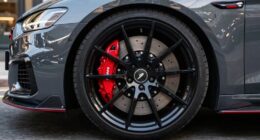
To improve drivability in hybrid sports cars, focus on advanced battery management systems that guarantee smooth power shifts and optimize energy use. Incorporate torque vectoring technology to enhance handling and stability during turns. Integrate control systems that coordinate battery performance and torque distribution for more precise, responsive driving. These enhancements create a seamless, engaging experience, combining efficiency with performance. Keep exploring to discover how these systems work together to elevate your driving sensation.

Get business pricing on garage and car supplies
- Business-only prices and quantity discounts
- Tax-exempt purchasing
- Multiple users, one account, clear invoices
Key Takeaways
- Optimize Battery Management Systems to ensure smooth power transitions and prevent overcharging or overheating.
- Utilize Torque Vectoring Technology for precise torque distribution, enhancing handling and stability during cornering.
- Integrate advanced control algorithms for real-time monitoring and seamless coordination between electric and combustion power.
- Improve energy utilization efficiency to reduce lag and hesitation, delivering a more responsive driving experience.
- Balance performance and fuel economy through system integration, creating an engaging and reliable hybrid sports car.
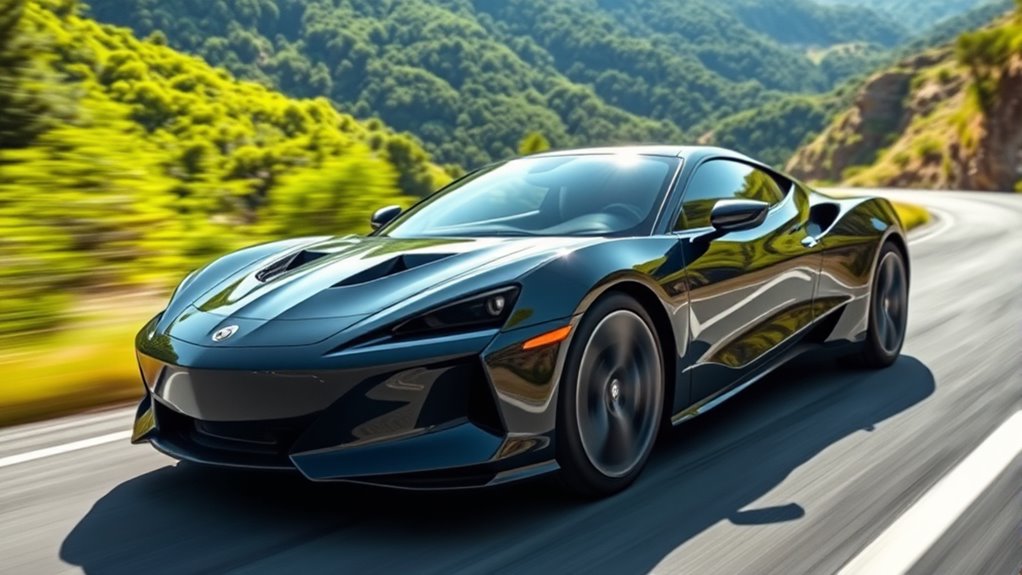
Hybrid sports cars combine exhilarating performance with fuel efficiency, but they often face challenges in delivering smooth, responsive driving experiences. To improve drivability, manufacturers focus on optimizing battery management systems. Efficient battery management ensures the hybrid system operates seamlessly, providing consistent power delivery without sudden surges or drops. When the battery is well-maintained and accurately monitored, the shift from electric to combustion power becomes smoother, reducing hesitation and lag. This not only enhances your driving experience but also prolongs battery life, making the vehicle more reliable over time. Additionally, advanced battery management allows the car to better balance power demands, guaranteeing that you don’t feel abrupt changes during acceleration or deceleration. Properly managed batteries also contribute to overall vehicle safety by preventing overcharging or overheating, which can lead to system failures.
Efficient battery management ensures smooth power transitions and prolongs the life of hybrid sports cars.
Another critical element in enhancing drivability is the implementation of torque vectoring. This technology actively distributes torque to individual wheels, improving handling, stability, and cornering agility. With torque vectoring, your hybrid sports car can respond more precisely to steering inputs, offering a more connected and confident driving experience. When steering through tight turns or high-speed curves, torque vectoring adjusts power dynamically, reducing understeer or oversteer tendencies. This results in a more predictable and controlled ride, making your driving feel more natural and engaging. By integrating torque vectoring with hybrid systems, manufacturers can mitigate some of the inherent weight and complexity issues associated with electrification, ensuring that the vehicle responds swiftly and accurately to your commands.
To maximize these benefits, vehicle control systems need to work in harmony. Sophisticated software algorithms continuously monitor battery status, driving conditions, and driver inputs to optimize power distribution and handling. This integration allows the car to adapt in real time, whether you’re accelerating hard on a straight or maneuvering through winding roads. You’ll notice less hesitation, more precise steering feel, and improved responsiveness overall. The combination of robust battery management and torque vectoring creates a more cohesive driving experience, turning what might feel like a compromise between performance and efficiency into a balanced, exhilarating ride. The integration of these systems is also essential for sustainable automotive advancements, ensuring future vehicles are both eco-friendly and high-performing.
In essence, by focusing on these technological advancements—careful battery management and intelligent torque vectoring—you can enjoy a hybrid sports car that doesn’t sacrifice responsiveness or thrill for fuel savings. Instead, it offers a harmonious blend of power, control, and efficiency, making every drive more engaging and satisfying. When these systems work together seamlessly, you’ll find that your hybrid sports car becomes more than just an eco-friendly option; it transforms into a dynamic machine built for spirited driving.
hybrid sports car battery management system
As an affiliate, we earn on qualifying purchases.
As an affiliate, we earn on qualifying purchases.
Frequently Asked Questions
How Does Hybrid System Tuning Affect Vehicle Responsiveness?
Hybrid system tuning directly influences your vehicle’s responsiveness by optimizing power management and regenerative braking. When you fine-tune these systems, you get smoother acceleration and deceleration, making your drives more agile. Adjusting regenerative braking settings allows you to control energy recovery, while better power management guarantees instant power delivery. These tweaks make your hybrid sports car feel more responsive, giving you a more engaging and seamless driving experience.
What Are the Best Practices for Hybrid Battery Maintenance?
To maximize your hybrid battery’s longevity, follow your vehicle’s recommended maintenance schedules diligently. Regularly check for corrosion, keep the battery terminals clean, and ensure proper cooling to prevent overheating. Avoid letting the battery fully deplete frequently, as it can shorten its lifespan. By staying proactive with maintenance, you help preserve battery performance, reduce costly replacements, and keep your hybrid sports car running smoothly for years to come.
Can Software Updates Improve Hybrid Sports Car Drivability?
Think of software updates as your hybrid’s secret weapon, like tuning a racecar for peak performance. They can improve electric acceleration and optimize regenerative braking, making your car feel smoother and more responsive. By updating the system, you enhance drivability, ensuring seamless power delivery and better energy recovery. So yes, software updates can truly elevate your hybrid sports car’s driving experience, turning every ride into a finely tuned performance.
How Do Hybrid Drivability Features Impact Fuel Efficiency?
Hybrid drivability features, like energy regeneration and noise reduction, markedly impact fuel efficiency. When you utilize energy regeneration, your vehicle recovers energy during braking, reducing fuel consumption. Noise reduction systems enable smoother, quieter operation, encouraging you to drive more efficiently. Together, these features optimize power use, minimize waste, and improve overall fuel economy, making your hybrid sports car more environmentally friendly and cost-effective to run.
Are There Specific Driving Techniques to Optimize Hybrid Performance?
Sure, because nothing says fun like micro-managing your hybrid’s torque vectoring and regenerative braking. To optimize performance, you should anticipate stops for smoother regenerative braking and apply gentle throttle for better torque distribution. Use steering inputs skillfully to leverage torque vectoring, enhancing handling. These techniques might seem trivial, but mastering them transforms your drive into a perfectly synchronized dance with your hybrid sports car’s advanced systems—ironically, making driving less like a chore.
Conclusion
By mastering these hybrid tweaks, you’ll transform your sports car into a beast that roars with unmatched agility and precision. Imagine effortlessly conquering every twist and turn, feeling unstoppable as your hybrid unleashes power smoother than thunder. With these improvements, you’ll not just drive—you’ll dominate the road like a legend, leaving ordinary cars in the dust. Get ready to turn your hybrid sports car into a jaw-dropping, adrenaline-pumping machine that defies all expectations!
Halloween Picks
halloween
As an affiliate, we earn on qualifying purchases.