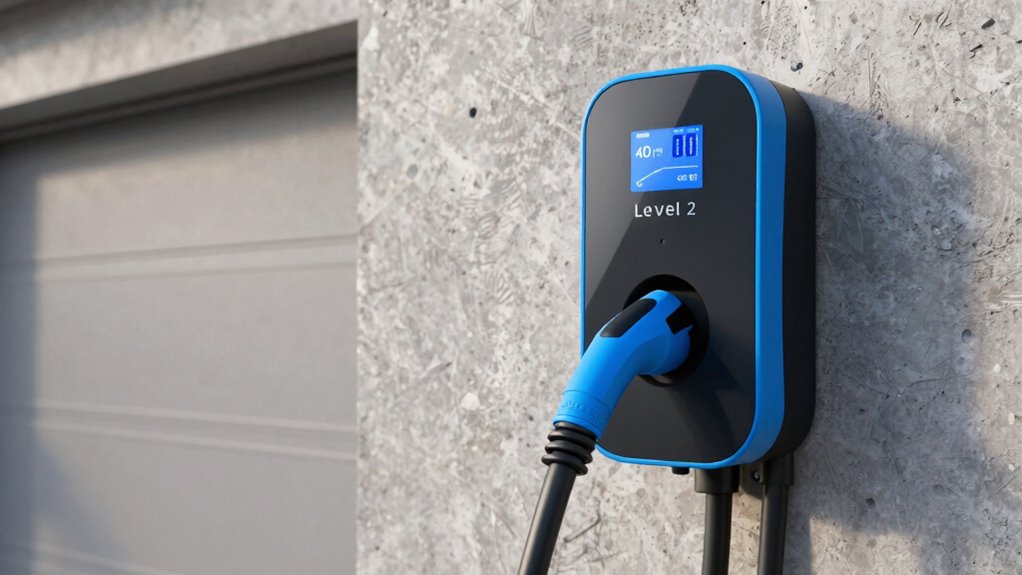
Choosing the right amperage for your Level 2 EV charger is key to fast, safe charging without damaging your wiring. Typically, a 16-amp charger suits most homes and keeps your system protected, while higher amps like 40 or 50 provide quicker charging if your electrical panel can handle it. It’s important to match the charger’s amperage to your home’s wiring and breaker capacity. Keep in mind, understanding these options helps prevent overloads and future-proof your setup—discover more about selecting the perfect amperage for your needs.
Key Takeaways
- Choose an amperage that matches your vehicle’s charging capacity to avoid electrical overloads.
- Higher amperage chargers recharge EVs faster but may require electrical panel upgrades.
- Assess your home’s existing wiring and electrical panel capacity before selecting amperage.
- Installing a dedicated circuit helps prevent overloads and ensures safe operation.
- Consult a qualified electrician to determine the optimal amperage for your current and future EV needs.
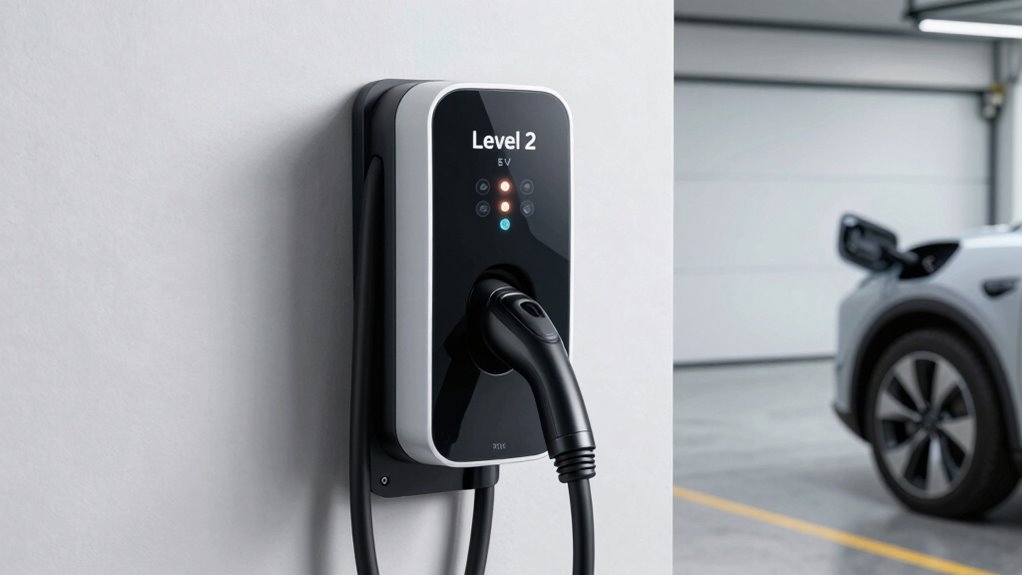
Level 2 EV chargers are a popular choice for electric vehicle owners seeking faster charging times than standard Level 1 units. These chargers typically operate at higher amperages, allowing your car to recharge more quickly and efficiently. When considering a Level 2 charger, one of the first things to evaluate is charging station placement. You want a spot that’s both convenient and safe, ideally close to where you park regularly. Think about accessibility—can you easily reach the outlet or hardwired unit without obstructing doors or pathways? Proper placement also means considering weather protection if the charger isn’t installed indoors, and ensuring the location can support the electrical load without requiring extensive wiring adjustments.
Placement decisions directly impact the installation process and overall cost considerations. For example, installing a charger in a garage often involves fewer complications and lower costs, especially if your electrical panel is nearby. Conversely, placing a charger farther from your main electrical supply might mean running longer wire runs, increasing both material and labor costs. You’ll want to assess your existing wiring infrastructure to determine whether upgrades are necessary. Some installations may require a dedicated circuit, which involves electrical panel modifications and can add to your expenses. You should also consider future-proofing—if you plan to buy more EVs or upgrade your system later, choosing a slightly higher amperage charger now could save money down the line. Additionally, understanding charger amperage options helps ensure compatibility with your vehicle and electrical system, preventing potential overloads or performance issues.
Installation cost considerations aren’t just about the charger itself. The overall expenses include permits, electrical upgrades, and labor fees. If your home’s electrical system is outdated, you might need a panel upgrade, which can profoundly increase installation costs. On the other hand, if your system already has capacity and a suitable placement, the process is typically quicker and less costly. It’s wise to get multiple quotes from qualified electricians, who can evaluate your specific setup and advise on the most cost-effective placement and amperage options. Keep in mind that some regions may offer incentives or rebates for installing Level 2 chargers, which can offset initial costs.
Frequently Asked Questions
Can I Upgrade My Existing Home Charger to Level 2?
Yes, you can upgrade your existing home charger to Level 2. First, check your charger compatibility with Level 2, making sure your vehicle supports it. Then, you might need wiring upgrades to handle the increased amperage safely. Consult a professional electrician to assess your home’s electrical system, confirm the proper circuit breaker size, and assure your wiring can handle the new charger without risking damage or safety hazards.
How Does Amperage Affect Charging Speed?
You might wonder how amperage impacts your charging speed, and the answer is vital. Higher amperage chargers deliver more power, considerably boosting charging speed, but they also increase power consumption and affect charger efficiency. If you choose too high an amperage, you risk overheating wiring, while too low delays your charge. Finding the perfect balance ensures fast, efficient charging without risking safety or wasting energy.
Are There Safety Concerns With Higher Amperage Chargers?
Higher amperage chargers can pose safety concerns if your wiring capacity isn’t sufficient, potentially increasing the risk of fire safety issues. To avoid hazards, you should verify your electrical system can handle the charger’s amperage. Always have a licensed electrician assess your wiring capacity before installing a high-amperage charger. Proper installation and maintenance are key to preventing electrical fires and ensuring safe, efficient charging.
Is Professional Installation Required for Level 2 Chargers?
Think of installing a Level 2 charger like planting a sturdy tree—you need a solid foundation. Yes, professional installation is recommended because your home wiring must handle the higher amperage safely. It might cost more upfront, but it guarantees safety and efficiency, saving you money in the long run. Skipping professional help could lead to costly repairs or hazards, making expert installation the smarter choice for peace of mind and proper setup.
What Are the Costs Associated With Different Amperage Options?
You’ll find that higher amperage Level 2 chargers generally cost more upfront, with a cost comparison highlighting increased equipment prices for 32A or 40A models versus 16A chargers. Installation expenses also rise with amperage, as higher power levels demand more extensive wiring and potentially upgraded electrical panels. Budget for both the charger’s purchase and installation costs, which vary based on amperage, to make sure you select an option that balances performance and affordability.
Conclusion
Choosing the right Level 2 EV charger isn’t just about amperage; it’s about safeguarding your home’s wiring and ensuring your EV charges safely and efficiently. Think of it as finding the perfect fit for a puzzle—when everything lines up, charging becomes seamless. Don’t let the wrong amperage be the missing piece that causes trouble. By selecting wisely, you keep your home safe and your EV ready to go—because a well-charged home is a well-lived home.