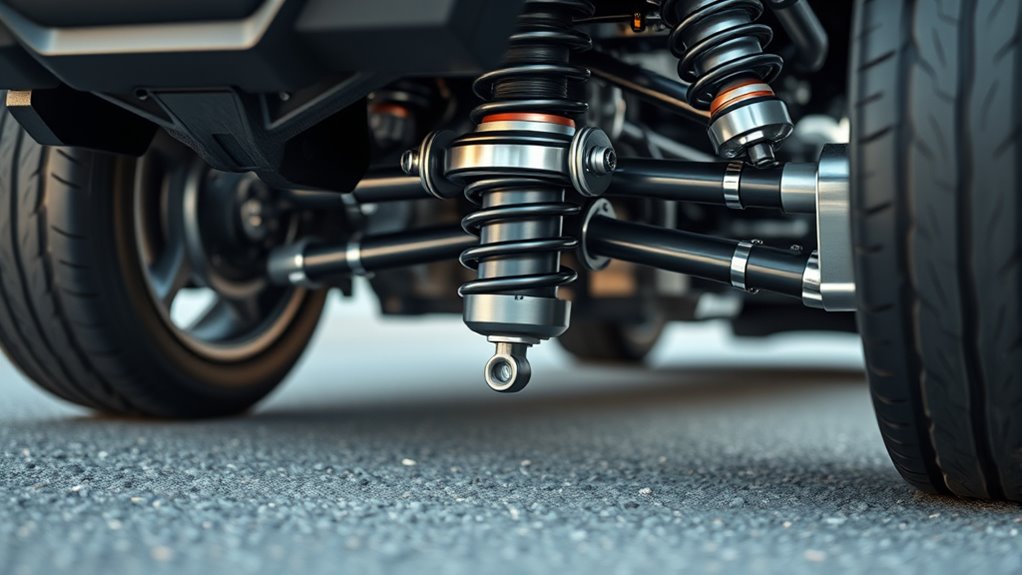

Regenerative shock absorbers capture energy generated by suspension movements that would typically be lost in traditional systems. They convert this mechanical energy into electrical power using electromagnetic or piezoelectric mechanisms, which can recharge your vehicle’s battery or power onboard systems. This process boosts efficiency, especially in electric vehicles, helping extend range and reduce energy costs. If you keep exploring, you’ll discover how these innovations are shaping smarter, more sustainable transportation options.

Get garage and car supplies delivered free — and shop member deals
- Fast, free delivery on millions of items
- Access to Prime Big Deal Days deals on October 6–7
- Prime Video, Amazon Music and more included
Key Takeaways
- Regenerative shock absorbers convert suspension movement into electrical energy, capturing energy typically lost during vehicle motion.
- They utilize electromagnetic or piezoelectric systems to generate electricity from suspension compression and rebound.
- These systems help recharge vehicle batteries, extend driving range, and improve overall energy efficiency.
- By recovering energy during suspension work, they reduce reliance on external power sources and decrease energy costs.
- Integrating regenerative shock absorbers enhances ride comfort, vehicle stability, and promotes sustainable, eco-friendly transportation.
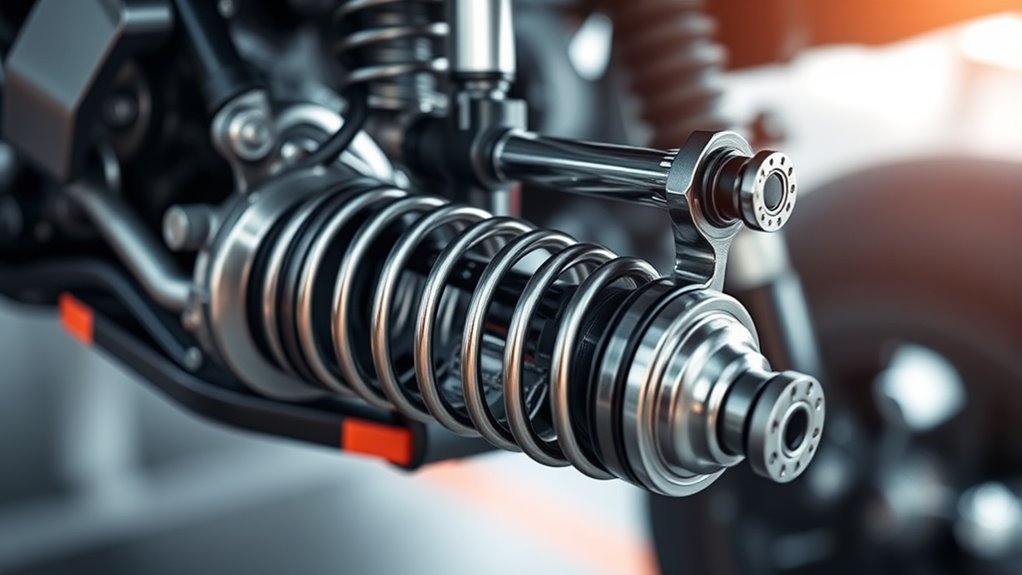
Regenerative shock absorbers are innovative automotive components that recover and reuse energy typically lost during vehicle suspension motion. These devices are especially significant in electric vehicles, where maximizing energy efficiency is essential for extending range and reducing overall energy consumption. Unlike traditional shock absorbers that solely dampen vibrations and absorb shocks, regenerative shock absorbers incorporate energy harvesting mechanisms. When your vehicle encounters bumps or uneven roads, the suspension compresses and rebounds, converting some of that mechanical energy into electrical energy. This process not only improves ride comfort but also feeds energy back into the vehicle’s battery system, enhancing overall efficiency.
In electric vehicles, regenerative shock absorbers serve as a smart solution to optimize energy recovery. As you drive, every bump and dip becomes an opportunity to generate electricity rather than just dissipate it as heat. The harvesting process typically involves electromagnetic or piezoelectric systems integrated into the shock absorber design. Electromagnetic systems utilize magnets and coils to convert motion into electrical current, which then charges the vehicle’s battery or supplies power to onboard systems. Piezoelectric systems, on the other hand, generate electricity directly from mechanical stress. Both approaches allow your vehicle to recover energy that would otherwise be lost, contributing to longer driving ranges and reduced reliance on external charging sources.
This energy harvesting capability is especially valuable in electric vehicles where maximizing every joule counts. By capturing energy during suspension movement, regenerative shock absorbers lessen the load on the main battery, leading to improved efficiency and potentially lower energy costs over time. They also help in reducing brake wear because the energy that would be used to slow down the vehicle can now be partially recovered during suspension activity, complementing regenerative braking systems. As a result, your EV becomes more sustainable and cost-effective to operate.
Moreover, regenerative shock absorbers enhance vehicle stability and comfort. They adapt to road conditions dynamically, providing better damping control while simultaneously harvesting energy. This dual functionality means you experience smoother rides without sacrificing efficiency. The integration of these shock absorbers into electric vehicles is a step toward smarter, more sustainable transportation. As technology advances, expect even more efficient energy harvesting mechanisms and smarter systems that optimize both ride quality and energy recovery. This innovation aligns with the future of electric mobility, where every component works toward maximizing efficiency and sustainability, making your driving experience more eco-friendly and cost-effective.
Additionally, advancements in energy harvesting mechanisms are driving innovations that further improve shock absorber performance and sustainability.
regenerative shock absorbers for electric vehicles
As an affiliate, we earn on qualifying purchases.
As an affiliate, we earn on qualifying purchases.
Frequently Asked Questions
How Long Do Regenerative Shock Absorbers Last Compared to Traditional Ones?
You’ll find regenerative shock absorbers generally last longer than traditional ones, thanks to their durability features. The durability comparison shows they often have increased longevity because they’re built with high-quality components that withstand wear and tear better. Factors like driving habits, terrain, and maintenance influence their lifespan, but overall, regenerative shock absorbers tend to stay effective longer, reducing replacement frequency and offering you more reliable performance over time.
Are Regenerative Shock Absorbers Suitable for All Vehicle Types?
Imagine a versatile toolbox ready for any job—you’re wondering if regenerative shock absorbers fit your vehicle. They’re compatible with many vehicle types, but not all. Consider vehicle compatibility carefully, as some models benefit more than others. Cost considerations also come into play; these shocks tend to be pricier upfront but save money long-term through energy recovery. Evaluate your vehicle’s needs and budget to determine if they’re the right choice for you.
What Is the Maintenance Requirement for Regenerative Shock Absorbers?
You need to regularly check your regenerative shock absorbers for proper functioning. Follow the lubrication schedules recommended by the manufacturer to keep parts moving smoothly. Additionally, inspect for signs of corrosion and apply corrosion prevention treatments as needed to extend their lifespan. Regular maintenance ensures peak energy recovery and suspension performance, helping you avoid costly repairs and ensuring a smooth, efficient ride.
How Much Energy Can Typically Be Recovered During Normal Driving?
Imagine saving enough energy during your daily commute to power your car’s accessories. Typically, regenerative shock absorbers recover about 5-10% of the energy from suspension movements, enhancing energy efficiency. While this can seem small, over time, it reduces fuel costs and lowers emissions. The cost implications are favorable, as they lead to less reliance on the engine for electrical power, making your vehicle more sustainable and economical in the long run.
Do Regenerative Shock Absorbers Affect Ride Comfort?
Regenerative shock absorbers can slightly affect ride comfort, but it depends on their design and suspension stiffness. You might notice a firmer ride if the system increases stiffness to maximize energy recovery. Noise levels could also rise if components aren’t well-isolated. However, many modern regenerative shocks are engineered to balance energy recovery with comfort, so you often won’t feel a significant difference unless the system is set to extreme settings.
Conclusion
Think of regenerative shock absorbers as the heartbeat of your vehicle’s future—pumping energy back into the system like a steady, life-giving pulse. They symbolize innovation’s promise to turn every bump and jolt into something valuable, transforming waste into power. As you travel, imagine your journey powered by the silent, unseen rhythm of energy recovery. Embrace this technology, and you’re not just riding; you’re part of a sustainable movement that keeps the world moving forward.
Halloween Picks
halloween
As an affiliate, we earn on qualifying purchases.