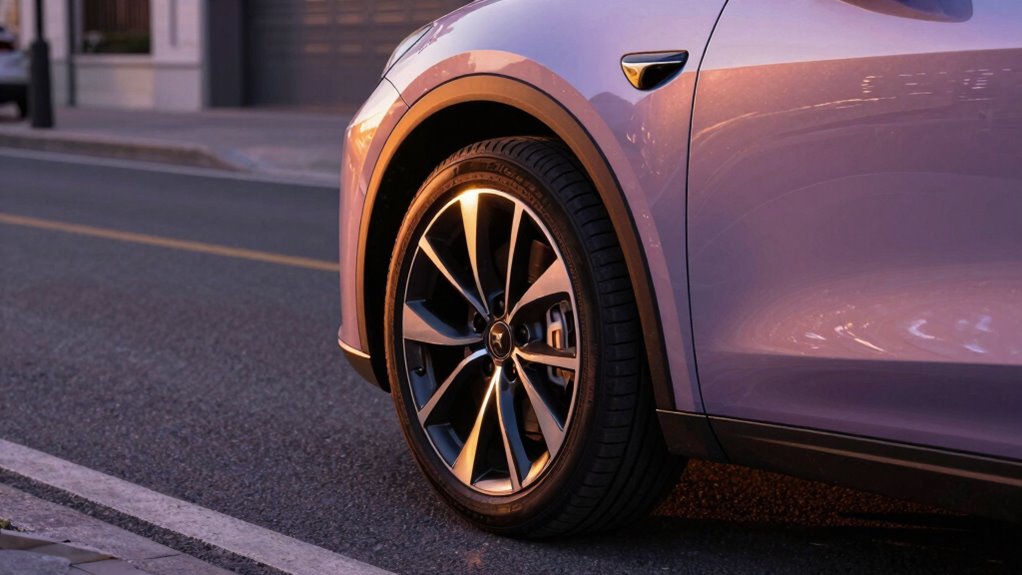

Your plug-in hybrid depends heavily on the right tires to maximize efficiency, safety, and sustainability. Smarter tire choices—like low rolling resistance and eco-friendly materials—help conserve battery life, reduce emissions, and lower operating costs. Durable tires improve handling and safety, especially with heavier batteries. Making informed decisions about tires can markedly boost your vehicle’s performance and environmental impact. Keep in mind, understanding these factors can lead to smarter driving and better results across the board.

Get business pricing on garage and car supplies
- Business-only prices and quantity discounts
- Tax-exempt purchasing
- Multiple users, one account, clear invoices
Key Takeaways
- Plug-in hybrids’ heavier batteries require tires with better traction and durability for safety and optimal handling.
- Low rolling resistance tires are crucial to maximize battery efficiency and extend driving range.
- Proper tire maintenance ensures consistent performance, vital for managing hybrid-specific weight distribution.
- Eco-friendly, durable tires reduce environmental impact and lower long-term replacement costs.
- Advanced tire technology enhances safety, especially in adverse weather, due to hybrids’ unique weight and energy profiles.

As plug-in hybrids become more popular, making smarter tire choices can considerably boost their efficiency and safety. Unlike traditional vehicles, plug-in hybrids rely heavily on optimized energy use to maximize their benefits. Your tires play a pivotal role in this, influencing everything from fuel efficiency to safety on the road. When selecting tires, it’s essential to consider tire durability because it directly affects how often you’ll need replacements, impacting both your budget and environmental footprint. Durable tires reduce waste, lessen the frequency of replacements, and contribute to a more sustainable driving experience. Additionally, choosing tires made from eco-friendly materials can further enhance your vehicle’s overall efficiency. These environmentally conscious options often incorporate sustainable compounds that reduce the use of harmful chemicals, helping you lessen your carbon footprint while still maintaining high performance.
Smarter tire choices aren’t just about durability and eco-friendly materials—they also involve understanding how tires influence your plug-in hybrid’s fuel economy and driving dynamics. Low rolling resistance tires, for example, are designed to minimize energy loss, which is especially beneficial for plug-in hybrids that switch between electric and gasoline modes. These tires help you conserve battery life and extend your electric driving range, enabling you to rely more on electric power and less on fuel. When tires are tailored for energy efficiency, you’ll notice better mileage, fewer trips to the pump, and a more eco-conscious drive. Moreover, staying informed about tire technology developments can help you select the most advanced options for your vehicle, ensuring optimal performance and sustainability. Regularly checking tire maintenance practices can further extend the life of your tires and enhance overall safety. Being aware of tire inflation and pressure levels also plays a critical role in maintaining tire efficiency and safety, especially in hybrid vehicles with unique weight distributions. To maximize your vehicle’s performance, it’s important to understand how tire selection impacts overall driving experience and efficiency.
Safety should always be at the forefront of your decision-making. Proper tire maintenance, including choosing the right tires, ensures maximum grip, handling, and braking performance. This is particularly essential for plug-in hybrids, which often have heavier batteries and different weight distributions than traditional vehicles. Tires that offer consistent traction and good heat dissipation can prevent accidents, especially in adverse weather conditions. Additionally, investing in high-quality tires with good tread life enhances tire durability, saving you money over time and ensuring your vehicle remains safe on the road for longer periods.
Ultimately, smarter tire choices for your plug-in hybrid aren’t just about prolonging tire life—they’re about making a conscious effort to improve efficiency, safety, and environmental impact. By selecting tires designed with eco-friendly materials and low rolling resistance, you’re supporting a more sustainable driving future while getting the most out of your vehicle’s hybrid capabilities. It’s a small change that makes a big difference, helping you drive smarter, safer, and greener every day.
Products Worth Considering

Milwaukee 2697-22 M18 18-Volt Lithium-Ion Cordless Hammer Drill/Impact Driver XC Combo Kit (2-Tool)

Chemical Guys 16-Piece Arsenal Builder Car Wash Kit with Foam Cannon & Bucket

DEWALT 20V MAX XR 1/2-Inch Cordless Impact Wrench Kit (DCF900P1)
As an affiliate, we earn on qualifying purchases.
Frequently Asked Questions
How Do Tire Choices Impact Plug-In Hybrid Battery Efficiency?
Your tire choices directly impact your plug-in hybrid’s battery efficiency. Opting for tires with the right tread reduces rolling resistance, helping your car use less energy. Low road noise tires also improve driving comfort, but they’re often more aerodynamic, further boosting efficiency. Selecting tires that balance tread design and noise levels ensures your hybrid conserves battery power, maximizing range and performance while providing a smoother, quieter ride.
Are There Specific Tire Brands Best Suited for PHEVS?
You might think all tires suit PHEVs, but specific brands excel in durability and noise reduction. Michelin, Continental, and Bridgestone offer tires designed for hybrid efficiency, balancing longevity with quieter rides. These brands understand the unique demands of PHEVs, ensuring your vehicle runs smoothly and quietly. Choosing their tires can improve your driving experience, enhance battery efficiency, and reduce road noise, making your PHEV more enjoyable and cost-effective.
How Often Should PHEV Tires Be Rotated Compared to Conventional Cars?
You should rotate your PHEV tires every 5,000 to 7,500 miles, similar to conventional cars. Because of their tire durability, this helps maintain even wear and extends tire life. Regular rotations also reduce road noise caused by uneven tread wear, enhancing your driving comfort. Prioritize rotating your tires on schedule to maximize performance, safety, and efficiency, especially since PHEVs often have unique weight distributions impacting tire wear patterns.
Do Tire Pressure Requirements Differ for PHEVS?
Yes, tire pressure requirements do differ for PHEVs, mainly because of tire material and tread pattern. You should regularly check your PHEV’s tire pressure, as ideal levels help maximize efficiency and safety. The tire material influences pressure retention, while the tread pattern affects grip and rolling resistance. Maintaining proper pressure ensures your PHEV performs well, extends tire life, and improves fuel economy, making smarter tire choices essential.
Can Tire Upgrades Improve PHEV Acceleration or Handling?
Imagine gripping the steering wheel tighter as tire noise and tread design influence your PHEV’s agility. Upgrading your tires can indeed improve acceleration and handling by providing better grip, reducing noise, and enhancing responsiveness. Opt for tires with a specialized tread design tailored for hybrids, which can optimize traction and stability. These upgrades create a smoother, quieter ride, making your PHEV feel more lively and controlled on every turn and acceleration.
Conclusion
Choosing the right tires for your plug-in hybrid isn’t just about safety—it’s about maximizing efficiency and saving money. While your car quietly purrs through town, a smarter tire choice can quietly boost your range and reduce emissions. It’s like giving your hybrid a secret weapon, much like choosing the perfect playlist to energize your drive. So, don’t overlook your tires—they’re the silent partners helping you get the most from your eco-friendly ride.