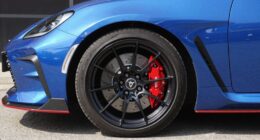
Regenerative braking in Tesla vehicles reduces the need for frequent, intense use of traditional brake pads, which can extend their lifespan and influence your hardware choices. Since regen handles most deceleration, you’ll want high-quality, compatible brake components like ceramic pads or larger rotors to manage heat and improve responsiveness when needed. Upgrading your brakes thoughtfully guarantees safety and durability, especially during spirited driving or steep climbs—learn more to optimize your system further.
Key Takeaways
- Regen reduces brake pad wear, but high-performance pads are recommended for sudden or heavy braking scenarios.
- Upgrading to larger, ventilated rotors improves heat dissipation, supporting regen’s frequent, low-speed deceleration.
- Compatibility with Tesla’s regen system is essential; improper hardware can cause uneven braking and increased wear.
- Ceramic brake pads extend lifespan and produce less dust, making them ideal for EV brake upgrades.
- Proper calibration of upgraded hardware ensures optimal regen efficiency and reliable braking performance.
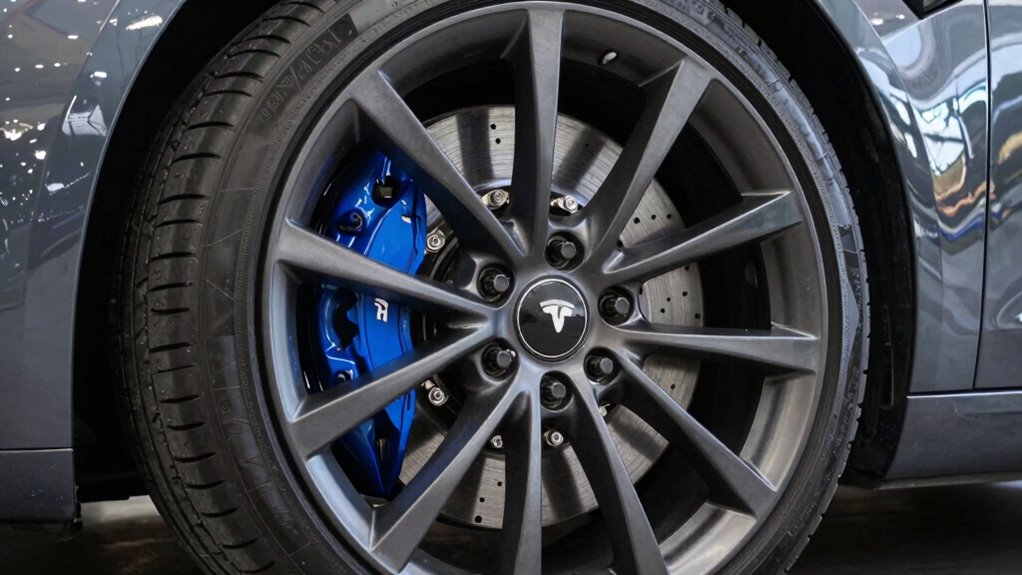
If you’re looking to enhance your Tesla’s stopping power, brake upgrades are a smart place to start. Tesla’s advanced regenerative braking system plays a vital role in how your vehicle slows down, converting kinetic energy into electrical energy to recharge the battery. While regenerative braking reduces reliance on traditional friction brakes, it also influences your hardware choices. Understanding how regen works can help you select the right brake components to maximize performance and longevity.
Regenerative braking primarily handles a significant portion of deceleration during everyday driving, especially at low to moderate speeds. This means your brake pads experience less frequent and less intense use, which can extend their lifespan. However, it also creates a unique challenge: brake pad wear becomes less predictable, since the system relies heavily on regen to slow down the vehicle. When regen is active, traditional brake systems take a backseat, but during sudden stops or high-speed deceleration, friction brakes engage more forcefully. This intermittent heavy use can lead to uneven brake pad wear if your hardware isn’t calibrated properly.
Regenerative braking reduces brake wear but causes uneven pad usage during sudden stops.
Upgrading your braking hardware involves choosing components that can handle the demands of a regen-assisted system. High-quality brake pads designed for electric vehicles tend to generate less dust and provide consistent performance even under intermittent heavy braking. Some enthusiasts opt for ceramic brake pads, which tend to last longer and produce less brake dust, helping maintain cleaner wheels and better stopping consistency. Additionally, upgrading to larger or ventilated rotors can improve heat dissipation, which is especially beneficial if you frequently drive in hilly terrain or engage in spirited driving. Better heat management prevents brake fade and ensures your vehicle maintains reliable stopping power.
Another factor to contemplate is the compatibility of your brake hardware with regenerative braking. Some aftermarket upgrades may not integrate seamlessly with Tesla’s regen system, potentially causing uneven braking or increased brake pad wear. It’s essential to select components specifically engineered for electric vehicles or Tesla models to ensure ideal synergy. Proper calibration and maintenance of your brake system will also help you maximize the benefits of regen, reducing unnecessary brake pad wear and ensuring consistent, reliable stops. Additionally, considering top-tier brake components can further enhance your braking system’s durability and performance.
Frequently Asked Questions
Can Regen Braking Be Adjusted for Different Driving Conditions?
Yes, you can adjust regen braking for different driving conditions. Many Teslas feature regenerative balance settings that let you fine-tune how much regen engages, based on your preferences or conditions. Adaptive regen automatically adjusts the level of deceleration to optimize energy recovery and braking feel, ensuring smooth driving in various environments. By customizing these features, you make your drive safer and more efficient, no matter the road or weather.
Does Upgrading Brakes Affect Tesla’s Warranty Coverage?
Upgrading your brakes can impact your Tesla’s warranty coverage, especially if the modifications affect the brake sensor or other critical components. You might void parts of your warranty if Tesla determines the hardware changes cause issues. Always review the warranty policy before upgrading, and consult Tesla or a certified technician to guarantee your modifications won’t void coverage. Stay informed, protect your investment, and keep your Tesla running smoothly.
How Does Regen Impact Tire Wear Over Time?
Regen can influence tire wear over time by creating distinct wear patterns, especially if you frequently rely on regenerative braking. You might notice increased tire longevity because regen reduces the need for harsh braking, but uneven wear can occur if your driving style is aggressive or if the regen system causes uneven pressure on the tires. Regular tire rotations and maintaining proper inflation help manage wear patterns and extend tire life.
Are There Any Safety Risks With High Regen Settings?
You might worry about safety risks with high regen settings, but they’re generally safe if your system functions properly. While regen can enhance braking, a regen malfunction could cause unpredictable deceleration. To guarantee battery safety, always keep your regen settings within recommended limits and have your Tesla inspected regularly. If you notice any irregular braking behavior, get it checked immediately to prevent potential safety issues.
What Maintenance Is Required After Upgrading Brake Hardware?
After upgrading your brake hardware, you should regularly check the brake fluid level and quality to guarantee peak performance. It’s also essential to lubricate the calipers properly to prevent sticking and uneven wear. Inspect the brake pads and rotors for signs of wear, and replace them as needed. Regular maintenance helps maintain braking efficiency, especially with upgraded hardware that may alter your vehicle’s braking dynamics.
Conclusion
Upgrading your Tesla’s brakes isn’t just about stopping faster; it’s about understanding how regenerative braking shapes your hardware choices. Think of regen as the heartbeat of your system—guiding and influencing every decision. By embracing these upgrades, you’re tuning your car’s rhythm for smoother, more efficient stops. Remember, your choices today set the tempo for a safer, more responsive drive tomorrow—like a conductor leading an orchestra toward harmony on the road.