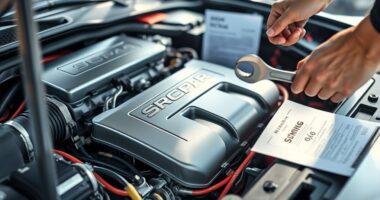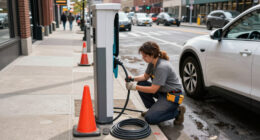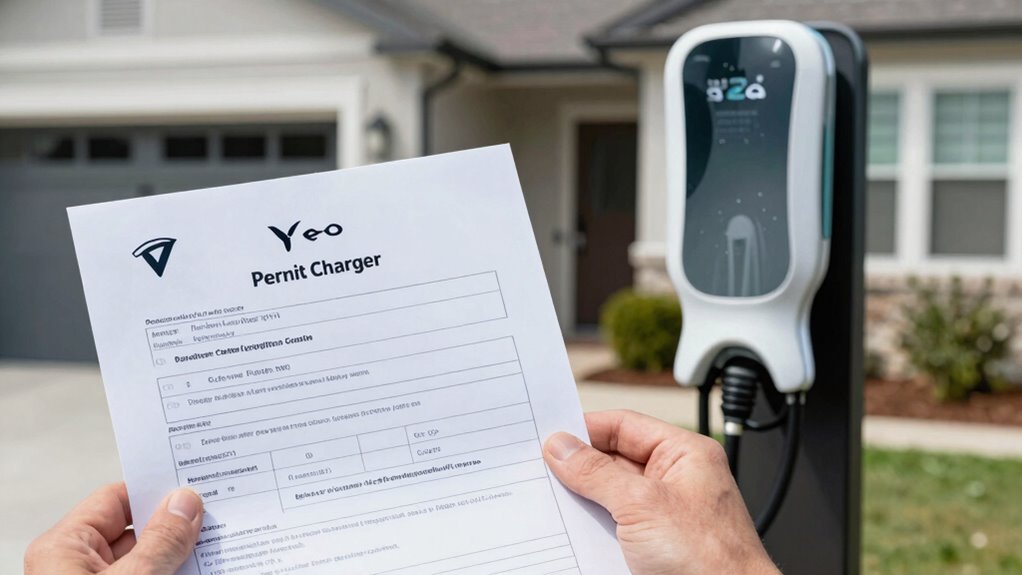

To avoid delays and surprises, you should clarify your local permit requirements early. Check with your city or county building department to determine if permits are needed based on your installation scope, charger type, and local codes. Understanding the process, fees, and inspection rules upfront helps you plan your project timeline and budget. Being informed early guarantees a smooth, compliant installation. Keep exploring, and you’ll find useful tips to make your EV charger setup easier.

Get business pricing on garage and car supplies
- Business-only prices and quantity discounts
- Tax-exempt purchasing
- Multiple users, one account, clear invoices
Key Takeaways
- Determine if a permit is required based on local building codes and charger installation scope.
- Clarify the specific permit application process and associated fees early.
- Understand inspection requirements and scheduling to avoid delays.
- Confirm if additional permits are needed for electrical upgrades or infrastructure changes.
- Verify documentation needed for permit approval and future home sale compliance.
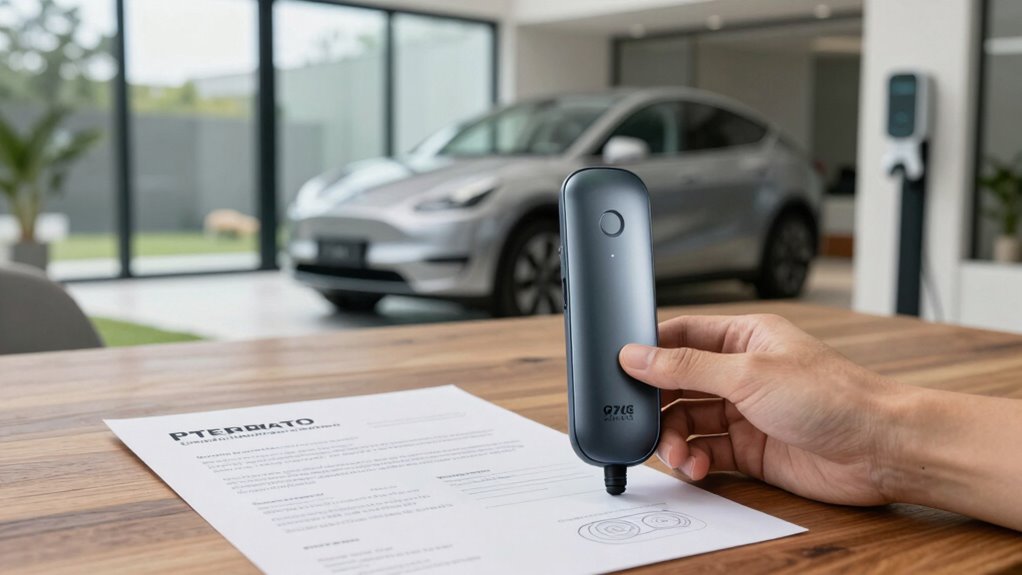
Are you unsure whether you need a permit to install an EV charger at your property? It’s a common question among homeowners keen to upgrade their homes for electric vehicles. Clarifying this early can save you time, money, and potential headaches down the line. The first step is understanding that permit requirements vary depending on your local regulations, the scope of your installation, and the type of charger you’re installing. Some areas may have strict codes, while others are more lenient. To avoid surprises, it’s best to check with your city or county’s building department before starting any work. They can tell you whether a permit is necessary and outline the steps you need to follow.
One of the key aspects to weigh early on is the cost considerations associated with obtaining permits. Permits often involve fees that can range from a modest amount to a significant expense, depending on your location and the complexity of your project. While these costs might seem like an unnecessary expense, they guarantee your installation complies with safety standards, which can save you money in the long run by avoiding fines or costly corrections later. Additionally, securing a permit can be essential if you plan to sell your home, as potential buyers or inspectors may require proof that your charger was installed legally and safely. Being aware of local regulations can help you avoid unexpected hurdles during this process. Understanding permit requirements early can also prevent delays once you’re ready to move forward. Moreover, understanding the inspection processes involved can help you prepare for any additional steps needed to meet compliance.
Another important factor to remember is the installation timeline. Getting a permit can sometimes add a few days or even weeks to your project schedule, especially if inspections or revisions are needed. Planning for this delay is vital so that you don’t expect to have your EV charger up and running immediately. The permit process often involves submitting plans, waiting for approval, and scheduling inspections. Being proactive about this process can streamline your installation — for example, by hiring qualified electricians familiar with local regulations who can help expedite the permit approval and installation timeline. It’s also helpful to familiarize yourself with local building codes to ensure your project is compliant from the start. Additionally, understanding the permitting process specific to your area can help you anticipate and navigate any administrative steps more effectively. Taking these steps early can also give you a clearer idea of the overall project timeline, reducing stress later on.
As an affiliate, we earn on qualifying purchases.
Frequently Asked Questions
How Long Does the Permit Approval Process Typically Take?
Permit approval timelines usually range from a few days to several weeks, depending on your local jurisdiction. You might experience approval delays if your application lacks complete information or if inspections are backlogged. To avoid unnecessary setbacks, make sure you submit all required documentation promptly and stay in touch with the permitting office. Being proactive helps you understand permit timelines and minimizes the impact of approval delays on your EV charger installation.
Are There Any Costs Associated With Obtaining the EV Charger Permit?
Think of it like paying a toll on your journey—you’ll face some costs. You should anticipate permit fees, which cover processing, and inspection costs, ensuring everything’s up to code. These expenses vary depending on your location and project scope. While some areas include these costs in your overall upgrade budget, others require separate payments. Always check with your local authorities to get a clear picture and avoid surprises.
Can I Install a Charger Without a Permit in an Emergency?
You shouldn’t install an EV charger without a permit, even in an emergency. Emergency installations might qualify for permit exemptions, but you must check local codes first. Skipping permits can lead to safety issues or fines later. It’s best to contact your local authorities quickly to clarify if an emergency exemption applies. Always prioritize safety and proper procedures, so your installation remains compliant and secure.
What Are the Consequences of Installing Without a Permit?
Installing an EV charger without a permit can lead to permit violations, which may result in fines or legal issues. It also raises safety concerns because unpermitted installations often lack proper inspections, increasing the risk of electrical hazards or fire. You might face costly repairs or difficulty selling your home later. Always check local regulations and get the necessary permits to guarantee your installation is safe and compliant.
Do Homeowners Need Special Insurance for EV Charger Installation?
You might think you’re covered, but insurance requirements can surprise you. Generally, homeowners don’t need special insurance for EV charger installation if it’s permitted and follows code, but permit exemptions sometimes change the game. Failing to check this could leave you vulnerable if damages or accidents occur. To stay safe and protected, verify your coverage and permit status beforehand—don’t wait until it’s too late.
Conclusion
Don’t delay or deny the details—dive into the permit process early to dodge delays and intimidating fines. Clarify your charger questions, check codes, and champion your choices with confidence. By being proactive, you’ll breeze through the permit puzzle and enjoy electric ease in your eco-friendly endeavor. Remember, thoroughness saves time, trouble, and tension—so stay savvy, stay prepared, and guarantee your EV charging experience is effortless and enjoyable from start to finish.
Fall Picks
fall essentials
As an affiliate, we earn on qualifying purchases.