
To avoid trouble, follow the towing equipment rulebook designed for modified SUVs. Make sure your equipment meets federal and state safety standards, and only use certified, approved parts. Proper installation and ongoing maintenance are key to safety and compliance. Know the local laws, and regularly check for updates. Prioritizing safety and staying within legal limits helps prevent fines, accidents, and headaches. Keep these tips in mind, and you’ll learn how to stay ahead of common towing pitfalls.

Get business pricing on garage and car supplies
- Business-only prices and quantity discounts
- Tax-exempt purchasing
- Multiple users, one account, clear invoices
Key Takeaways
- Always verify that towing equipment meets certified safety standards and is approved for your specific SUV model.
- Check and follow local, state, and federal regulations regarding towing modifications and equipment.
- Ensure proper installation by professionals and maintain regular inspections for safety and compliance.
- Use only rated and tested components like hitches, brakes, and wiring to prevent failure or accidents.
- Keep thorough records of installation and maintenance to streamline inspections and ensure ongoing legal compliance.
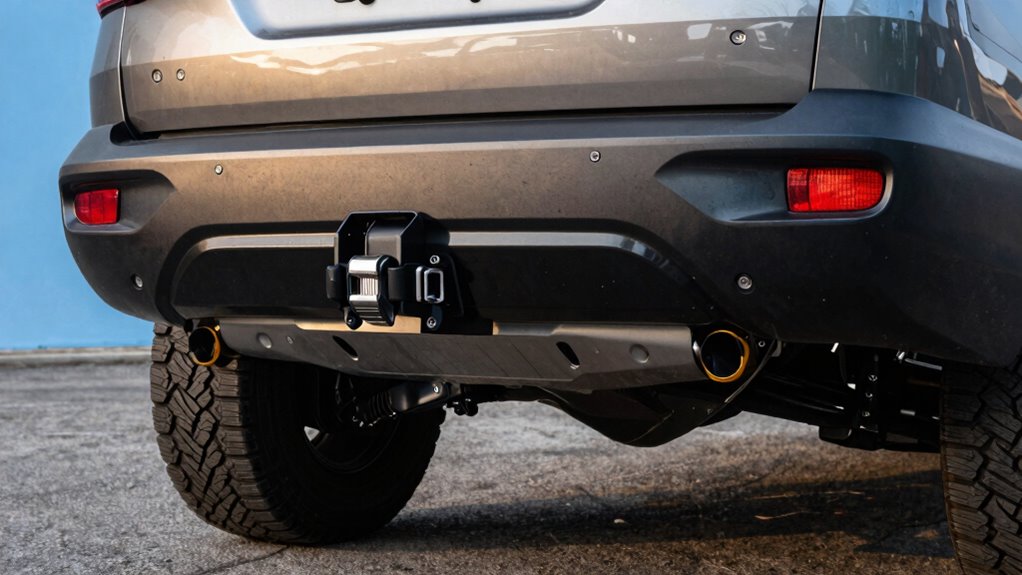
When you modify your SUV for towing, understanding the rules surrounding towing equipment is vital to stay legal and safe on the road. Towing safety regulations are in place to protect everyone—drivers, other road users, and your cargo. Failing to comply with these rules can lead to hefty fines, vehicle penalties, or even accidents. That’s why it’s essential to familiarize yourself with the legal compliance requirements for towing modifications. These regulations specify what equipment is acceptable, how it should be installed, and the limits you must adhere to. Ignorance isn’t a defense, so taking the time to learn these rules helps you avoid unnecessary trouble and guarantees your modifications are up to code.
Your first step is to understand that any towing equipment you add or alter must meet federal and state standards. This includes hitches, trailer brakes, wiring, and load capacity ratings. Not all aftermarket parts are created equal, and some may not be rated for your specific SUV model or towing needs. For example, installing a hitch that isn’t rated for the weight you intend to tow could result in equipment failure, risking damage or accident. Confirming your towing setup complies with safety regulations means choosing certified components that have been tested and approved for use on roads. It’s always wise to check whether your modifications are compliant with local laws, as regulations can vary by state or region. Additionally, understanding towing equipment regulations helps ensure your modifications meet legal standards and prevent potential issues during inspections or roadside checks. Being aware of modification requirements can also help you stay ahead of changes in legislation that might affect your setup. Moreover, staying informed about relevant safety standards ensures your towing system is reliable and compliant with current best practices. Regular consultation of regulatory updates can also aid in maintaining compliance over time. Staying informed about manufacturer guidelines can further assist in selecting appropriate and compliant equipment.
Ensure your towing equipment meets federal, state, and safety standards for reliable, legal, and safe vehicle modifications.
Another important aspect of legal compliance involves proper installation. Even the best equipment won’t perform safely if it’s not installed correctly. Follow manufacturer instructions and consider professional installation if you’re unsure. Incorrect installation can lead to unsafe towing conditions, such as sway, uneven load distribution, or electrical failures. Additionally, regular inspections and maintenance are necessary to keep your towing setup safe and compliant over time. This includes checking hitch connections, brake systems, wiring, and load limits before each trip. Keeping thorough records of your installation and maintenance activities can also prove helpful during inspections or if questions about your modifications arise.
Ultimately, staying within safety regulations and legal compliance when modifying your SUV for towing isn’t just about avoiding fines; it’s about protecting yourself and others on the road. Properly equipped and maintained towing gear reduces the risk of accidents caused by equipment failure. It also ensures your vehicle handles the additional load without compromising stability or control. When you prioritize safety and compliance, you’re not only following the law—you’re making smart choices that keep your towing adventures safe, smooth, and trouble-free.
As an affiliate, we earn on qualifying purchases.
Frequently Asked Questions
Can I Tow Heavier Loads With a Modified SUV Legally?
You can tow heavier loads with a modified SUV legally if you make sure your off-road modifications don’t exceed the vehicle’s towing capacity and meet safety regulations. Upgrading suspension or adding weight can affect fuel efficiency, so check local laws and manufacturer guidelines first. Always verify that your modifications comply with towing rules to avoid legal issues, and consider consulting experts to balance off-road capabilities with legal and safety standards.
Do Aftermarket Modifications Affect Towing Capacity Ratings?
Think of your SUV as a ship steering the towing seas. Aftermarket modifications like suspension upgrades and brake enhancements can boost or hinder your vessel’s towing capacity. Properly installed, they might improve your load handling. But if done poorly, they could weaken your ship’s strength, reducing capacity. Always guarantee modifications are professionally done and compliant with towing guidelines to keep your towing journey smooth and safe.
Are There Specific Towing Equipment Standards for Modified SUVS?
Yes, there are specific towing equipment standards for modified SUVs to guarantee towing safety. These standards focus on vehicle compatibility, accounting for aftermarket modifications that can affect towing capacity. You should check that your modifications meet industry guidelines and use equipment rated for your vehicle’s unique setup. Following these standards helps prevent accidents, damage, and ensures your modified SUV remains safe and reliable during towing.
How Often Should Towing Equipment Be Inspected on a Modified Vehicle?
You should inspect your towing equipment regularly, ideally before each towing session, to guarantee towing safety and vehicle maintenance. Check for signs of wear, corrosion, or damage, and tighten any loose components. A thorough inspection every few months is also recommended for peace of mind. Staying proactive helps prevent accidents, prolongs equipment life, and keeps your modified SUV towing safely and reliably.
Are Special Permits Needed for Modified SUVS Towing Large Trailers?
You don’t usually need special permits for a modified SUV towing large trailers, but trailer safety and brake compatibility are vital. Imagine your upgraded vehicle hauling a heavy load smoothly, with brakes that respond instantly. To stay compliant and safe, make certain your modifications meet local regulations and double-check that your brakes handle the extra weight. Proper permits and equipment checks keep your towing experience worry-free and secure.
Conclusion
By following these towing equipment rules, you can avoid fines and guarantee your modified SUV stays safe on the road. Did you know that improperly equipped vehicles are involved in over 20% of towing accidents? Don’t let that be your story. Stick to the guidelines, double-check your gear, and enjoy peace of mind knowing you’re compliant and protected. Safe towing starts with knowing the rules—so stay informed and drive confidently.
Fall Picks
fall essentials
As an affiliate, we earn on qualifying purchases.