
Choosing the right compound for your 200TW track tires depends on your driving style and track conditions. Softer compounds give you more grip and faster lap times but wear out quickly, while harder compounds last longer and provide better stability. To find the best fit, consider how aggressive your driving is and the track temperature. If you’re enthusiastic to optimize your setup and make smarter choices, keep exploring more tips.
Key Takeaways
- Select a softer compound for maximum grip and quick lap times on dry, warm track conditions.
- Opt for a harder compound for better durability and consistent performance during longer sessions.
- Consider your driving style: aggressive drivers benefit from softer compounds, while steady drivers may prefer harder options.
- Adjust tire pressure based on compound to optimize contact patch, heat management, and wear.
- Match the tire compound to track conditions, weather, and your racing goals for optimal performance.
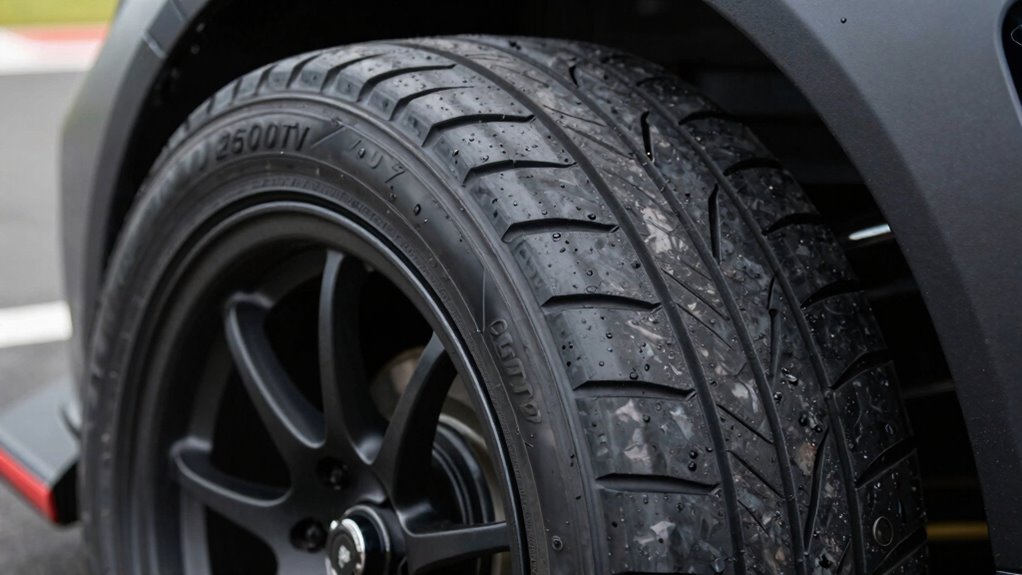
If you’re serious about maximizing your track performance, 200TW track tires are an essential upgrade. One of the most critical factors in choosing the right tire is understanding how the compound interacts with your driving style and track conditions. The tire compound determines grip, durability, and heat management, so selecting the right one can make a significant difference in lap times and overall handling. Different compounds offer varying levels of softness and hardness, affecting how the tire heats up and maintains grip during high-speed corners. Softer compounds, for example, provide more grip but tend to wear faster, making them ideal for short, intense sessions. Harder compounds last longer and are more stable over extended runs but may sacrifice some grip. Consider your typical track days or racing conditions when choosing a compound; if you’re aiming for maximum grip and quick lap times, a softer compound is usually the best pick. However, if your focus is on consistency and longevity, a slightly harder compound might serve you better.
Another essential aspect is how you manage tire pressure, which directly influences the tire’s performance and wear. Proper tire pressure ensures excellent contact with the track surface, maximizing grip and minimizing uneven wear. When working with 200TW tires, you’ll want to experiment with pressure settings to find the sweet spot that offers the best balance between grip and durability. Lower pressures increase the contact patch, enhancing grip but risking excessive heat buildup and faster wear. Higher pressures reduce the contact patch, which can improve stability but might compromise grip. Keep in mind that tire pressure can change as the tire heats up during a run, so it’s important to monitor and adjust it accordingly to maintain consistent performance. Additionally, understanding the contrast ratio of your tires can help optimize your setup for different track conditions, ensuring you get the most out of your tires’ grip and performance.
Frequently Asked Questions
How Do Tire Compounds Affect Overall Track Performance?
Tire compounds directly influence your track performance through their chemistry, affecting grip levels and durability. Softer compounds offer better grip and faster lap times but wear out quickly, while harder compounds last longer but may compromise grip. By understanding how compound chemistry impacts grip levels, you can choose tires that balance performance and longevity, ensuring you get the most out of each session and maintain peak control on the track.
Can Different Compounds Be Mixed on a Single Set of Tires?
Mixing tire compounds is like blending spices in cooking—you can create unique flavors, but it’s risky. Generally, it’s not recommended because of compound compatibility issues, which can lead to uneven wear or compromised grip. If you do consider mixing tire compounds, make certain they’re designed to work together and consult your tire manufacturer. Proper mixing can optimize performance, but improper mixing might jeopardize your safety and track results.
What Are the Signs of Choosing the Wrong Tire Compound?
If you’ve chosen the wrong tire compound, you’ll notice uneven tire wear patterns and grip inconsistency. Your tires might wear out quickly in certain areas or feel unpredictable on the track, especially during sharp turns or sudden acceleration. You might also experience a loss of confidence in your traction, leading to reduced performance. Pay attention to these signs; they indicate it’s time to reassess your compound choice for better handling and longevity.
How Does Weather Impact the Choice of Tire Compound?
Imagine your tire compound as a guardian facing different weather battles. Weather conditions and temperature sensitivity influence your choice; in cold or wet weather, you need a softer, more grip-focused compound, like a brave protector comfortable in rain or chill. Conversely, hot, dry conditions demand a harder compound for durability. Selecting wisely guarantees your tires perform their best, providing safety and confidence on every track adventure.
Are There Specific Compounds Recommended for Beginner Track Drivers?
If you’re a beginner, start with a softer compound for better grip and easier handling, which enhances beginner safety. Look for starter recommendations like tires with moderate grip levels that balance performance and longevity. Softer compounds provide confidence on the track, but avoid overly aggressive options that might be harder to control. Prioritize tires designed for beginners, ensuring you build skills safely while enjoying improved traction and confidence during your sessions.
Conclusion
Choosing the right 200TW track tire compound can turn your driving experience from ordinary to adrenaline-pumping, pavement-shredding, speed-freak heaven. Whether you opt for the stickiest, most aggressive compound or a more balanced option, you’re unlocking the power to conquer every corner and straightaway with unmatched confidence. So go ahead—pick your perfect tire, unleash your inner race car driver, and prepare for a thrill ride that’ll leave everyone else in the dust!