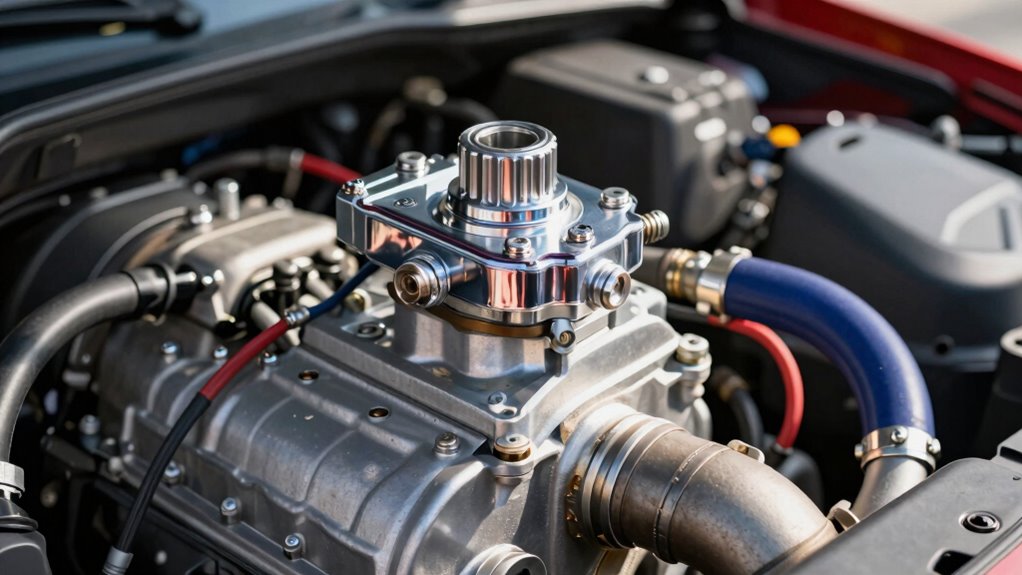

Many new turbo owners believe that installing a blow-off valve (BOV) will boost power or make the turbo spool faster, but that’s a myth. A BOV’s main job is to vent excess boost pressure and prevent compressor surge, not to increase performance or reduce turbo lag. If you keep believing these common myths, you might overlook how proper tuning and components really affect your turbo’s efficiency. Keep exploring to get the facts straight.

Get business pricing on garage and car supplies
- Business-only prices and quantity discounts
- Tax-exempt purchasing
- Multiple users, one account, clear invoices
Key Takeaways
- BOV does not increase boost pressure or improve turbo spool time.
- The sound from a BOV is purely aesthetic, not a power enhancement.
- Installing a BOV won’t reduce turbo lag or improve throttle response.
- Improper BOV tuning can cause boost leaks, negatively affecting performance.
- The main function of a BOV is venting excess pressure, not boosting engine power.
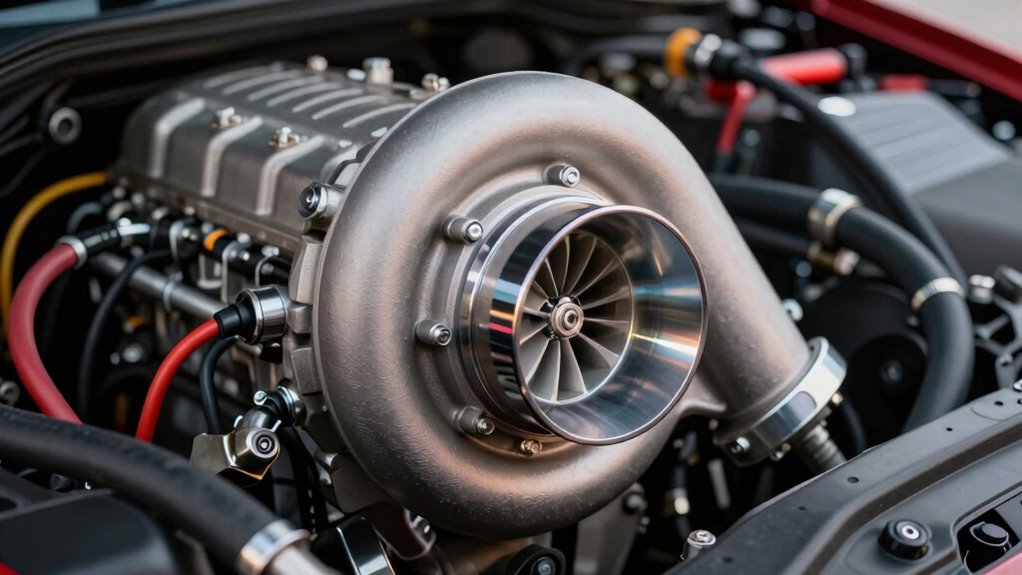
Blow-off valve’s primary job is to release excess boost pressure when you lift off the throttle, preventing compressor surge and protecting your turbo. It doesn’t directly influence turbo lag or markedly alter boost pressure during acceleration. Turbo lag, the delay between stepping on the gas and feeling the boost, is mainly caused by the turbo spool time—how long it takes for the turbo to spin up to operating speed. A BOV isn’t designed to reduce this lag. Instead, it’s more about managing pressure fluctuations and preventing compressor stall. Properly tuning your BOV can help avoid boost leaks and ensure it functions as intended. Additionally, the efficiency of your turbo system relies heavily on overall engine tuning and component quality, not just the BOV. Many newcomers believe that a BOV will give their car faster spool times or more immediate throttle response. That’s a myth. The BOV’s role is to vent excess pressure when you shift gears or lift off, not to boost the turbo’s acceleration. If anything, some BOVs can cause slight delays in throttle response if they’re not tuned properly, but they don’t directly affect the turbo’s spool time. boost pressure, which is the amount of compressed air delivered to your engine, depends on your turbo size, wastegate settings, and your engine tuning—factors that a BOV doesn’t change. A lot of people think installing a BOV increases boost pressure, but in reality, it’s designed to vent pressure safely rather than boost it. Proper installation techniques are essential to prevent unintended boost leaks and ensure optimal performance. Using a well-calibrated BOV can help maintain consistent boost levels during aggressive driving.
Another common myth is that a BOV makes your car sound better or louder. While some BOVs do produce a distinctive whooshing noise, this isn’t a performance upgrade. It’s purely aesthetic. The sound is created by venting pressurized air, which many enthusiasts find appealing, but it doesn’t translate into real power gains. In fact, using a BOV that’s not calibrated properly can sometimes cause minor boost leaks, which might reduce overall performance or cause inconsistent boost levels.
blow-off valve for turbocharged cars
As an affiliate, we earn on qualifying purchases.
As an affiliate, we earn on qualifying purchases.
Frequently Asked Questions
Do All Turbocharged Cars Require a Blow-Off Valve?
Not all turbocharged cars require a blow-off valve. If your car has a properly tuned bypass valve or recirculating system, you might not notice issues like turbo lag or compressor surge. However, a blow-off valve helps release excess pressure during throttle lift, preventing compressor surge and reducing turbo lag. Without it, you risk damaging the turbo or experiencing inconsistent performance, especially in high-boost setups.
Can a Blow-Off Valve Improve Horsepower?
Think of a blow-off valve like a brake for turbo noise— it controls sudden pressure releases, improving boost stability. While it doesn’t directly boost horsepower, it prevents compressor surge, which can improve overall performance. I once installed one, and noticed smoother acceleration and less turbo noise, making my drive more enjoyable. So, while it doesn’t add power directly, a blow-off valve helps maintain consistent boost, indirectly supporting better horsepower delivery.
Is It Safe to Remove the Blow-Off Valve?
Removing the blow-off valve isn’t safe because it can cause turbo noise issues and boost leaks, which may lead to compressor surge or damage. Without the valve, pressure isn’t properly released, risking harm to your turbocharger. You might enjoy a quieter ride temporarily, but in the long run, the increased stress on the system can result in costly repairs. It’s best to keep the blow-off valve installed for safety and performance.
How Often Should I Maintain My Blow-Off Valve?
You should perform maintenance on your blow-off valve every 10,000 to 15,000 miles or once a year, whichever comes first. Regular maintenance guarantees the best valve longevity and prevents issues like sticking or leaks. Check for dirt, oil, or debris that could impair performance. Cleaning and inspecting your valve during routine service helps keep your turbocharged engine running smoothly, extending its lifespan and maintaining peak performance.
Are Aftermarket Blow-Off Valves Better Than Stock Ones?
Aftermarket blow-off valves can be better than stock ones if you’re looking for tuning considerations and sound modifications. They often offer quicker response times, customizable boost control, and louder, more aggressive sounds. However, verify compatibility with your turbo system and check local regulations. Proper installation and tuning are essential to avoid leaks or driveability issues. If you want a personalized sound and improved performance, upgrading can be a worthwhile choice.
Conclusion
Don’t let these myths hold you back or mislead you. Know the truth, trust your turbo, and embrace the power of knowledge. Question what you hear, learn what’s real, and enjoy every boost like it’s your first. Because understanding the facts fuels confidence, fuels passion, and fuels your drive forward. Keep learning, keep questioning, and keep pushing—your turbo deserves nothing less than the truth.
Halloween Picks
halloween
As an affiliate, we earn on qualifying purchases.