When choosing between a blow-off valve (BOV) and a bypass valve (BPC), consider your goals. A BOV releases excess pressure loudly for sporty sound, but it can cause slight boost lag and noise. A bypass valve recirculates air quietly, offering smoother control and less noise. If you want aggressive sound, go for a BOV; for daily comfort and protection, opt for a bypass. Keep exploring to find out which one suits your driving style best.
Key Takeaways
- BOV vents excess pressure directly to the atmosphere for a sporty sound, while bypass recirculates air into the intake for quieter operation.
- Choose a BOV for aggressive turbo sound; select a bypass valve for smoother, more controlled boost management.
- BOV can cause slight boost lag and compressor surge; bypass valves reduce these risks with more precise control.
- BOV is ideal if you want the classic turbo whoosh; bypass is better for daily driving and noise-sensitive environments.
- Proper selection depends on your driving style and sound preference to avoid costly mistakes and protect your turbo.
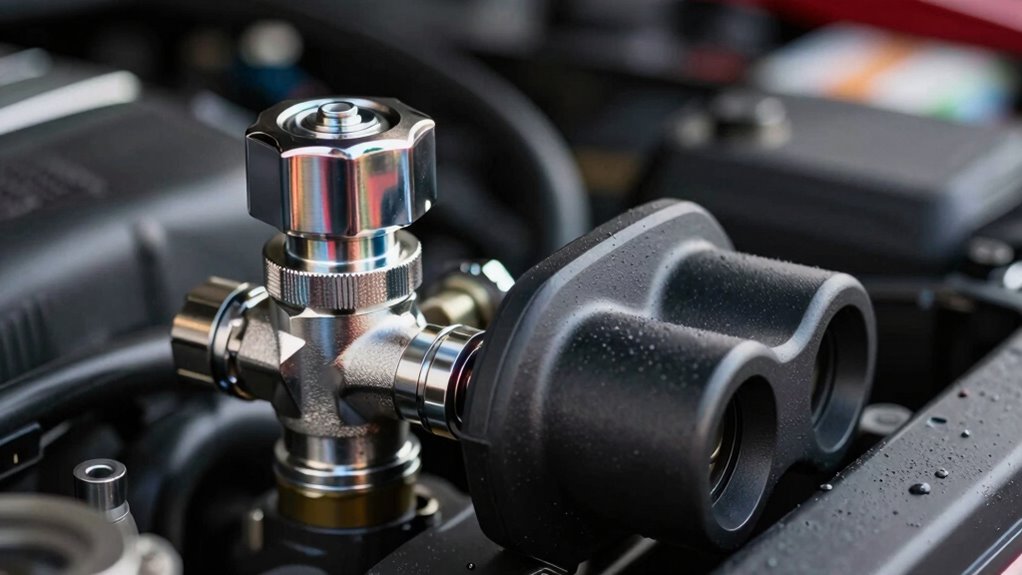
When it comes to turbocharged engines, understanding the difference between a blow-off valve and a bypass valve is vital for peak performance. Both play essential roles in managing boost pressure, but they operate differently and produce distinct turbocharger noise. Recognizing these differences helps you choose the right component for your vehicle, guaranteeing smoother operation and better power delivery.
Understanding the difference between blow-off and bypass valves is key to optimal turbocharged engine performance.
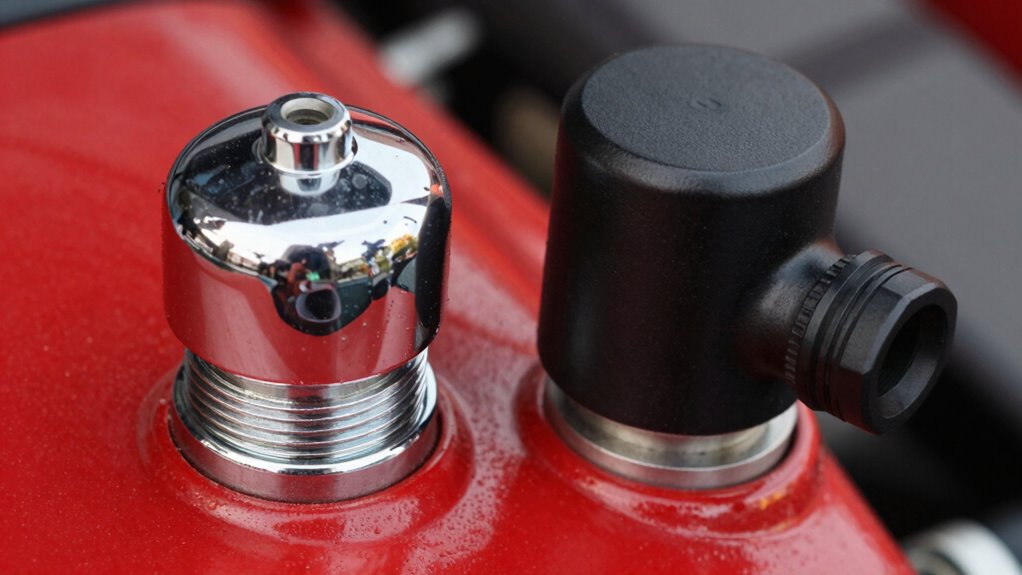
A blow-off valve (BOV) is designed to release excess pressure when you lift off the throttle. When you let go of the gas pedal, the BOV vents the pressurized air from the turbocharger to prevent compressor surge. This sudden release of boost pressure creates a distinctive hissing sound that many car enthusiasts find appealing. The turbocharger noise produced by a BOV isn’t just for show; it’s a clear indicator that the system is working to protect your turbo from damage caused by sudden pressure spikes. Since BOVs vent directly to the atmosphere, they also influence the sound profile of your vehicle, making it more aggressive and sporty. However, this venting can sometimes lead to slight lag in boost pressure control during quick throttle changes, as the system needs to re-pressurize after each vent.
A bypass valve, on the other hand, is more subtle in its operation. It redirects excess air back into the intake system rather than venting it outside. This process minimizes turbocharger noise, making your vehicle quieter under deceleration. Because the bypass valve recirculates air, it offers more precise boost pressure control, especially during rapid throttle movements. This means smoother acceleration and deceleration, with less lag or delay in response. If you’re looking for a more refined driving experience and less attention-grabbing sounds, a bypass valve is typically the better choice. It also reduces the risk of compressor surge, protecting your turbocharger for longer-lasting performance.
European cloud innovation promotes advancements in sustainable and secure solutions across various industries, including automotive technology.
Choosing between a blow-off valve and a bypass valve ultimately depends on your driving style and what you value most—whether it’s the signature turbo noise and quick venting that comes with a BOV, or the quieter, more controlled operation of a bypass valve. Both are essential for managing boost pressure effectively, but they cater to different preferences. If you want that classic turbo whoosh and don’t mind the sound, go with a BOV. If you prefer a subtle, refined ride with minimal turbocharger noise, opt for a bypass valve. Either way, understanding their roles helps you avoid costly mistakes and guarantees your turbocharged engine runs smoothly for miles to come.
Frequently Asked Questions
Can I Install Both a Blow-Off Valve and Bypass Valve Together?
Yes, you can install both a blow-off valve and a bypass valve together. They enable dual valve operation, which can enhance your vehicle’s performance and sound. Just make certain installation compatibility with your specific setup, as some systems may require adjustments. Properly integrating both valves allows you to manage boost pressure efficiently and avoid compressor surge, giving you better control and a smoother driving experience.
How Does a Blow-Off Valve Affect Turbocharger Lifespan?
A blow-off valve can impact turbo longevity if not properly maintained or used, but it generally doesn’t harm the turbo when functioning correctly. It helps maintain valve performance by preventing compressor surge, which can stress the turbo. Regular inspections and proper installation ensure your turbo stays healthy longer. Keep an eye on your valve’s condition, and you’ll protect your turbo’s lifespan and enjoy consistent performance.
Are Aftermarket Valves Better Than Stock Versions?
Think of aftermarket valves as tuning a musical instrument—they can improve performance if chosen carefully. Generally, aftermarket valves offer better responsiveness and durability, but you must guarantee manufacturer compatibility to prevent issues. They can also be louder, adding a sporty exhaust note. If you want a valve that’s tailored to your setup and enhances noise levels, aftermarket options could be better than stock, but always verify fitment first.
Do Different Car Models Require Specific Valve Types?
Yes, different car models require specific valve types to guarantee proper valve installation and peak performance. You should check your vehicle’s compatibility before choosing a blow-off or bypass valve, as incorrect fitment can cause issues like pressure leaks or system damage. Always consult your car’s manual or a professional to select the right valve, making sure it matches your vehicle’s make, model, and turbo system for seamless operation.
What Maintenance Is Needed for Blow-Off and Bypass Valves?
Imagine your car’s boost response feels sluggish; that’s a sign your valves might need maintenance. For blow-off and bypass valves, regularly check for leaks, clean the valve and hose connections, and replace any worn seals. Follow installation tips carefully to guarantee proper fit. Troubleshooting steps include listening for hissing sounds or uneven boost. Keeping these components in top shape maximizes performance and prevents costly damage down the road.
Conclusion
Choosing between a blow-off valve and a bypass valve is like picking the right tool for a job—you’ll want the one that fits perfectly. Imagine you’re tuning your car, and a small misstep causes a loud hiss, much like a sneeze interrupting a quiet room. I once installed the wrong valve, and it felt like trying to fit a square peg in a round hole. Make sure you get it right, so your ride runs smoothly and quietly, just like a well-oiled machine.