
Upgrading your brake lines to steel braided or Teflon-lined hoses reduces flex and improves pedal feel, making your brakes more responsive. Using high-performance brake fluids like DOT 4 or DOT 5.1 with proper system flushing can handle higher temps and prevent fade. Confirm compatibility with your vehicle and install correctly for maximum benefit. Want to know how these upgrades make a real difference? Keep exploring to get all the details.

Get business pricing on garage and car supplies
- Business-only prices and quantity discounts
- Tax-exempt purchasing
- Multiple users, one account, clear invoices
Key Takeaways
- Upgrade to steel braided or Teflon-lined hoses for improved durability and more responsive braking.
- Choose high-performance brake fluids like DOT 4 or DOT 5.1 to handle higher temperatures and enhance stopping power.
- Ensure fluid compatibility by performing a complete system flush when switching to a different brake fluid type.
- Properly bleed the brake system after installing new lines or fluids to eliminate air and maximize braking efficiency.
- Regular maintenance and use of quality components prevent brake fade and maintain optimal stopping performance.
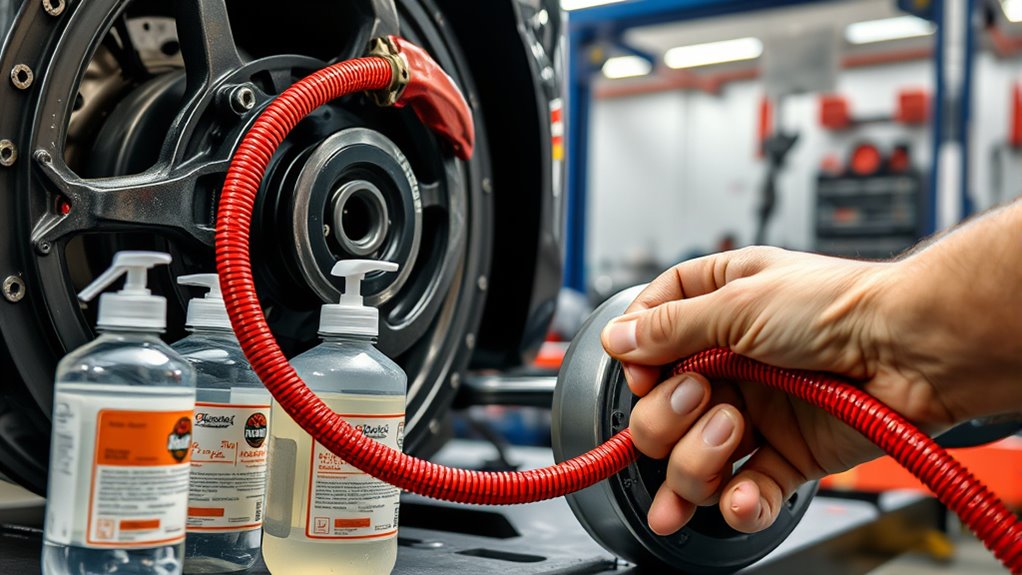
Upgrading your brake lines and fluids is a crucial step to guarantee your vehicle’s braking system performs reliably and safely, especially if you’ve modified your car or driven aggressively. When it comes to brake line materials, you’ll find options like rubber, steel braided, and Teflon-lined hoses. Rubber lines are common but tend to degrade over time and are less resistant to high temperatures. Steel braided lines, on the other hand, offer superior durability, reduced expansion under pressure, and better resistance to wear and tear. Teflon-lined hoses provide excellent flexibility and heat resistance, making them a popular choice for performance applications. Choosing the right material depends on your driving style and the demands you place on your braking system, but investing in high-quality brake lines ensures better pedal feel and more consistent braking performance. Additionally, selecting brake lines that meet industry standards and certifications can further enhance safety and reliability.
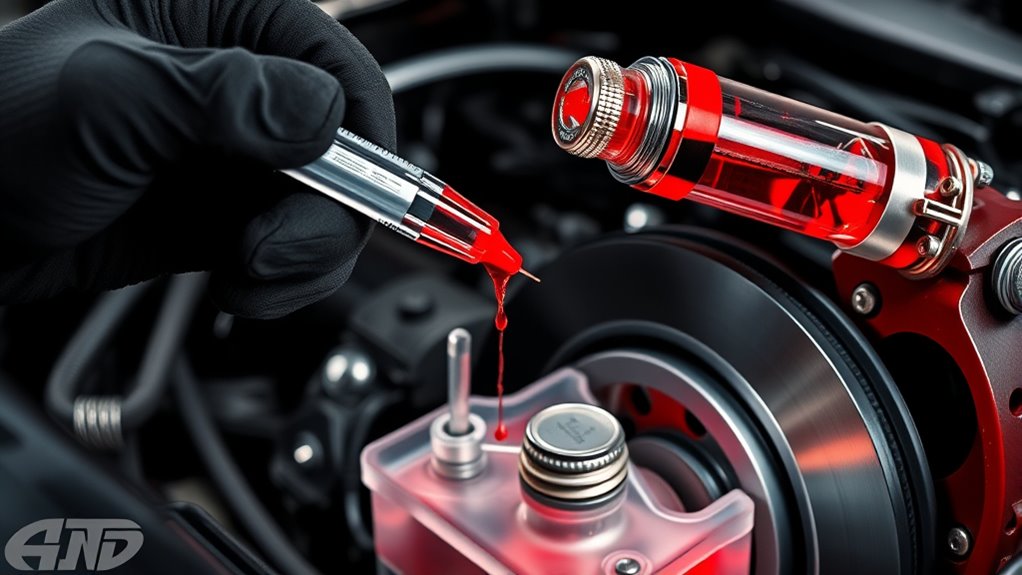
Fluid compatibility is equally important. Not all brake fluids are created equal, and mixing incompatible types can lead to reduced braking efficiency, corrosion, or even system failure. Most vehicles are designed to use DOT 3 or DOT 4 brake fluids, but if you upgrade to a high-performance fluid like DOT 5.1, you’ll benefit from higher boiling points and better thermal stability. However, switching between different types requires a complete flush of the system to prevent chemical reactions that could compromise your brakes. Using the right fluid ensures your brake system operates at peak performance and minimizes the risk of vapor lock or brake fade during intense braking.
When upgrading, you should also focus on ensuring proper fluid compatibility. This means checking your vehicle’s specifications and selecting a fluid that meets or exceeds those requirements. For example, if your car was factory-filled with DOT 3, switching to DOT 4 or DOT 5.1 can improve heat dissipation without risking damage to seals or components. Always bleed your brake system thoroughly after replacing lines or fluids, as air pockets can substantially diminish braking power. Remember, even the best brake lines won’t perform perfectly if your fluid isn’t compatible or if air remains trapped in the system. Incorporating sustainable manufacturing practices can also contribute to the overall quality and environmental impact of your braking system upgrades.
steel braided brake lines for cars
As an affiliate, we earn on qualifying purchases.
As an affiliate, we earn on qualifying purchases.
Frequently Asked Questions
Can I Install Aftermarket Brake Lines Myself?
Yes, you can install aftermarket brake lines yourself if you have the right tools and knowledge. Make sure to verify brake line compatibility with your vehicle to guarantee proper fit. You’ll need basic installation tools like wrenches, pliers, and possibly a brake line flare tool. Follow the manufacturer’s instructions carefully, and take safety precautions. If you’re unsure, consulting a professional is always a smart choice.
How Often Should Brake Fluid Be Replaced?
Did you know brake fluid can absorb moisture over time, reducing its effectiveness? You should replace your brake fluid every 2 to 3 years or based on your vehicle’s fluid change interval. The brake fluid lifespan varies, but regularly changing it guarantees ideal brake performance and safety. Don’t ignore signs like spongy brakes or decreased stopping power; these indicate it’s time for a fluid change.
Will Upgrading Brake Lines Improve ABS Performance?
Yes, upgrading your brake lines can improve ABS performance by reducing flex and providing more consistent brake pressure. A brake line upgrade guarantees the hydraulic system responds faster and more effectively during ABS activation, enhancing overall braking performance. When combined with fresh brake fluid, these upgrades help your ABS system work more efficiently, giving you better control and shorter stopping distances, especially in emergency situations.
Are Braided Stainless Steel Brake Lines More Durable?
They say, “A chain is only as strong as its weakest link,” and the same applies to brake lines. Braided stainless steel brake lines are more durable than rubber ones, thanks to their braided durability and steel longevity. They resist expansion, corrosion, and wear better, ensuring consistent brake performance over time. If you want reliable stopping power, upgrading to braided stainless steel lines is a smart move for lasting strength.
What Signs Indicate Brake Fluid Contamination?
You’ll notice brake fluid contamination if the fluid changes color to dark or murky, or if it develops a burnt smell. These signs indicate dirt, moisture, or debris have entered the system. Also, if your brake pedal feels spongy or sinks when pressed, it’s a warning that the fluid may be compromised. Regularly checking the brake fluid color and smell helps you catch issues early and maintain ideal braking performance.
Conclusion
Upgrading your brake lines and fluids is like giving your car a fresh set of lungs—your stopping power becomes sharper and more reliable. With these improvements, you’ll feel more confident commanding your vehicle’s brakes, especially when every second counts. Think of it as tuning your car’s heartbeat, ensuring it responds swiftly and smoothly. Take these steps, and watch your stopping power transform from a gentle tap to a commanding halt, keeping you safer on every drive.
Halloween Picks
halloween
As an affiliate, we earn on qualifying purchases.