

To make your steering feel more honest, focus on chassis stiffness upgrades like adding strut bars, subframe braces, or a full roll cage to reduce flex. Upgrading sway bars and coilovers also improves rigidity, resulting in more direct feedback and better control. Weight reduction and proper suspension tuning further enhance responsiveness. These modifications create a stable platform for precise steering and handling. Keep exploring to discover even more ways to maximize your driving experience.
Key Takeaways
- Installing strut bars and subframe braces to unify chassis components and reduce flex.
- Upgrading sway bars and coilovers to enhance rigidity and minimize body roll.
- Adding full roll cages for comprehensive structural reinforcement.
- Reducing weight from high points to decrease chassis load and improve response.
- Ensuring proper alignment and suspension tuning for optimal handling and steering feedback.
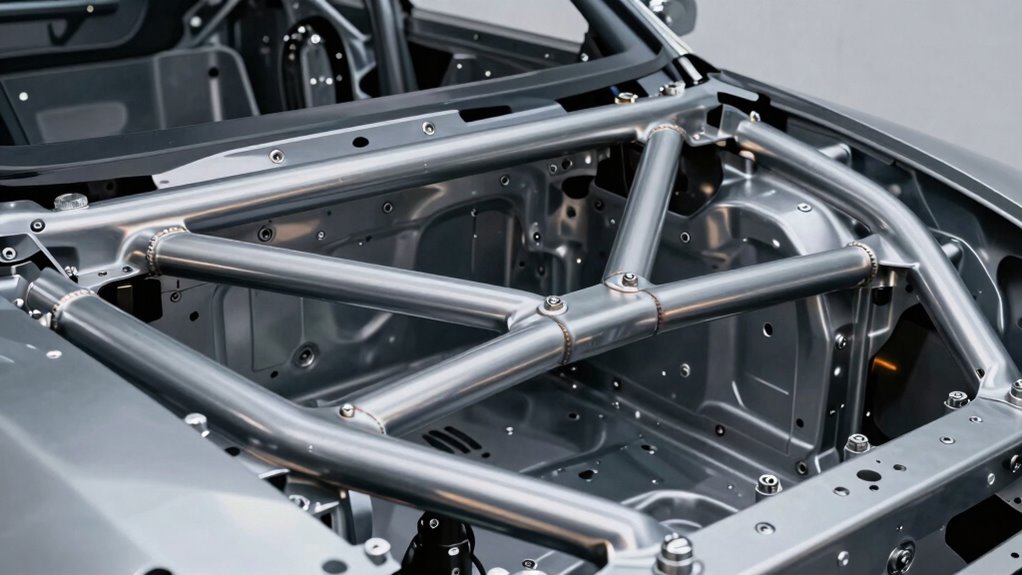
Are you looking to improve your vehicle’s handling and stability? Upgrading your chassis stiffness is a smart move if you want more precise steering and a more connected driving feel. When your chassis is stiffer, it resists flexing under load, which translates into better control and sharper responsiveness. One of the first steps you can take is suspension tuning. By adjusting or upgrading your suspension components—like sway bars, strut braces, or coilovers—you can significantly enhance chassis rigidity. These modifications reduce body roll and help your tires maintain better contact with the road, giving you a more honest steering experience.
Upgrading suspension components enhances chassis rigidity, reduces body roll, and delivers more precise, honest steering.
Weight reduction also plays a critical role in improving chassis stiffness and overall handling. Removing unnecessary weight from the car, especially from high up in the vehicle, decreases the load on your suspension and chassis. This not only lightens the vehicle but also makes it more agile. Lighter cars respond more quickly to steering inputs, making your driving feel more direct and predictable. Combining weight reduction with suspension tuning can dramatically transform how your car handles, especially during aggressive maneuvers or spirited driving.
The benefits of increased chassis stiffness extend beyond just steering feel. When your chassis is more rigid, it minimizes flex under cornering loads, helping your suspension do its job more effectively. This leads to more precise feedback through the steering wheel, so you’re better informed about what the tires are doing. It also reduces unpredictable handling quirks, like understeer or oversteer, by providing a stable platform for your suspension to work from. Additionally, chassis reinforcement parts like strut bars, subframe braces, or even full roll cages can further improve structural integrity. Incorporating structural stiffening techniques can amplify these benefits by creating a more unified chassis structure.
To achieve this, many enthusiasts opt for chassis reinforcement parts like strut bars, subframe braces, or even full roll cages if they’re into track days or racing. These components tie together different parts of the chassis, creating a unified structure that resists flexing. Proper alignment adjustments can also optimize handling by ensuring that all suspension components work harmoniously. Combined with suspension tuning and weight reduction, these upgrades make your steering feel more honest—more in tune with what’s happening on the road or track.
Ultimately, upgrading your chassis stiffness isn’t just about making your car faster; it’s about making your driving experience more confident and enjoyable. When you feel your car respond predictably and directly to your inputs, you gain a new level of control and trust. Whether you’re carving mountain roads or pushing your limits on a track, these upgrades make your car’s handling sharper, more precise, and infinitely more satisfying.
As an affiliate, we earn on qualifying purchases.
Frequently Asked Questions
How Do Chassis Upgrades Impact Overall Vehicle Safety?
Chassis upgrades boost your vehicle’s safety by improving handling, stability, and response during maneuvers. These enhancements also provide aerodynamic benefits, reducing drag and increasing efficiency, while aesthetic improvements make your car look sharper. When you invest in quality chassis components, you create a more predictable driving experience, helping you avoid accidents. Overall, these upgrades strengthen safety, boost confidence, and guarantee your vehicle performs reliably in various driving conditions.
Are There Any Trade-Offs With Increased Chassis Stiffness?
Increasing chassis stiffness enhances handling and steering feedback, but it can also bring trade-offs. You might notice reduced ride comfort as the stiffer chassis transmits more road vibrations. Material compatibility becomes vital; using incompatible materials can cause noise or damage. While your vehicle feels more precise and responsive, be aware that this firmness may make long drives less comfortable, so balancing stiffness with ride quality is essential for your driving experience.
What Are the Costs Associated With Chassis Stiffness Upgrades?
The costs of chassis stiffness upgrades include material selection, which can be pricey if you choose high-quality, lightweight options like carbon fiber or aluminum. Installation may also require specialized labor, adding to expenses. Keep in mind, these upgrades might impact your vehicle’s warranty, especially if aftermarket parts cause issues. Overall, expect to invest a few hundred to several thousand dollars, depending on the scope and materials used.
How Long Does Installation Typically Take?
Installation usually takes about 4 to 8 hours, depending on your suspension compatibility and the specific upgrades you choose. You’ll want to set aside a full day for the process to guarantee proper fitting and safety checks. During installation, your ride comfort might temporarily decrease, but once complete, you’ll notice a more honest steering feel and improved chassis stiffness, enhancing your overall driving experience.
Can Chassis Upgrades Improve Off-Road Performance?
Chassis upgrades can turn your off-road adventures into a smoother ride, like steering a boat through choppy waters. By focusing on suspension tuning and choosing the right tires, you enhance stability and traction. These improvements help your vehicle handle uneven terrain better, giving you more control and confidence. Upgrading your chassis fundamentally fortifies your rig’s backbone, making off-road performance more precise and enjoyable.
Conclusion
Upgrading your chassis stiffness truly transforms your steering feel, making it more honest and responsive. As you enhance rigidity, you’ll notice better handling and confidence on the road. Remarkably, studies show that even a 10% increase in chassis stiffness can improve steering response by up to 15%. So, don’t overlook these upgrades—they’re a smart investment in your driving experience, giving you not just better control, but a more connected and enjoyable ride every time you hit the road.