
Many believe that adjusting ride height or preload is the key to better handling, but that’s a myth. The real game-changer is fine-tuning your damping settings, which control how your suspension responds to bumps and turns. Correct damping adjustments can dramatically improve ride quality, stability, and cornering performance. If you want to master your coilover setup, understanding how to adjust damping is essential—keep going to discover what truly makes a difference.
Key Takeaways
- Damping settings directly influence ride comfort, handling, and stability, making them more impactful than preload or ride height adjustments.
- Proper damping adjustment helps control suspension movement during bumps and turns, improving vehicle responsiveness.
- Fine-tuning damping provides more precise and noticeable handling improvements compared to static height or preload changes.
- Damping settings are critical for balancing grip and comfort, especially in aggressive driving or track conditions.
- Misadjusting damping can worsen ride quality and handling, emphasizing its importance over common misconceptions about preload and height.
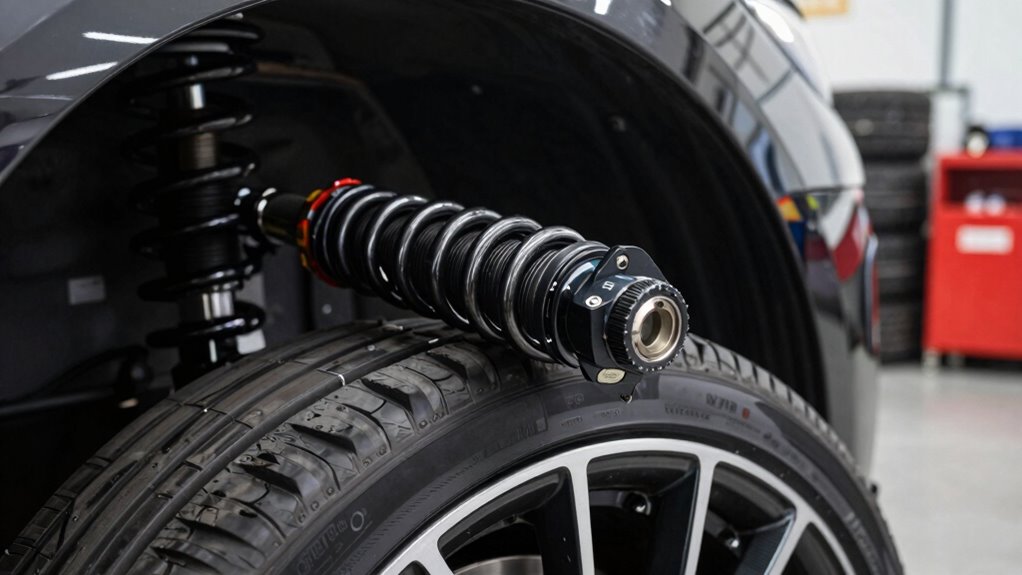
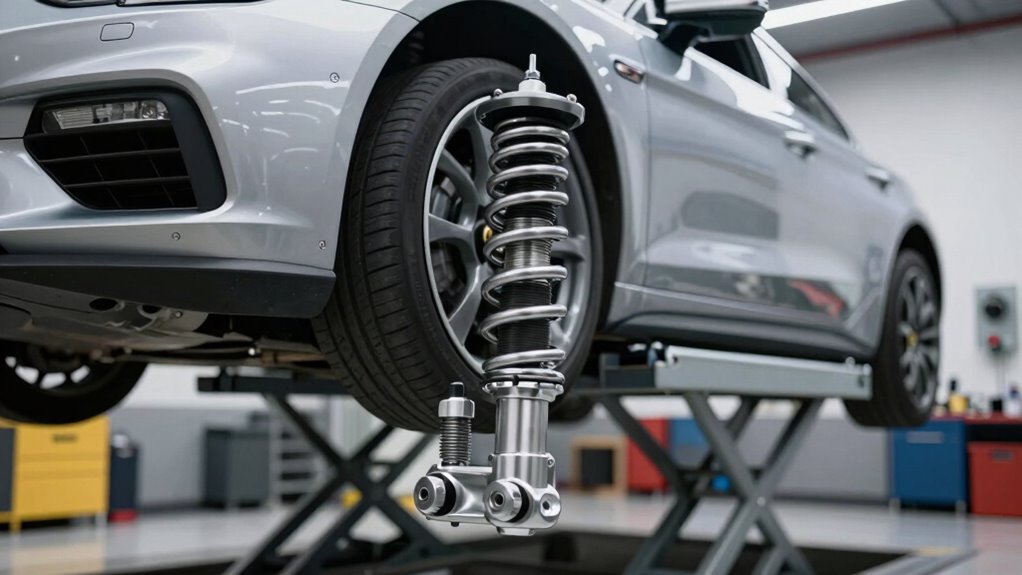
Many car enthusiasts believe that adjusting coilovers is a simple way to dramatically improve handling and ride quality, but this is a misconception. While tweaking coilovers can influence your vehicle’s feel, not all adjustments have the impact you might expect. A common mistake is focusing solely on things like spring preload or ride height, assuming they are the key to better performance. In reality, these adjustments are often misunderstood and can even cause more harm than good if not done correctly. Spring preload is often misunderstood as a way to stiffen or soften your suspension. It’s the amount of tension applied to the coil spring before the weight of the car compresses the suspension. Many think increasing preload makes the car handle sharper, but in truth, it mainly affects ride comfort and initial suspension response. Excessive preload can lead to a harsher ride and reduce the suspension’s ability to absorb bumps, which compromises handling rather than improves it. Conversely, too little preload can cause excessive suspension travel, leading to inconsistent behavior during cornering. Ride height adjustment is another popular tweak. Lowering your car is often associated with improved handling and aesthetics. However, dropping the ride height without considering other factors can actually hurt your vehicle’s performance. Lowering too much shifts the suspension geometry and can cause alignment issues, uneven tire wear, and a drop in overall grip. It might look aggressive, but if you don’t make corresponding adjustments to camber or alignment, your handling could suffer. A proper ride height setting maintains optimal suspension geometry, ensuring your tires make consistent contact with the road. The real key to effective coilover adjustments lies in understanding damping settings, which control how quickly your suspension responds to bumps and turns. Damping adjustments directly influence handling, stability, and comfort. While spring preload and ride height are easy to tweak, they don’t provide the same level of control. Many overlook this because they focus on visual or initial modifications rather than tuning how the suspension reacts dynamically. It’s tempting to think that small changes in preload or ride height will transform the car’s feel, but the truth is, fine-tuning damping settings yields more noticeable and predictable improvements. Remember, suspension tuning is a complex process that requires careful consideration of multiple factors to truly enhance performance.
Frequently Asked Questions
Do Coilover Damping Adjustments Affect Tire Wear?
Yes, coilover damping adjustments can affect tire wear. When you change damping settings, you influence how the suspension reacts to bumps and turns, which impacts ride comfort and tire contact. If damping is too stiff or too soft, uneven tire wear may occur due to improper load distribution. Adjusting damping to match your spring rate helps maintain even tire contact, prolonging tire life and improving overall handling.
Can Improper Damping Settings Cause Handling Issues?
Think of your suspension as the heartbeat of your ride—improper damping settings can cause handling issues, like a dancer losing rhythm. When you set damping too stiff or soft, you might notice increased suspension noise and decreased ride comfort, making your vehicle less predictable. These issues can compromise control, especially during sharp turns or rough roads. Proper damping ensures smooth handling, reducing noise and enhancing overall driving confidence.
Are Damping Adjustments Vehicle-Specific or Universal?
Damping adjustments are vehicle-specific, so you can’t rely on universal settings. Your vehicle’s compatibility and suspension design influence the ideal damping setup. To get the best handling, you should use proper adjustment techniques tailored to your car. Experiment with small changes and test drive to see how each adjustment affects performance. This guarantees you’re optimizing damping settings for your vehicle, rather than applying generic solutions that may not work well.
How Often Should Damping Settings Be Recalibrated?
You should recalibrate damping settings whenever your driving conditions change or after a significant suspension or tire alignment adjustment. Studies show that improper suspension geometry can reduce tire lifespan by up to 20%. Regularly checking and adjusting damping ensures ideal handling, safety, and tire wear. Keep an eye on suspension performance and revisit damping settings if you notice changes in ride quality or handling, especially when your tire alignment shifts.
Do Damping Settings Impact Fuel Efficiency?
Yes, damping settings can impact your fuel economy and ride comfort. When damping is too soft or too stiff, your suspension works inefficiently, causing increased rolling resistance and higher fuel consumption. Properly adjusted damping ensures smoother ride comfort and maximum energy use, helping you save fuel. Regularly calibrate your coilovers to maintain the right damping settings, so you enjoy better fuel efficiency and a comfortable driving experience.
Conclusion
Remember, tuning your coilovers isn’t about chasing mythical settings that promise perfection. Like Icarus soaring too close to the sun, chasing elusive damping perfection can lead you astray. Focus instead on understanding how your adjustments affect handling—staying grounded in real-world feedback. The true art lies in finding balance, not in chasing after impossible ideals. Keep your feet on the ground, and let experience guide your journey, not myths.