
A custom intake manifold helps you tune your engine’s powerband by optimizing airflow for specific RPM ranges. You can shape the design to boost high RPM horsepower or improve low-end torque, depending on your goals. Using the right materials also manages heat transfer, keeping intake air cooler and denser. Fine-tuning runner length, diameter, and shape allows you to maximize performance. Keep exploring to discover how these adjustments can release your engine’s full potential.
Key Takeaways
- Customize intake manifold shape and runner length to optimize airflow at specific RPM ranges for desired powerbands.
- Use lightweight, thermally resistant materials to reduce heat soak and maintain cooler, denser intake air.
- Fine-tune diameter and runner design to enhance low-end torque or high-end horsepower depending on performance goals.
- Minimize airflow turbulence and resistance through precise design adjustments, improving engine responsiveness and efficiency.
- Align intake tuning with engine characteristics to unlock maximum power and torque within targeted RPM ranges.
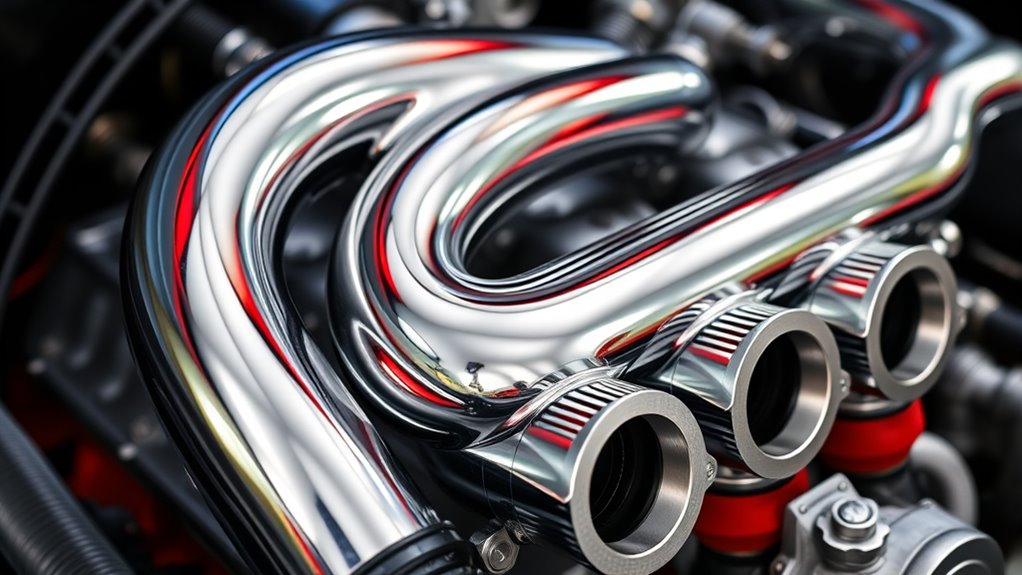
Have you ever wondered how custom intake manifolds can boost your engine’s performance? The secret lies in their ability to optimize airflow and tailor the engine’s powerband to your driving needs. When you choose a custom intake manifold, you’re essentially designing a pathway that guides air into your engine more efficiently, which can significantly improve horsepower, torque, and throttle response. The key to this enhancement is airflow optimization—crafting a design that minimizes turbulence and resistance, allowing your engine to breathe more freely. This means less energy is wasted fighting against airflow restrictions, translating into more power delivered to the wheels.
Material selection plays a critical role in achieving this airflow optimization. The right materials can reduce heat transfer, which is essential because cooler, denser air improves combustion efficiency. Many high-performance manifolds are made from lightweight materials like aluminum or composite plastics, which not only help keep the intake air cooler but also reduce overall weight. Aluminum, in particular, is popular for its durability, ease of machining, and excellent heat dissipation qualities. When you opt for a material that resists heat soak, you guarantee that the incoming air remains as cool and dense as possible, directly impacting your engine’s power output.
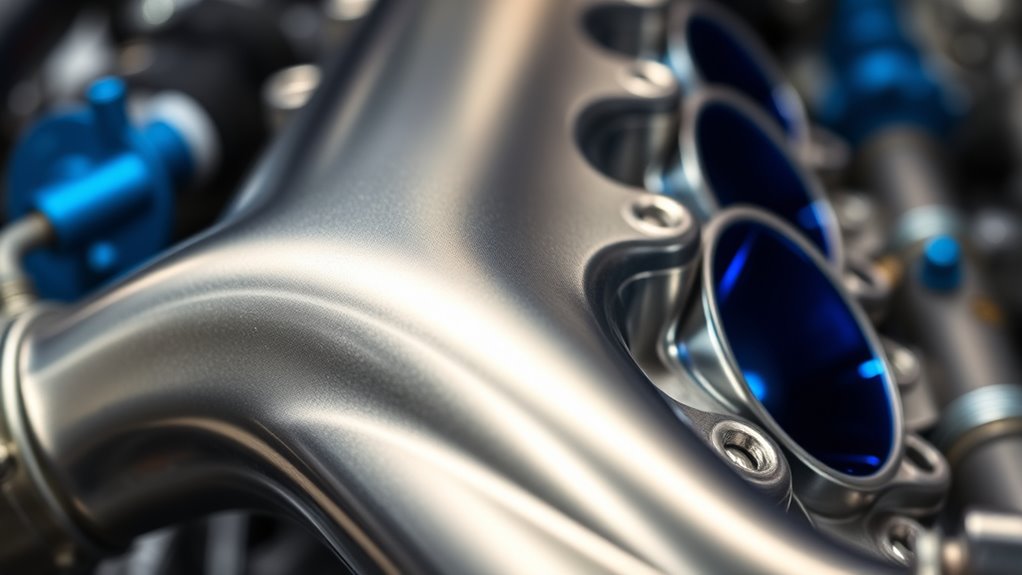
Designing a custom intake manifold also allows you to tune the flow characteristics to match your engine’s specific powerband. For instance, if you’re aiming for peak power at higher RPMs, the manifold can be shaped to boost airflow at those speeds. Conversely, if low-end torque is your priority, the design can emphasize airflow at lower RPM ranges. This level of tuning is difficult to achieve with stock manifolds, which are often built for broad compatibility rather than specialized performance. By customizing the length, diameter, and runner shape, you can fine-tune how air enters the cylinders, leading to more precise control over your engine’s breathing and power delivery.
In addition, understanding the importance of performance tuning can help you make informed decisions about your modifications. Investing in a custom intake manifold isn’t just about adding shiny components to your engine bay. It’s about strategically improving airflow, selecting materials that optimize thermal properties, and tailoring the design to fit your performance goals. When you get these elements right, you unlock the full potential of your engine, making it more responsive, powerful, and efficient across your desired RPM range. This personalized approach to intake design ensures that every breath your engine takes is maximized, giving you that edge on the street or track.
Frequently Asked Questions
How Do Custom Intake Manifolds Affect Fuel Economy?
Custom intake manifolds can improve your vehicle’s fuel efficiency by optimizing airflow to the engine. When designed properly, they enhance airflow, reducing fuel consumption during operation. You’ll notice better combustion and smoother acceleration, which means you use less fuel overall. By tuning your intake manifold for your specific engine setup, you guarantee maximum airflow optimization, leading to increased fuel economy and a more efficient driving experience.
Can Custom Intake Manifolds Be Used on Turbocharged Engines?
Did you know that over 60% of turbocharged engines benefit from custom intake manifolds? Yes, custom intake manifolds can be used on turbocharged engines, enhancing airflow and efficiency. Turbo compatibility depends on intake design; a well-crafted manifold optimizes boost response and power delivery. If you tailor the intake to your turbo, you can see significant gains in performance, making it a smart upgrade for your turbocharged setup.
What Materials Are Best for Durability in Intake Manifolds?
For durability in intake manifolds, aluminum is your best bet because it offers excellent material durability and resists corrosion, extending your intake lifespan. Cast iron is also highly durable, though heavier, making it suitable for heavy-duty applications. Plastic or composite materials are lighter and resistant to heat, but may not last as long under extreme conditions. Choose based on your performance needs and desired intake lifespan.
How Does Port Size Influence Tuning for Different RPM Ranges?
You should consider port size carefully because it directly impacts airflow optimization and tuning for different RPM ranges. Larger ports improve airflow at high RPMs, boosting top-end power, while smaller ports enhance low-end torque by increasing velocity. Adjusting port sizing allows you to fine-tune your intake manifold’s performance, ensuring ideal powerband across your engine’s RPM spectrum. Proper port sizing is key to achieving the desired balance between power and efficiency.
Are There Compatibility Issues With Existing Engine Components?
You might face engine compatibility issues if your custom intake manifold doesn’t align with your existing engine components. Confirm component integration is seamless by checking fitment and specifications, especially with your intake ports, throttle body, and sensors. Mismatched parts can cause performance drops or damage. Double-check compatibility details before installation to avoid costly errors, and consider consulting a professional to optimize integration and maintain your engine’s reliability and power.
Conclusion
When you tailor your intake manifold, you’re tuning for torque, traction, and total thrill. Take the time to test, tweak, and trust the process—your powerband will prosper. Precision in planning paves the path to peak performance, proving that small changes can create significant strides. So, stay savvy, stay spirited, and see your setup succeed as you master the art of manifold modification. Your perfect powerplant is just a tweak away!