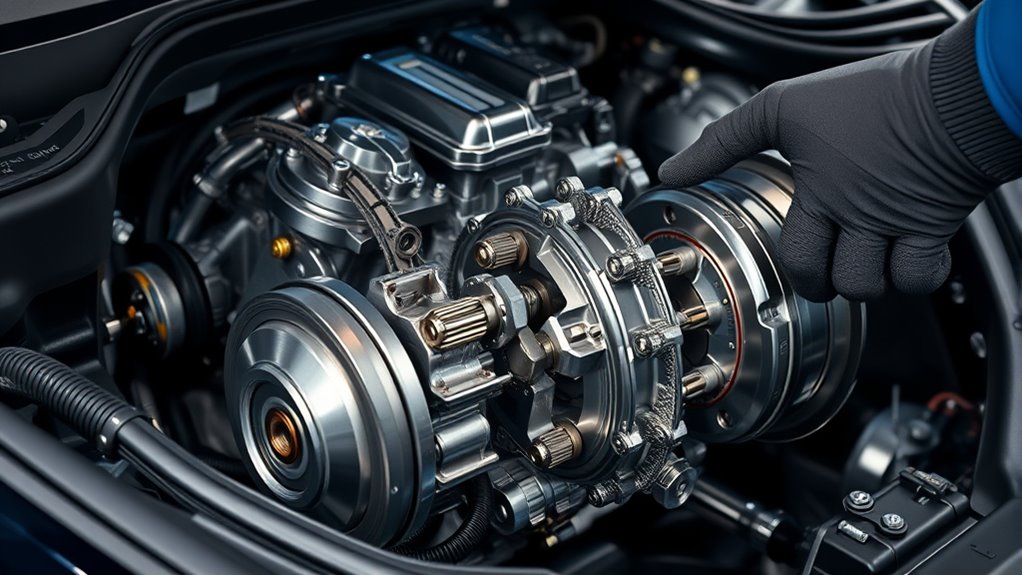

Upgrading a CVT transmission offers limited options. You can improve performance slightly by changing to high-quality or synthetic fluids and considering software tuning for better shift response. Hardware modifications like pulleys or belts are risky, complex, and may void warranties. Keep in mind, CVTs are designed for efficiency, so major upgrades can harm durability. If you explore further, you’ll discover how these limits shape the best ways to enhance your CVT’s longevity and performance.

Get business pricing on garage and car supplies
- Business-only prices and quantity discounts
- Tax-exempt purchasing
- Multiple users, one account, clear invoices
Key Takeaways
- Upgrading transmission fluids with high-quality or synthetic options can improve performance and extend CVT lifespan.
- Software tuning may optimize shift points and responsiveness but must be done carefully to avoid system damage.
- Hardware modifications like pulley or belt upgrades are complex, risky, and often void warranties.
- CVTs are highly optimized systems; major upgrades are limited and can compromise reliability and durability.
- Minor improvements are possible, but comprehensive modifications require professional guidance to prevent damage.

Continuously Variable Transmissions (CVTs) are known for providing smooth acceleration and improved fuel efficiency, but many drivers seek ways to enhance their performance and durability. If you’re looking to get more out of your CVT, understanding the possibilities and limitations of upgrades is essential. While CVTs are designed to optimize efficiency and smoothness, you might wonder if it’s possible to boost their performance gains or make them more durable over time.
One common approach is upgrading the transmission fluid. Using high-quality, manufacturer-recommended fluids can considerably impact both performance and longevity. Better lubricants reduce wear and tear, leading to durability improvements, especially under demanding driving conditions. Some drivers opt for synthetic fluids that can withstand higher temperatures, which helps maintain consistent operation and minimizes overheating risks. This simple upgrade often results in smoother shifting and can extend the life of internal components.
Upgrading to high-quality, manufacturer-recommended fluids enhances CVT performance and extends component lifespan.
Another option involves installing a performance tune or recalibration. Although CVTs are more limited than traditional automatics in terms of tuning, some manufacturers or aftermarket specialists offer software updates that alter shift points and response characteristics. These modifications can provide noticeable performance gains, making acceleration feel more responsive and engaging. However, it’s vital to remember that not all CVTs are designed for aggressive tuning, and pushing the transmission beyond its intended parameters can jeopardize durability. Always consult with professionals to verify that any software adjustments align with your vehicle’s capabilities.
Some enthusiasts consider hardware modifications, such as upgrading pulleys or belts, but these are generally less common and more complex. CVTs rely on a set of pulleys and a belt or chain to vary gear ratios seamlessly. Altering these components can theoretically improve performance, but such modifications often require extensive expertise and may void warranties. Furthermore, they can introduce additional wear if not precisely engineered, potentially reducing durability rather than improving it.
It’s important to recognize the inherent limitations of upgrading a CVT. Unlike traditional transmissions, CVTs are highly integrated and rely on intricate components optimized for efficiency. Pushing these systems beyond their design limits can accelerate wear and diminish durability, sometimes leading to costly repairs. Thus, while minor upgrades like fluid improvements or software tuning can offer performance gains and some durability benefits, major modifications should be approached with caution.
CVT transmission fluid high quality synthetic
As an affiliate, we earn on qualifying purchases.
As an affiliate, we earn on qualifying purchases.
Frequently Asked Questions
Can I Install a Different Type of Transmission in My Vehicle?
You can install a different type of transmission in your vehicle, but it’s not always straightforward. Aftermarket options are available, but compatibility challenges often arise because transmissions are designed specifically for certain makes and models. You’ll need to consult experts to confirm the new transmission fits properly, works with your vehicle’s electronics, and doesn’t compromise safety or performance. Proper planning and professional installation are essential for a successful upgrade.
What Are the Signs of CVT Transmission Failure?
Like a warning bell ringing in the distance, your CVT might be signaling trouble. You’ll notice signs such as transmission fluid leaks, which indicate a problem, or unusual noises like whining or slipping sounds. If your vehicle hesitates or struggles to accelerate, those are red flags too. Pay attention to these signs, and have your transmission checked promptly to prevent further damage and costly repairs.
How Long Does a CVT Transmission Upgrade Typically Take?
A CVT transmission upgrade typically takes about 1 to 3 days, depending on your vehicle and the complexity of the upgrade. You’ll notice benefits like improved transmission lifespan, smoother acceleration, and better fuel efficiency. During this process, your mechanic will replace or enhance key components, ensuring you get the most out of your upgrade. Plan accordingly to allow sufficient time for the work and to enjoy the upgraded transmission’s full benefits.
Are There Any Risks Involved in Upgrading My CVT?
Think of upgrading your CVT as balancing on a tightrope—there’s potential for improved performance but also risks to transmission durability. You might face issues if the upgrade isn’t compatible, causing possible damage or reduced lifespan. While it can boost efficiency, improper modifications threaten reliability. Carefully assess upgrade compatibility and consult experts to minimize risks, ensuring your transmission remains durable while enjoying the benefits of enhanced performance.
What Is the Cost Range for a CVT Transmission Upgrade?
The cost for a CVT transmission upgrade typically ranges from $1,500 to $4,000, depending on your vehicle and chosen upgrade options. Consider your budget and the potential benefits when evaluating upgrade options, as higher-end upgrades might offer better durability and performance. Keep in mind that labor costs and parts quality also influence the overall price, so shop around to find the best value for your investment.
Conclusion
So, you’ve explored the possibilities of upgrading your CVT transmission, but the limitations still loom. Will you find a way to push beyond these boundaries? The potential is exciting, yet risks remain. As technology evolves, new solutions might emerge—are you ready to seize them? The future of CVT upgrades is uncertain, but one thing’s for sure: the next move could change everything. Stay tuned, because the story isn’t over yet.
Halloween Picks
halloween
As an affiliate, we earn on qualifying purchases.