If you’re choosing between drilled and slotted rotors for street use, slotted rotors are generally the better option. They handle wet conditions, stay durable, and require less maintenance, making them ideal for daily driving. Drilled rotors offer high-performance benefits but tend to be fragile and prone to cracking under regular street driving. To discover which type suits your driving style best and learn more about their pros and cons, keep exploring the details.
Key Takeaways
- Slotted rotors are more durable and better suited for daily street driving due to reduced risk of cracking.
- Drilled rotors excel at heat dissipation but may require more frequent inspections and replacement for street use.
- Slotted rotors help keep braking surfaces clean in wet conditions, improving performance in rain or snow.
- Drilled rotors are ideal for high-performance driving but can be fragile under normal street conditions.
- Proper maintenance and understanding of driving needs determine which rotor type performs best on the street.
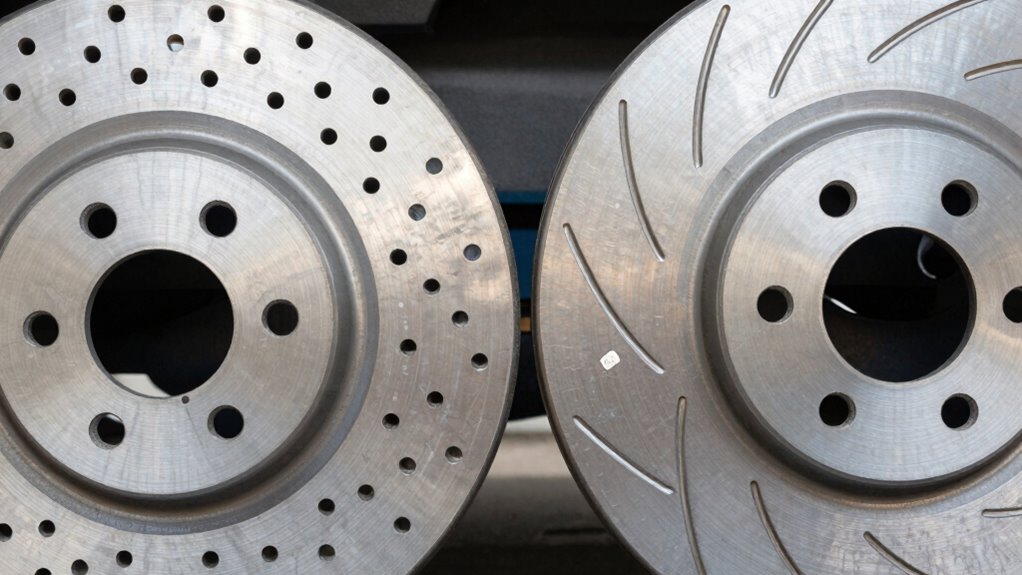
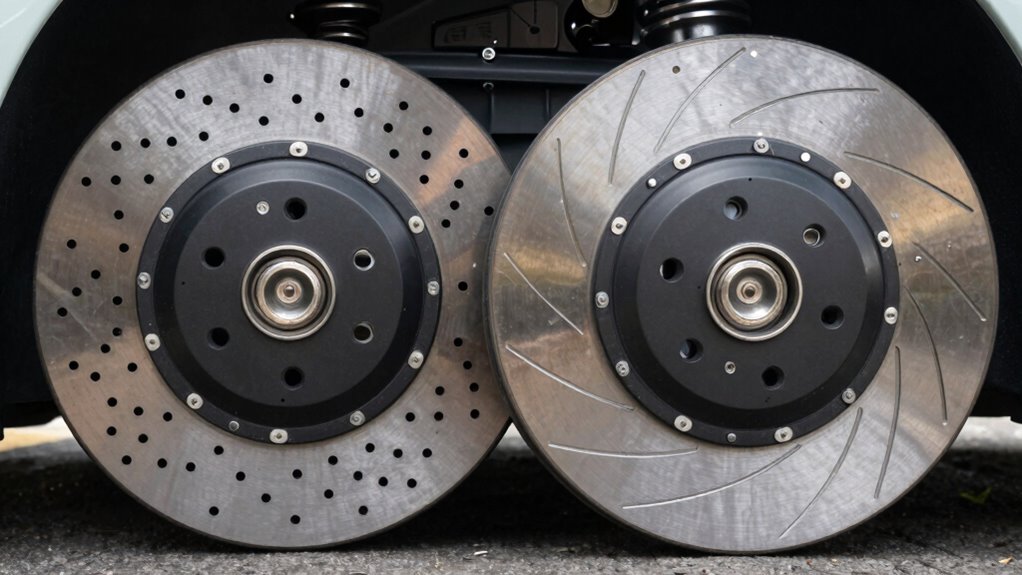
When choosing brake rotors for your vehicle, understanding the differences between drilled and slotted rotors is essential. These rotor designs can influence your braking performance and how much maintenance they require over time. Drilled rotors feature holes drilled through the metal surface, which help dissipate heat and gases generated during braking. This design aims to improve braking performance, especially in high-performance or racing scenarios, by reducing brake fade. However, drilled rotors tend to be more fragile than other types because the holes can create stress points, making them more prone to cracking under heavy or repeated use. On the other hand, slotted rotors have grooves cut into their surface, which serve to sweep away brake dust, debris, and water from the contact patch. This design enhances braking performance by maintaining consistent friction, especially in wet conditions. Slotted rotors are generally more durable and better suited for street driving that involves frequent stop-and-go traffic or adverse weather. Additionally, proper maintenance practices can extend the lifespan of both rotor types and ensure optimal braking performance.
When it comes to maintenance requirements, drilled rotors may require more attention. The drilled holes can trap brake dust or debris, and the stress concentration points can lead to cracks over time, especially if you’re pushing your vehicle hard or driving aggressively. This means you might need to replace drilled rotors more often if they start to crack or become uneven. Slotted rotors, by contrast, tend to be more forgiving. Their grooves help keep the braking surface cleaner, reducing the buildup of dust and debris that can impair braking performance. As a result, they often need less maintenance or resurfacing, making them a more practical choice for everyday driving. That said, both types of rotors benefit from regular inspection to identify signs of wear, warping, or cracking before they compromise safety.
Frequently Asked Questions
Which Rotor Type Lasts Longer Under Daily Driving Conditions?
Slotted rotors tend to last longer under daily driving because they generate less heat and reduce brake pad wear. When considering brake pad compatibility, verify the pads fit well with your rotor type to maximize lifespan. Installation considerations include checking for proper fit and avoiding over-tightening. If durability is your priority, slotted rotors are generally a better choice for everyday driving, as they handle heat and stress more effectively.
Are Drilled Rotors More Prone to Cracking Than Slotted Ones?
Yes, drilled rotors are more prone to cracking than slotted ones due to thermal expansion. The drilled holes create weak points that can’t handle intense heat buildup, especially during heavy braking. While drilled rotors might produce more noise levels, slotted rotors maintain better structural integrity and resist cracking. So, if you value durability and quieter operation, slotted rotors are a smarter choice for street driving.
Do Drilled or Slotted Rotors Provide Better Fade Resistance?
You’ll find slotted rotors generally offer better fade resistance because their design helps vent gases and water more effectively, maintaining ideal brake performance. Drilled rotors may look more aggressive and appealing, but they can sometimes produce more noise and are prone to cracking under extreme conditions. If aesthetics matter and you prefer quieter operation, slotted rotors are a better choice for consistent street performance and visual appeal.
Can Slotted Rotors Improve Braking in Wet Conditions?
Think of slotted rotors like sponges, quickly dispersing water from your brake surface. They improve braking in wet conditions by channeling water away, enhancing water dispersal and rotor cooling. This reduces the risk of hydroplaning and maintains consistent brake performance. So, if you often drive in rain or wet environments, slotted rotors give you better grip and safer braking, keeping your stopping power reliable when it matters most.
Which Rotor Type Is More Cost-Effective Over Time?
Slotted rotors tend to be more cost-effective over time because they generally have lower maintenance costs compared to drilled rotors. They resist cracking better and don’t require frequent replacements, saving you money in the long run. While drilled rotors might initially cost more, their higher maintenance needs and potential for cracking can lead to increased costs. So, if you’re looking for better cost savings, slotted rotors are usually the smarter choice.
Conclusion
Ultimately, choosing between drilled and slotted rotors is like picking between the stars and the moon—you’ll find advantages in both, depending on your driving style. Drilled rotors may remind you of a starry night, offering quick heat dissipation, while slotted rotors are like the moon’s steady glow, providing consistent braking. Trust what suits your daily drive best, and remember, in the end, it’s about keeping you safe—just like the guiding lights we follow in the dark.