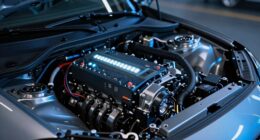
Engine knocking is your vehicle’s way of warning you that something’s wrong with the combustion process. It happens when the air-fuel mixture ignites prematurely or irregularly, often caused by incorrect ignition timing or using low-octane fuel in high-performance engines. If you ignore the knocking, it can cause serious internal damage over time. Understanding what causes knocking and how to prevent it helps protect your engine’s health—keep exploring to learn how to keep your engine running smoothly.
Key Takeaways
- Engine knocking is a metallic noise caused by irregular combustion inside the engine.
- It occurs when ignition timing is too advanced or fuel octane is too low, leading to premature explosions.
- Knocking signals that the engine is “complaining” about improper combustion, which can cause damage if ignored.
- Proper maintenance, such as adjusting ignition timing and using correct fuel octane, prevents knocking.
- Recognizing knocking early helps avoid long-term engine damage and maintains optimal engine performance.

Have you ever wondered what a “knock” really means? It’s that unsettling metallic sound or pinging noise coming from your engine, often occurring during acceleration or under load. That sound isn’t just an annoyance—it’s a warning sign that something’s off inside your engine’s combustion process. When your engine runs smoothly, the air-fuel mixture ignites in a controlled manner. But when knocking happens, the combustion becomes irregular, causing small explosions that create shockwaves. These shockwaves can damage engine components over time if left unaddressed. Understanding what causes these knocks is essential to keeping your engine healthy and avoiding costly repairs.
One of the main factors influencing knocking is ignition timing. This refers to when the spark plug ignites the air-fuel mixture inside the cylinder. If the timing is too advanced—meaning the spark ignites too early before the piston reaches the ideal position—it can lead to knocking. When ignition timing is set correctly, the spark occurs just as the piston reaches top dead center, ensuring a smooth, controlled burn. But if it’s off, the pressure builds prematurely, causing those damaging shockwaves. Adjusting the ignition timing, either manually or through engine control modules, helps prevent knocking and keeps your engine running efficiently.
Fuel octane also plays a vital role. Think of octane as a measure of your fuel’s resistance to knocking. Higher octane fuels can withstand greater compression before igniting prematurely. If you’re using fuel with too low an octane rating for your engine’s compression ratio, you’re more likely to experience knocking. This is especially true if your vehicle’s manufacturer recommends premium fuel. Conversely, if your engine is designed for regular octane, using high-octane fuel won’t necessarily improve performance but can be a waste of money. Using the correct octane grade helps maintain ideal ignition timing and prevents early or uneven combustion, which leads to knocking.
In essence, knocking is your engine’s way of telling you something’s not quite right with how it’s firing. Adjusting ignition timing and choosing the right fuel octane are key steps in preventing this issue. When your engine runs in sync with proper timing and the right fuel, it not only runs quieter but also lasts longer. Ignoring knocking signs can cause serious damage, so paying attention to these factors keeps your engine healthy and your driving smooth. Remember, your car’s “complaint” is a warning—heed it before it turns into a costly breakdown. Proper maintenance, including understanding combustion irregularities, can help you spot and address issues early, preserving engine performance over time.
Frequently Asked Questions
Can Engine Knocking Cause Long-Term Damage?
Yes, engine knocking can cause long-term damage if disregarded. It often results from incorrect ignition timing or using poor-quality fuel, which can harm pistons and valves over time. To prevent this, confirm your ignition timing is properly set and consider fuel additives designed to reduce knocking. Addressing knocking early keeps your engine healthy, saving you costly repairs and extending its lifespan.
How Can I Prevent Knocking in My Engine?
Prevent knocking like you’d stop a squeaky wheel by keeping up with engine tuning and regular maintenance. Use high-quality fuel to reduce the risk, and avoid pushing your engine too hard, which accelerates piston wear. Make sure your spark plugs are in good condition and your timing is correct. These steps help your engine run smoothly, preventing knocking and protecting it from long-term damage.
What Are the Signs of Severe Engine Knocking?
Severe engine knocking feels loud and constant, often causing a rattling sound that worsens under load. You might notice a decrease in power or acceleration, and the engine may overheat. These signs often stem from improper engine tuning or spark plug issues, which disrupt proper combustion. Ignoring these symptoms can lead to serious damage, so it’s essential to address knocking early by checking your spark plugs and optimizing engine tuning.
Does Fuel Quality Affect Engine Knocking?
Think of fuel quality as the heartbeat of your engine; poor fuel can cause it to tremble and knock. Using low-quality fuel or contaminated supplies strains the engine, triggering knocking sensors. To prevent this, add fuel additives that clean and stabilize, ensuring smooth operation. When you choose high-quality fuel, you’re helping your engine stay healthy, avoiding the stress that leads to knocking and potential damage.
Is Knocking More Common in Certain Types of Engines?
Yes, knocking is more common in certain engine types, especially those with high compression ratios or turbochargers. Your engine design influences its susceptibility; for example, older or poorly maintained engines tend to knock more often. Regular maintenance routines, like checking spark plugs and using quality fuel, help prevent knocking. Being aware of your engine’s design and sticking to proper maintenance routines can reduce knocking and extend engine life.
Conclusion
So, now you know the noise, the nuisance, and the nuance of knocking engines. By paying attention to peculiar pings and pesky puffs, you prevent pricey repairs and prolong your engine’s life. Remember, recognizing the rumbles and raps early can save your vehicle from serious suffering. Stay savvy, stay sound, and never ignore that initial, insistent insurgence inside your engine. Keep it quiet, keep it running, and keep enjoying the ride with confidence.