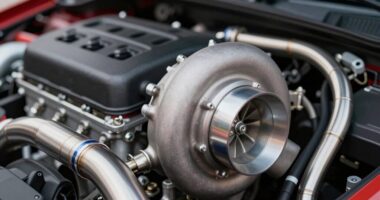
Before adding a big boost, you typically upgrade your fuel system with higher-octane fuels to prevent knocking and handle increased pressure. You might also use performance fuel additives to guarantee complete combustion and improve power. Upgrading fuel injectors and fuel pumps ensures adequate flow and pressure to support the extra demand. These enhancements help maintain reliability and safeguard your engine during your boost. Keep going, and you’ll discover more essential fueling upgrades to maximize your performance safely.
Key Takeaways
- Upgrading to higher-octane fuels to prevent knocking at increased boost levels.
- Incorporating performance fuel additives for more complete combustion and power delivery.
- Ensuring the fuel system can handle higher pressures with reinforced fuel lines and pumps.
- Tuning fuel maps to optimize air-fuel ratios for boosted engine reliability.
- Installing fuel pressure regulators to maintain consistent fuel delivery during high boost.
Before you hit the accelerator for your upcoming big boost, it’s vital to make certain your vehicle is fully prepared. Upgrading your fuel system is just the start; ensuring your engine is finely tuned and your vehicle’s aerodynamics are optimized can make a significant difference in performance. Engine tuning allows you to maximize power output and efficiency, adjusting fuel maps, ignition timing, and boost pressure to get the most from your setup. Proper tuning ensures your engine runs smoothly under increased loads, reducing the risk of knocking or hesitation that could undermine your boost efforts. It’s not just about raw horsepower—it’s about delivering consistent, reliable power when you need it most.
Alongside engine tuning, aerodynamic improvements play a crucial role in preparing your vehicle for a big boost. Even minor modifications, like a front splitter, rear spoiler, or side skirts, can reduce drag and increase downforce, helping your car stay stable at higher speeds. These improvements aren’t just for show—they directly influence how effectively your vehicle handles increased power and airflow. When your car cuts through the air more efficiently, you’ll notice better acceleration, improved fuel economy, and enhanced overall stability. It’s a strategic way to ensure that all the extra power generated by your upgrades translates into real-world performance gains, rather than wasted energy battling aerodynamic drag. Additionally, understanding aerodynamic principles can help you make more informed modifications for optimal performance, especially when considering drag reduction techniques.
Aerodynamic upgrades enhance stability, boost efficiency, and maximize performance during high-speed boosts.
Fuel upgrades are also essential. Upgrading to higher-octane fuels or adding performance fuel additives can prevent knocking and allow your engine to operate safely at higher boost levels. These changes ensure your fuel mixture burns more completely, providing the necessary energy boost without risking engine damage. Paired with engine tuning, these fuel enhancements help you maximize power output while maintaining reliability. Incorporating fuel efficiency strategies can further enhance your vehicle’s readiness for increased demands, helping you sustain performance over longer periods. Moreover, selecting the right fuel type can also improve your vehicle’s overall longevity and reduce long-term maintenance costs. Proper fuel management and choosing the appropriate fuel type can also contribute to long-term engine health.
Don’t forget about supporting modifications like upgraded intercoolers or boost controllers, which complement your engine tuning and aerodynamic improvements. An upgraded intercooler keeps intake temperatures lower, improving efficiency and power, while a better boost controller allows precise pressure adjustments. These components work together to ensure your vehicle’s systems are balanced and prepared for the increased demands of a big boost. When combined with monitoring tools, such as performance gauges, you can better track your vehicle’s response to modifications and make real-time adjustments for optimal results.
In essence, your pre-boost preparations should focus on fine-tuning your engine, streamlining aerodynamics, and optimizing your fuel system. This holistic approach ensures that your vehicle can handle increased power safely and efficiently, giving you the confidence to unleash your full potential when the moment arrives.
high octane fuel for performance cars
As an affiliate, we earn on qualifying purchases.
As an affiliate, we earn on qualifying purchases.
Frequently Asked Questions
How Do I Determine the Best Fueling Upgrade for My Vehicle?
To determine the best fueling upgrade for your vehicle, first consider your goals—whether you want improved fuel efficiency or enhanced performance. Research upgrades like high-flow fuel injectors or fuel pumps that match your engine’s needs. Consult your vehicle’s manual or a trusted mechanic to confirm compatibility. Test different options to see which upgrade delivers the ideal balance of efficiency and performance, tailored to your driving habits.
Are There Common Mistakes to Avoid During Fueling Upgrades?
You should avoid common mistakes like neglecting fuel efficiency and ignoring emission standards during fueling upgrades. Don’t choose upgrades solely for power gains without considering how they impact your vehicle’s emissions or fuel economy. Always research compatibility with your vehicle and local regulations. Skipping professional advice can lead to inefficiencies, increased emissions, or damage. Staying informed and cautious guarantees your upgrades enhance performance without sacrificing efficiency or compliance.
How Long Do Fueling Upgrades Typically Take to Install?
Imagine tuning a guitar—each string needs just the right adjustment. Fueling upgrades typically take between 2 to 8 hours, depending on your vehicle and upgrade complexity. During this time, mechanics enhance fuel efficiency and emissions reduction, ensuring your vehicle runs smoothly and eco-friendly. Rushing the process can lead to mistakes, so give your upgrade the time it needs for peak performance and environmental benefits.
What Are the Cost Ranges for Different Fueling Upgrades?
Fueling upgrades vary in cost depending on the type and complexity. Basic performance tuning might cost around $200 to $600, improving power and efficiency. Upgrading fuel injectors or pumps can range from $500 to $2,000, boosting performance and fuel economy. Higher-end modifications like custom fuel systems or advanced tuning can exceed $2,500. Consider your goals, as investing in quality upgrades guarantees better performance and fuel economy, maximizing your vehicle’s potential.
Will Fueling Upgrades Affect My Vehicle’s Warranty?
Fueling upgrades can impact your vehicle’s warranty, especially if they involve fuel system modifications. Warranty implications depend on whether the modifications are deemed to cause damage or issues covered by your warranty terms. It’s essential to check your manufacturer’s policy and consult with your dealer before making any fueling upgrades. Properly installed, some upgrades might not void your warranty, but always verify to avoid future complications.
Conclusion
As you fine-tune your fueling system, you’re laying the groundwork for a roaring engine ready to release its full potential. Think of it as fueling a mighty ship—every upgrade is like tightening sails before a storm, ensuring you harness the power that’s just over the horizon. With each step, you’re fueling not just your car, but your passion and anticipation for the exhilarating ride ahead. Get ready—you’re about to ignite a storm on the road.