Choosing the right intercooler size isn’t just about fitting it in your engine bay; it deeply impacts airflow, cooling efficiency, and durability. A smaller intercooler may cause higher intake temps and power loss, while an oversized one can reduce airflow and cause pressure drops. Proper sizing balances heat dissipation, airflow, and lifespan, ensuring peak engine response and long-term performance. Curious about how to optimize this balance? Keep exploring to uncover the full picture.

Get business pricing on garage and car supplies
- Business-only prices and quantity discounts
- Tax-exempt purchasing
- Multiple users, one account, clear invoices
Key Takeaways
- Proper size balances heat dissipation and airflow, preventing power loss or pressure drop issues.
- Larger intercoolers add weight and complexity, affecting vehicle handling and durability.
- Material choice impacts thermal management, longevity, and resistance to thermal fatigue.
- Placement and design influence airflow efficiency, cooling performance, and thermal stress.
- Environmental factors and driving style determine optimal size for durability and heat handling.
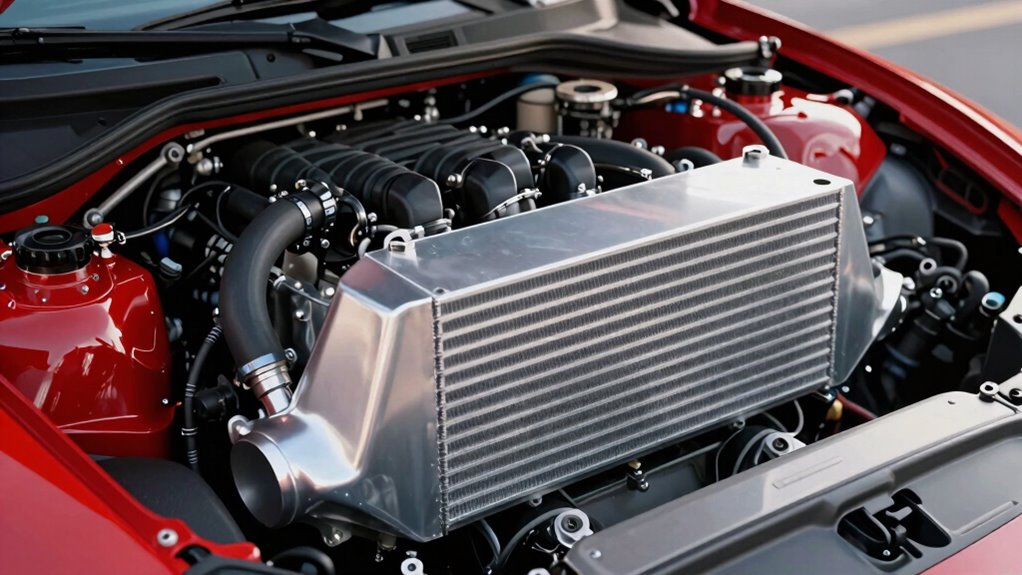
Choosing the right intercooler size is fundamental because it directly impacts your vehicle’s performance and efficiency. When you’re selecting an intercooler, understanding how size influences airflow efficiency is essential. A properly sized intercooler ensures that incoming air is cooled effectively without creating unnecessary resistance. If it’s too small, it won’t dissipate heat efficiently, causing higher intake temperatures that can lead to power loss and increased engine stress. Conversely, an oversized intercooler might seem like a good idea, but it can cause excessive pressure drop and reduce airflow velocity, which hampers overall engine response. Striking the right balance means your engine breathes easier, maintaining peak power while avoiding performance dips caused by inadequate cooling or airflow restrictions. Material durability also plays a critical role in choosing the right intercooler size. A larger intercooler often involves more material, which can mean added weight and potential durability concerns if the construction isn’t high quality. If the material isn’t robust enough, it can crack or corrode over time, especially under harsh conditions or extreme heat cycles. You want an intercooler built with durable materials that can withstand the rigors of daily driving, high-speed runs, or off-road adventures. The choice of core material—such as aluminum or specific high-strength alloys—affects not only the longevity but also how well the intercooler handles thermal stresses. An intercooler that’s too fragile may fail prematurely, leading to costly repairs and reduced performance over time. Additionally, understanding the thermal management properties of different materials can help ensure your intercooler maintains optimal cooling efficiency under demanding conditions. Proper airflow dynamics are also influenced by the design and placement of the intercooler, making installation considerations an essential part of the decision process. Size isn’t just about volume; it’s about the interplay between airflow efficiency and material durability. A well-sized intercooler facilitates smooth airflow, reducing pressure losses and ensuring that cooled air reaches your engine quickly. It’s important to consider how aerodynamic design can improve overall performance and longevity. An optimized design can also help in reducing thermal fatigue and extending the lifespan of the intercooler. Moreover, selecting an intercooler with an appropriate flow rate can prevent bottlenecks that impair engine response and efficiency. It also needs to be constructed with durable materials that resist corrosion, physical damage, and thermal fatigue. When you’re making your choice, consider how the size affects these factors and how they align with your driving style and environment. Bigger isn’t always better if it compromises airflow or durability, and smaller isn’t necessarily ideal if it can’t handle the heat load. By understanding these nuances, you can select an intercooler that boosts performance, lasts longer, and keeps your engine running smoothly under demanding conditions.
intercooler size for turbocharged engines
As an affiliate, we earn on qualifying purchases.
As an affiliate, we earn on qualifying purchases.
Frequently Asked Questions
How Does Intercooler Size Affect Engine Longevity?
A larger intercooler improves engine longevity by enhancing cooling efficiency and heat dissipation. When your intercooler effectively cools compressed air, it prevents excessive heat buildup, reducing stress on engine components. This lowers the risk of overheating and engine damage over time. By choosing the right size, you guarantee better thermal management, helping your engine operate smoothly and last longer, especially during high-performance or demanding driving conditions.
Can an Oversized Intercooler Cause Performance Issues?
An oversized intercooler can cause performance issues by increasing airflow resistance, which can lead to turbo lag and slower boost response. When the intercooler is too large, it may cool the air excessively, reducing pressure and delaying power delivery. You might notice sluggish acceleration or inconsistent engine response. To avoid these problems, it’s vital to select an intercooler that balances cooling efficiency with minimal airflow restriction.
What Is the Ideal Intercooler Size for My Vehicle?
The ideal intercooler size for your vehicle depends on your boost levels and engine setup, but don’t go overboard—an oversized intercooler can cause turbo lag and reduce cooling efficiency. You want a balance that minimizes turbo lag while maximizing cooling. Think of it like fitting a perfect-sized jacket; too small and it’s tight, too big and it’s bulky. Choose wisely to optimize performance and keep your engine running smooth.
How Does Intercooler Material Influence Its Effectiveness?
Your intercooler’s material greatly influences its effectiveness through durability and heat transfer capabilities. Aluminum is popular because it offers excellent thermal conductivity and is lightweight, improving efficiency. However, stainless steel provides superior durability but at a higher manufacturing cost. Consider your driving conditions—if you need a long-lasting, high-performance intercooler, investing in durable materials might be worthwhile, even if it costs more initially.
Does Climate Impact the Optimal Intercooler Size?
Climate definitely impacts the ideal intercooler size because it affects turbocharging efficiency. In colder climates, smaller intercoolers might work well since heat dissipation is less critical, and you may prioritize aesthetic considerations. Conversely, hotter environments demand larger intercoolers to maintain performance, preventing heat soak. You should consider both climate and aesthetic preferences to choose the right size, ensuring your turbocharged engine runs efficiently without sacrificing style.
Conclusion
So, next time you’re choosing an intercooler, ask yourself: is bigger always better? Remember, a larger intercooler can improve performance but might also add unnecessary weight or complexity. It’s about finding the right balance for your setup. Don’t just go for the biggest size without considering your specific needs and goals. After all, isn’t optimizing your ride about making smart, informed choices that keep you ahead of the game?
Halloween Picks
halloween
As an affiliate, we earn on qualifying purchases.