Many builders overlook brake cooling because they focus on power and handling, often ignoring heat management until brakes start to fade or fail. They don’t realize that proper airflow, material choice, and ducting are vital from the start. Neglecting these cooling strategies leads to overheating, reduced safety, and increased maintenance. If you want to avoid these issues, understanding the importance of brake cooling early on can make all the difference—keep going to learn how to get it right.
Key Takeaways
- Builders often focus on power and handling, neglecting brake cooling until overheating causes failures.
- Lack of awareness about heat buildup leads to delayed attention to cooling strategies.
- Proper cooling considerations are overlooked during initial planning, resulting in reactive rather than proactive solutions.
- Many underestimate the impact of airflow and material choice on brake performance under high stress.
- Ignoring early cooling needs increases risk of brake fade, damage, and costly repairs later.
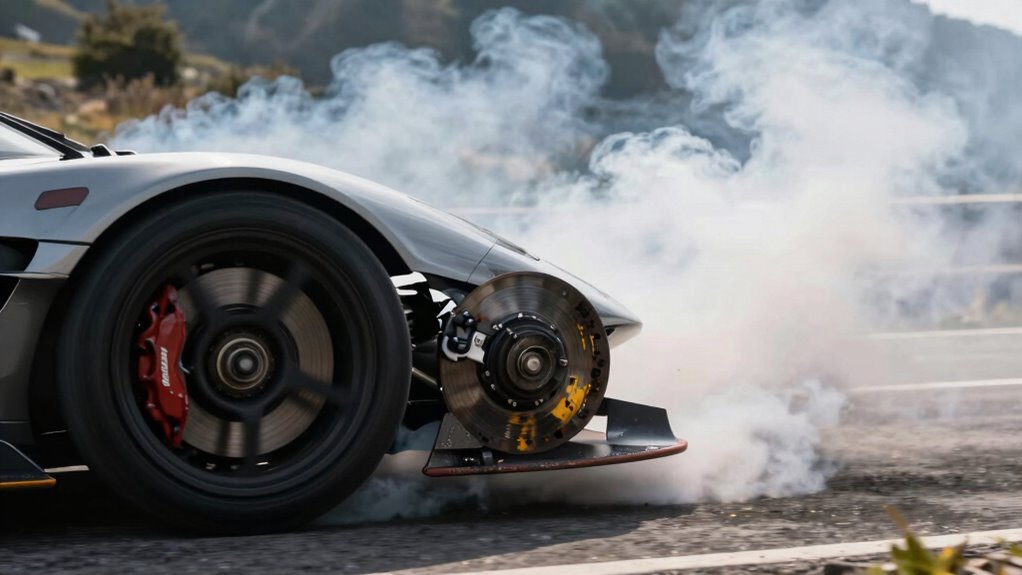
Have you ever wondered why some high-performance builds overheat brakes so quickly? It’s often because people overlook the importance of proper brake cooling, especially during the planning stages. When building a vehicle meant for speed or aggressive driving, understanding how to keep brakes cool isn’t just a minor detail—it can be the difference between safe, reliable stopping power and catastrophic brake failure. The key lies in thoughtful material selection and aerodynamic design, two elements that many ignore until it’s too late.
Material selection plays a crucial role in how well your brakes can dissipate heat. Not all brake components are created equal; choosing the right materials can dramatically improve heat management. For example, high-performance brake rotors made from advanced alloys or carbon-ceramic composites are designed to withstand higher temperatures without warping or fading. These materials transfer heat more efficiently and resist the thermal expansion that causes brake fade. On the other hand, using standard cast iron rotors might save money initially, but they quickly become heat sinks, trapping heat and reducing braking effectiveness during intense use. When you ignore the importance of material selection, you risk your brakes overheating prematurely, which can be dangerous during spirited driving or track sessions.
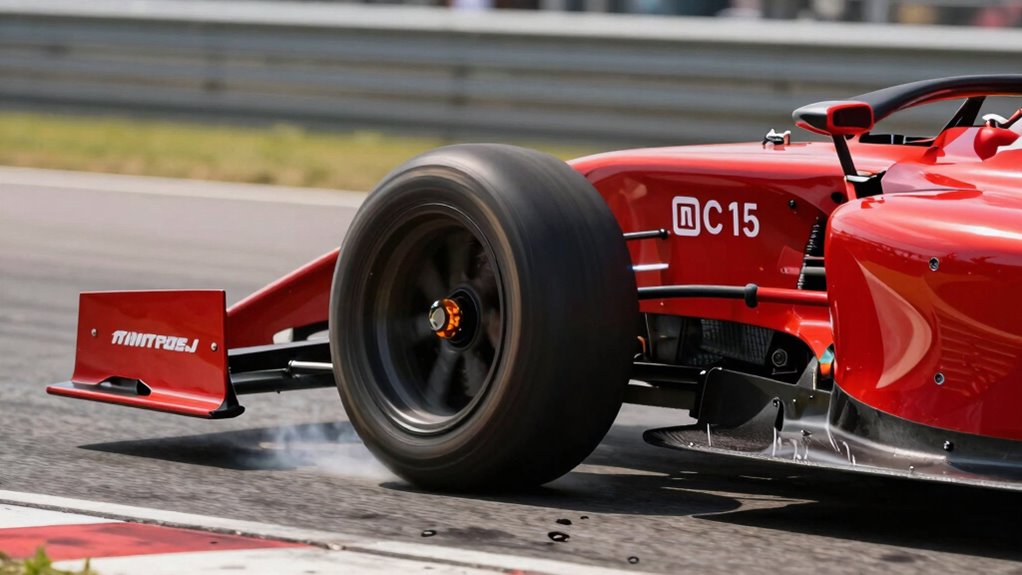
Choosing advanced materials like carbon-ceramic composites enhances heat dissipation and prevents brake fade during intense driving.
Aerodynamic design also plays a vital role in keeping brakes cool. Many builders focus on the engine bay or overall vehicle aerodynamics, but neglect how airflow reaches the brakes. Properly designed air ducts and vents can channel cool air directly onto the rotors and calipers, helping to carry away excess heat. Without these features, hot air stagnates around the braking components, increasing the risk of overheating. You might think that simply installing larger brakes is enough, but if you don’t consider how air flows around them, you’re just asking for trouble. Aerodynamic enhancements, like vents integrated into the wheel well or brake cooling ducts, can make a significant difference. They ensure continuous airflow, reducing the temperature buildup during aggressive driving. Additionally, material properties play a role in how effectively heat is transferred and dissipated, further emphasizing the importance of choosing the right components. Incorporating ventilation strategies can significantly improve the longevity and reliability of your braking system, especially under demanding conditions.
Many builders ignore these factors until they experience brake fade or, worse, failure. It’s tempting to focus on power and handling first, but neglecting cooling strategies can undermine everything else you’ve worked for. Proper cooling techniques, such as strategic duct placement and choosing materials with high thermal conductivity, are essential for maintaining optimal brake performance. By paying attention to material selection and aerodynamic design from the start, you ensure your brakes stay reliable under pressure. Think of it as a crucial part of the overall build—if you ignore it initially, you’ll pay the price later. Proper cooling isn’t just about comfort; it’s about safety and performance. When you incorporate these elements into your build, you set yourself up for a more predictable, confident driving experience, no matter how hard you push your vehicle.
As an affiliate, we earn on qualifying purchases.
Frequently Asked Questions
How Can I Tell if My Brakes Are Overheating?
You can tell if your brakes are overheating by feeling for excess heat after driving, especially after heavy braking. Look for a strong, burnt smell, or if the brake pedal feels spongy. Check the brake pad composition—softer pads heat up faster—and consider rotor material durability, as some rotors overheat more easily. If your brakes fade or you notice a discoloration on the pads or rotors, they’re likely overheating.
What Are the Signs of Brake Fade During a Race?
During a race, you’ll notice brake fade as your braking feels less effective, often accompanied by a spongy pedal. Signs include increased stopping distances and a soft pedal, which can result from brake pad deterioration or rotor warping. If you sense the brakes aren’t responding well or feel vibrations under braking, it’s likely brake fade, signaling you should ease off and check for overheating issues before damage worsens.
Are Aftermarket Brake Cooling Solutions Effective?
Like Icarus flying too close to the sun, ignoring brake cooling can lead to disaster. Aftermarket solutions, such as brake ducting and cooling fans, are highly effective—they direct airflow precisely where needed, reducing heat and preventing fade. When you install these upgrades, you’ll notice improved braking performance and longer component life. Don’t wait until it’s too late—invest in proper cooling to keep your brakes reliable under pressure.
How Often Should Brake Cooling Systems Be Maintained?
You should check and maintain your brake cooling system every 5,000 to 7,000 miles, especially if you often drive hard or on demanding terrains. Regularly inspect the brake fluid, ensuring it’s clean and at the proper level, since contaminated fluid hampers cooling. Also, consider rotor material; high-performance rotors need more frequent inspection because they dissipate heat differently. Proper maintenance keeps your brakes effective and prevents overheating issues.
Does Brake Cooling Impact Overall Vehicle Performance?
While it’s easy to overlook, brake cooling considerably impacts your vehicle’s performance. Poor cooling efficiency can cause brake material to overheat, reducing braking power and increasing wear. When cooling isn’t optimized, you might notice decreased responsiveness and longer stopping distances. Ensuring proper brake cooling helps maintain consistent performance, prevents damage, and extends brake lifespan, ultimately supporting safer, more reliable driving.
Conclusion
You race down the track, adrenaline pounding, but suddenly, your brakes fade and seize. That scorching heat quietly builds, unseen until it’s too late. Ignoring brake cooling is like ignoring a ticking time bomb beneath your feet—one wrong move, and everything can come crashing down. Don’t let neglect be your downfall. Embrace proper cooling, keep your brakes cool and confident, and stay in control when it counts most. Your victory depends on it.