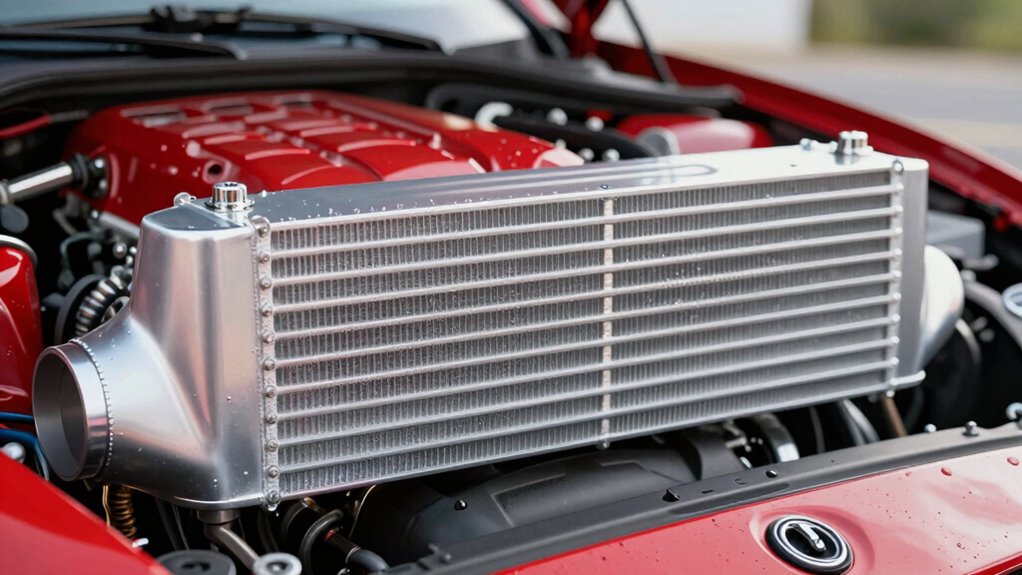

If your intercooler is too small, it won’t dissipate heat effectively, leading to overheating and power drops. An oversized unit can cause airflow resistance, reducing throttle response and engine efficiency. Finding the right size balances sufficient cooling with minimal airflow resistance, ensuring peak performance. Proper sizing depends on your engine’s airflow and boost levels. Keep going to discover how to select the best intercooler size for your setup.
Key Takeaways
- An undersized intercooler can’t dissipate heat effectively, leading to overheating of compressed air and reduced engine performance.
- An oversized intercooler causes increased airflow resistance, resulting in pressure drops and sluggish throttle response.
- Proper intercooler sizing balances core volume and airflow to optimize cooling without creating excessive turbulence.
- Material and design choices impact heat transfer efficiency and airflow dynamics, influencing lag and overheating issues.
- Correct sizing ensures high charge density, prevents heat buildup, and maintains responsive engine performance.
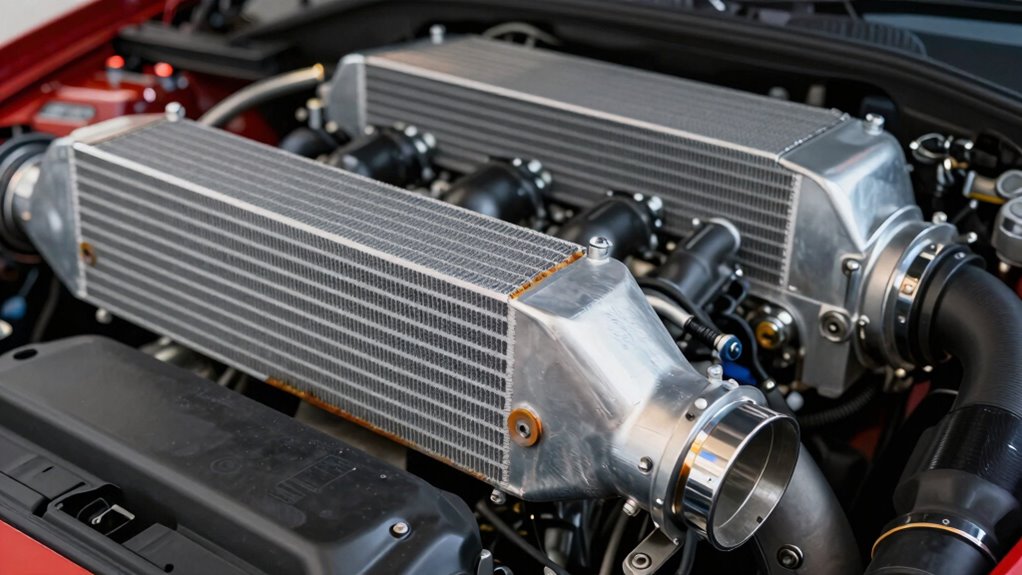
Have you ever wondered how to choose the right intercooler size for your setup? It’s a vital decision that impacts your engine’s performance, efficiency, and reliability. A properly sized intercooler ensures ideal cooling of compressed air before it enters the engine, but selecting the correct size isn’t just about fitting the biggest unit available. Instead, it involves understanding airflow dynamics and material selection to strike a balance between too small and too big.
Airflow dynamics play a vital role in intercooler sizing. If your intercooler is too small, it won’t have enough surface area or volume to dissipate heat effectively, causing the compressed air to heat up excessively. This overheating reduces the density of the intake charge, leading to lower power output and increased risk of knocking. On the other hand, a too-large intercooler can introduce unnecessary airflow resistance, creating a pressure drop that hampers throttle response and power delivery. It might also add extra weight and cost without delivering proportional benefits. To get this right, you need to consider the airflow rates generated by your turbo or supercharger and how the intercooler’s core size and design influence heat transfer. An efficient intercooler should facilitate smooth airflow, maintaining high pressure while effectively removing heat.
Proper airflow ensures effective heat dissipation without creating pressure drops or added weight.
Material selection is equally important when choosing your intercooler size. The core material determines heat transfer efficiency, weight, and durability. Aluminum is the most common choice because it offers excellent thermal conductivity and is lightweight, allowing for larger cores without adding excessive weight. Copper, while even more conductive, is heavier and less common in automotive applications. The core’s construction—such as fin density and plate design—affects airflow through the intercooler and heat dissipation capacity. A well-chosen material with appropriate core design enhances airflow dynamics, ensuring that heat is transferred away quickly and efficiently. When selecting materials, also consider factors like corrosion resistance and ease of manufacturing, since these impact longevity and maintenance. Additionally, thermal conductivity plays a key role in how effectively the intercooler can transfer heat away from compressed air.
Ultimately, choosing the right intercooler size requires balancing airflow dynamics and material selection to match your engine’s power goals and operating conditions. An undersized intercooler can lead to overheating and power loss, while an oversized one might cause unnecessary airflow restrictions and weight increases. By understanding how airflow moves through the core and selecting materials that optimize heat transfer without adding excess weight, you can ensure your setup runs efficiently and reliably. Remember, the goal is to keep the intake air as cool and dense as possible without sacrificing responsiveness or adding unnecessary bulk. This careful consideration will help you avoid the pitfalls of both too small and too large intercoolers, giving your engine the best chance to perform at its peak.
Frequently Asked Questions
How Does Intercooler Size Affect Turbo Lag?
A larger intercooler can increase turbo lag because it adds airflow restriction and causes a pressure drop, delaying boost response. You might notice a slower spool-up as the turbo works harder to push air through the bigger cooler. Conversely, a smaller intercooler reduces lag but risks overheating and performance drops under high load. Balancing size guarantees ideal airflow without excessive pressure loss, giving you responsive yet effective cooling.
Can a Larger Intercooler Improve Fuel Efficiency?
Think of your cooling system as a garden sprinkler; a well-sized intercooler acts like the right spray—efficient and effective. A larger intercooler can improve fuel efficiency by maintaining ideal turbo boost and keeping intake temps lower. This reduces engine stress, helping your engine run smoother and use fuel more wisely. So, yes, upgrading to a bigger intercooler can enhance your vehicle’s fuel economy by enhancing your cooling system’s performance.
What Materials Are Best for High-Performance Intercoolers?
You should choose high-performance intercoolers made from aluminum or copper. Aluminum offers excellent durability and light weight, making it ideal for consistent performance and longevity. Copper provides superior thermal conductivity, which helps dissipate heat more effectively. Combining these materials in your intercooler can optimize cooling efficiency and durability, ensuring your engine stays cool under demanding conditions without adding unnecessary weight or compromising performance.
How Does Ambient Temperature Influence Intercooler Performance?
Ambient temperature substantially impacts your intercooler’s performance by affecting ambient heat, which directly influences cooling efficiency. When air temperatures rise, your intercooler struggles to dissipate heat effectively, causing higher intake temps and potential power loss. Conversely, cooler ambient conditions boost cooling efficiency, helping your intercooler reduce intake temperatures more effectively. To optimize performance, consider the climate and verify your intercooler is rated for your typical ambient temperatures.
Is There an Optimal Intercooler Size for Daily Driving?
For daily driving, an ideal intercooler balances size and efficiency. You want one that’s not too heavy, which can affect handling, and not too expensive in manufacturing costs. A moderate-sized intercooler offers good cooling without adding excessive weight or cost. This ensures reliable performance, prevents overheating, and maintains smooth driving. Choose a well-designed intercooler that fits your vehicle’s needs without compromising comfort or budget.
Conclusion
So, next time you’re choosing an intercooler, remember that size truly matters—too small, and you’ll deal with overheating; too big, and you’ll face lag. It’s almost like the perfect fit finds you when you least expect it, just like that one piece of junk in your garage that turns out to be exactly what you needed. Trust your instincts, size it right, and enjoy the smooth ride, because sometimes, the right choice comes when you’re not even looking for it.