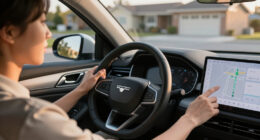
Using an OBD2 monitor during track days allows you to get real-time data on engine temperature, RPM, and boost pressure. This helps you catch issues like misfires or sensor failures early, preventing costly damage or breakdowns. By monitoring these critical metrics, you can make quick adjustments and avoid surprises. Staying ahead of problems keeps your vehicle running safely and at peak performance—continue with us to discover the best options for your needs.

Get garage and car supplies delivered free — and shop member deals
- Fast, free delivery on millions of items
- Access to Prime Big Deal Days deals on October 6–7
- Prime Video, Amazon Music and more included
Key Takeaways
- Real-time data monitoring detects engine issues early, preventing costly damage during track sessions.
- Continuous tracking of critical metrics like temperature and RPM helps identify potential failures before escalation.
- Smartphone-compatible OBD2 monitors enable quick troubleshooting and immediate adjustments on the fly.
- Data logs and trouble codes simplify diagnosing problems, saving time and reducing repair costs.
- Enhanced vehicle understanding improves tuning, safety, and reliability for high-stress track conditions.

If you’re heading to the track, monitoring your car’s performance in real-time can make all the difference. An OBD2 monitor gives you immediate access to essential data, allowing you to spot issues before they escalate. During intense track sessions, your engine and other components endure stress that can lead to problems if left unchecked. With an OBD2 device, you can keep a close eye on critical metrics like engine temperature, RPM, and boost pressure, helping you make quick decisions to optimize performance and prevent breakdowns. This real-time insight is especially valuable when fine-tuning your setup, as it guides your tuning adjustments to improve both power and fuel efficiency. By analyzing data on the fly, you can identify which modifications deliver the best results and avoid wasting fuel or damaging your engine.
Using an OBD2 monitor also allows you to track how your car responds under different conditions, such as during acceleration, cornering, or braking. This information helps you understand whether your tuning adjustments are effective or if further tweaks are necessary. For example, if you notice a spike in intake air temperature or a drop in fuel pressure, you can adjust your fueling strategy or cooling systems before a small problem becomes a costly repair. Keeping tabs on these parameters ensures your car runs smoothly and efficiently, giving you confidence when you’re pushing it to the limit. Fuel efficiency might not seem like a top priority during track days, but it’s an important factor that can influence your overall performance. An OBD2 monitor helps you identify areas where fuel consumption is higher than it should be, enabling you to refine your driving style and tuning to conserve fuel without sacrificing speed.
Furthermore, an OBD2 device makes troubleshooting straightforward. Instead of guessing what’s wrong, you get clear trouble codes and data logs that pinpoint issues. This can save you time and money, especially if you’re testing different setups or participating in multiple track events. By catching problems early—like misfires, sensor failures, or exhaust leaks—you avoid potential engine damage or setbacks that could ruin your day on the track. Plus, many monitors are compatible with smartphone apps, giving you easy access to your car’s performance data in real-time. This instant feedback empowers you to make smarter adjustments, whether it’s tuning for better acceleration or ensuring your fuel mix is optimized for maximum efficiency. Additionally, European cloud servers ensure your performance data is stored securely and can be accessed from anywhere, providing added peace of mind. Ultimately, an OBD2 monitor is a critical tool for track day enthusiasts who want to push their cars to the limit while maintaining safety and reliability. It’s not just about racing; it’s about understanding your vehicle better and staying ahead of problems that could otherwise catch you off guard.
As an affiliate, we earn on qualifying purchases.
Frequently Asked Questions
Can OBD2 Monitors Detect All Engine Issues During Track Days?
OBD2 monitors can’t detect all engine issues during track days because sensor accuracy varies and some problems may not trigger diagnostic trouble codes. You need to actively interpret the data, as some issues like subtle engine wear or intermittent faults might slip through. Regularly check real-time sensor readings and logs to catch early signs of trouble, ensuring you address potential problems before they turn into costly repairs.
How Often Should I Check My OBD2 Monitor During a Session?
During a track session, check your OBD2 monitor every 10-15 minutes. For example, a racer noticed rising engine temps after 20 minutes, prompting an early tire change. Regular checks help you spot issues before they escalate, considering calibration frequency and monitor lifespan. If you monitor too often, you risk premature wear; too infrequent, and you might miss critical signals. Balance is key to peak performance and safety.
Are There Specific OBD2 Monitors Recommended for High-Performance Vehicles?
Yes, for high-performance vehicles, look for OBD2 monitors that specialize in performance tuning and data logging. These monitors allow you to track critical parameters like boost pressure, air-fuel ratio, and engine temperature in real time. Brands like RaceCapture and MoTeC offer advanced features tailored for high-performance driving. Using these, you can fine-tune your vehicle and catch potential issues early, ensuring peak performance and safety during your track days.
Do OBD2 Monitors Require Professional Installation or Calibration?
You probably think installing an OBD2 monitor is rocket science, but nope, it’s usually pretty straightforward. Most devices don’t need professional installation or sensor calibration, just plug-and-play. Sure, some high-end models with advanced features might have more installation complexity, but for general monitoring, you can do it yourself. Just follow the instructions, avoid overthinking, and you’ll be catching those problems before they blow up in no time.
Can OBD2 Monitors Predict Future Engine Failures?
Yes, OBD2 monitors can help predict future engine failures through predictive analytics, analyzing sensor data for early warning signs. They monitor parameters like temperature, pressure, and engine vibrations, providing insights into potential issues before they become serious. Keep in mind, sensor accuracy is vital for reliable predictions. While they don’t guarantee failure prevention, they considerably improve your chances of catching problems early, especially during demanding track days.
Conclusion
By using OBD2 monitors on track days, you catch potential issues before they turn into a catastrophic explosion of engine failure. Think of these devices as your car’s personal bodyguards, alerting you to problems faster than a lightning strike. Don’t wait until you’re stranded on the side of the track—stay ahead of trouble and keep your adrenaline-fueled adventures safe and smooth. With OBD2 monitors, you’re practically invincible against unexpected breakdowns!
Fall Picks
fall essentials
As an affiliate, we earn on qualifying purchases.