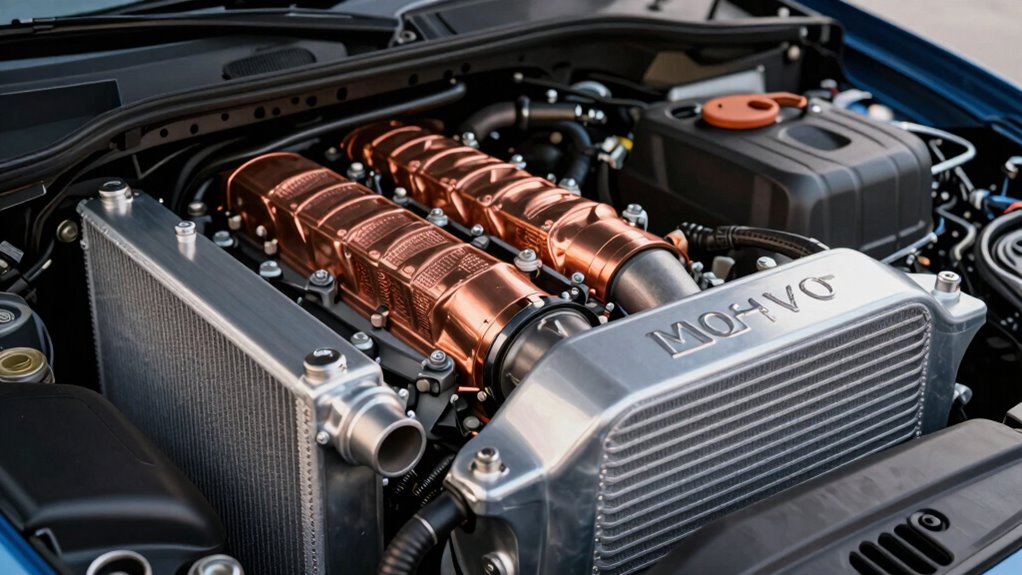

When deciding what to upgrade first, consider your driving needs. If your engine overheats or you push your car hard, start with the radiator to improve overall cooling. Next, upgrade the oil cooler if you tow, race, or drive aggressively to protect your engine oil. The intercooler should be your focus if you have a turbocharged engine wanting more power. Knowing your vehicle’s condition and goals can help you choose the best upgrade path. Keep going to explore more details.

Get business pricing on garage and car supplies
- Business-only prices and quantity discounts
- Tax-exempt purchasing
- Multiple users, one account, clear invoices
Key Takeaways
- Prioritize upgrading the radiator first if your engine frequently overheats or shows signs of cooling system issues.
- Consider the oil cooler next if you drive under high stress, like racing or towing, to maintain optimal oil temperature.
- Upgrade the intercooler primarily for turbocharged engines seeking increased power and improved air intake cooling.
- Assess your vehicle’s specific needs and driving conditions to determine which component’s upgrade will provide the most benefit.
- Overall, address the radiator first, followed by auxiliary cooling components, to ensure efficient engine temperature management.

When it comes to keeping your vehicle’s engine running smoothly, radiators, oil coolers, and intercoolers each play essential but distinct roles. Understanding their functions and how they impact your vehicle’s cooling efficiency can help you decide which component to upgrade first. The radiator is the primary heat exchanger that dissipates heat from the engine coolant, preventing the engine from overheating. Its performance directly influences overall engine temperature regulation, especially during demanding driving conditions. If your radiator is aging, clogged, or damaged, it can considerably reduce cooling efficiency, leading to higher engine temperatures and potential damage. Upgrading your radiator should be a priority if you notice persistent overheating or if you’re planning modifications that increase engine output. A high-quality radiator with better heat exchange capabilities can substantially improve cooling efficiency, ensuring your engine stays within ideal temperature ranges.
An oil cooler, on the other hand, is designed to maintain proper oil temperature, ensuring the lubricant remains effective under high-stress conditions. Unlike the radiator, which cools coolant circulating through the engine, the oil cooler specifically targets the engine oil. When oil gets too hot, it loses its lubricating properties, increasing wear and risking engine damage. If you’re pushing your vehicle harder—like in racing, towing, or spirited driving—upgrading the oil cooler can make a noticeable difference in maintaining consistent oil temperatures. While it may not impact overall engine temperature directly, improving oil cooling helps sustain ideal lubrication, which in turn supports cooling efficiency and engine longevity. Prioritizing an oil cooler upgrade becomes vital for high-performance applications or if you’re experiencing oil temperature spikes. Additionally, incorporating proper ventilation can help improve overall cooling performance by facilitating heat dissipation.
The intercooler is vital in turbocharged or supercharged engines, as it cools the compressed air before it enters the combustion chamber. Hotter intake air reduces power and efficiency; cooler air improves combustion, resulting in more power and better fuel economy. If you’re aiming to boost your engine’s performance, upgrading the intercooler to a more efficient unit can provide immediate gains. It directly influences the air intake temperature, thereby impacting overall cooling efficiency and power output. For most drivers, a stock intercooler suffices, but for those seeking performance enhancements, an upgraded intercooler can be a game-changer.
Deciding what to upgrade first depends on your driving habits and vehicle condition. If overheating is your main concern, start with the radiator. If you’re into high-performance driving or towing, consider upgrading the oil cooler next. For turbocharged setups aiming for more power, the intercooler should be your last consideration but a noteworthy upgrade. Ultimately, evaluating your vehicle’s specific needs and how each component affects cooling efficiency will guide your upgrade prioritization effectively.
high performance radiator for cars
As an affiliate, we earn on qualifying purchases.
As an affiliate, we earn on qualifying purchases.
Frequently Asked Questions
How Do I Determine Which Cooling System Needs Upgrading First?
To determine which cooling system needs upgrading first, check for signs like overheating, coolant leaks, or reduced performance. Prioritize cooling system maintenance to identify bottlenecks. For aftermarket upgrade options, consider upgrading the radiator first if your engine runs hot, or the intercooler if you’re boosting power. An oil cooler is essential for high-performance or heavily loaded engines. Focus on the system that shows the most strain or inefficiency for best results.
Can I Upgrade All Three Components Simultaneously?
Think of your engine’s thermal management as a symphony; each component plays a vital role. Yes, you can upgrade all three simultaneously to boost cooling efficiency, but it’s best to prioritize based on your specific needs and budget. Upgrading all at once maximizes cooling performance, yet spreading out upgrades allows you to evaluate improvements step-by-step, ensuring each component functions at its most effective to contribute to your engine’s thermal balance.
What Are the Signs of Overheating in Each System?
You’ll notice signs of overheating in each system through increased engine temperature, coolant boiling, or oil temperature spikes. In thermal management, you might see coolant leaks or gauge readings high beyond normal. Cooling efficiency drops when your intercooler or radiator isn’t properly dissipating heat, leading to reduced performance. Pay attention to these signs to prevent damage, and verify your cooling systems operate effectively by maintaining and upgrading when necessary.
How Do Upgrades Affect Overall Vehicle Performance?
Upgrades can transform your vehicle from a sluggish turtle into a sleek cheetah, boosting overall performance. When you enhance your cooling systems, you improve heat management, leading to better engine efficiency and potentially increased horsepower. While aesthetic modifications make your ride look sharp, upgrading radiators, oil coolers, or intercoolers directly impacts fuel efficiency and reliability, ensuring your vehicle runs smoothly under pressure and keeps you ahead of the pack.
Are Aftermarket Parts Necessary for Effective Upgrades?
Aftermarket options aren’t always necessary, but they often enhance upgrade benefits. If you want better cooling or performance, aftermarket parts can offer improved efficiency, durability, and customization. However, guarantee the parts fit your vehicle’s needs and budget. Upgrading with quality aftermarket options can maximize your vehicle’s performance gains, but in some cases, stock parts might suffice. Decide based on your goals and how much you’re willing to invest.
Conclusion
Ultimately, choosing to upgrade your radiator, oil cooler, or intercooler depends on your driving style and goals. Remember, “a chain is only as strong as its weakest link.” Prioritize the component that most limits your engine’s performance or reliability. Investing wisely in the right upgrade helps prevent problems down the road and keeps your car running smoothly. So, assess your needs carefully, and don’t overlook the importance of a balanced cooling system.
Fall Picks
fall essentials
As an affiliate, we earn on qualifying purchases.