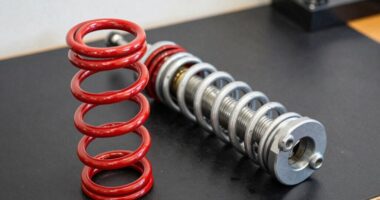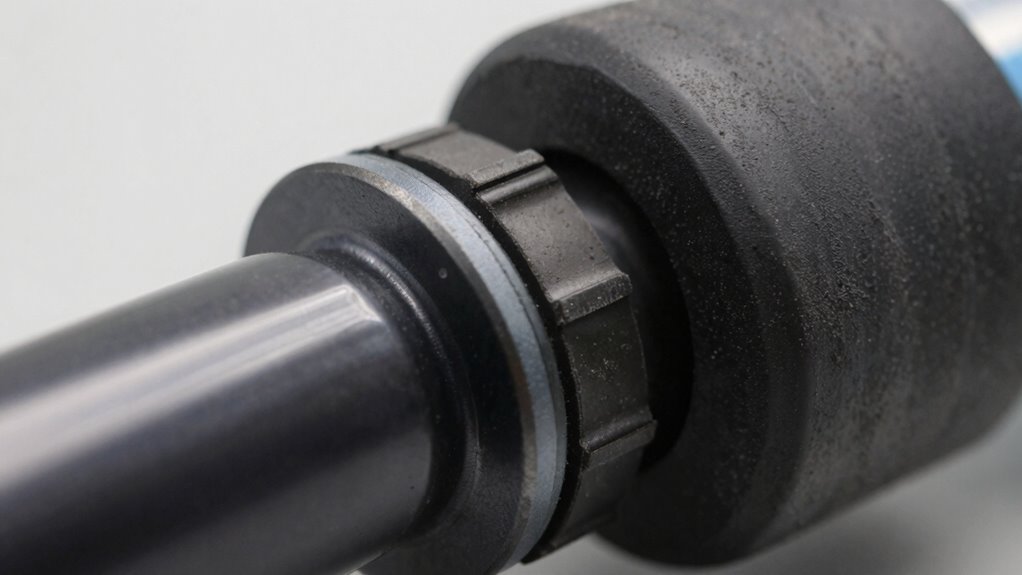

Choosing poly bushings boosts your vehicle’s handling and durability but often increases noise, vibration, and harshness (NVH) compared to rubber options. Poly’s stiffness means you’ll feel more road input and less comfort on rough terrain. Rubber absorbs shocks better and keeps NVH low, but it wears out faster. If you want to understand how this tradeoff impacts your drive and what to think about before upgrading, the details will become clear as you explore further.
Key Takeaways
- Poly bushings increase NVH due to their rigidity, transmitting more road noise and vibrations into the cabin.
- Rubber bushings absorb vibrations effectively, resulting in a quieter and more comfortable ride.
- Over time, rubber deterioration reduces its NVH benefits, potentially increasing noise levels again.
- The tradeoff favors poly for performance and handling, but at the cost of higher NVH levels.
- Proper installation and material quality influence the NVH characteristics of both poly and rubber bushings.
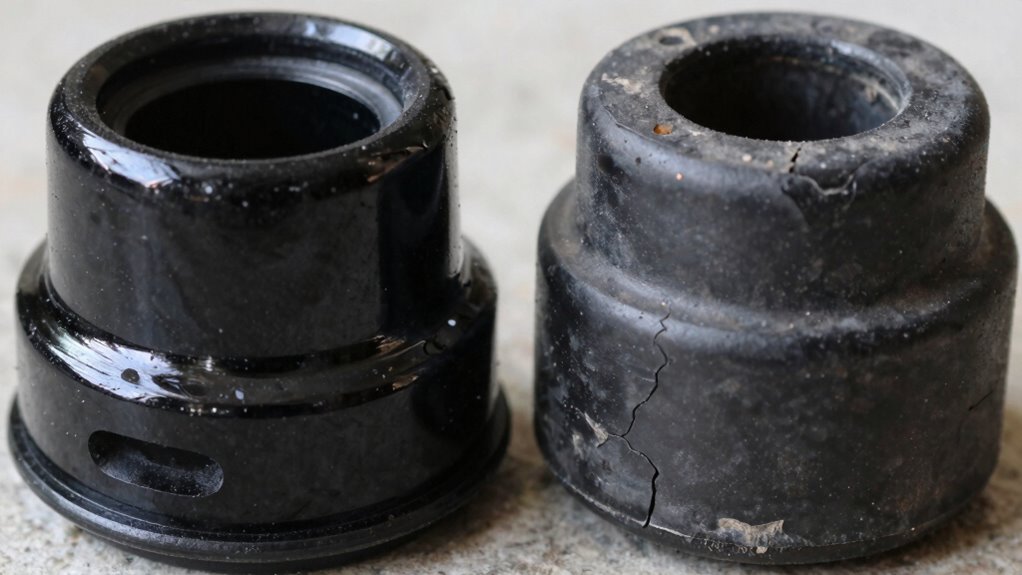
When it comes to choosing suspension components, understanding the differences between poly bushings and rubber bushings is essential. These small parts play a big role in how your vehicle handles, feels, and even looks. Poly bushings are known for their durability and stiffening properties, which can lead to noticeable aesthetic improvements by giving your suspension a more modern, performance-oriented look. They’re often chosen by enthusiasts looking for a clean, tight appearance that complements upgraded suspension setups. However, installing poly bushings isn’t always straightforward. They tend to be more challenging to fit because they’re less forgiving than rubber and require precise alignment. You might need special tools or extra patience during installation, especially if you’re swapping out old rubber bushings that have deformed over time. If you’re not experienced, the installation challenges can turn into a frustrating process, possibly requiring professional help to ensure everything fits correctly and functions properly.
On the other hand, rubber bushings excel in providing a comfortable ride and reducing noise, vibration, and harshness (NVH). They absorb shocks more effectively, making your driving experience smoother. Because rubber bushings are more compliant and flexible, they tend to be easier to install, especially if you’re working with stock suspension components. This flexibility also means they’re more forgiving if your suspension parts are slightly worn or misaligned, which can save you time and effort during installation. But, despite their ease of installation and NVH benefits, rubber bushings don’t offer the same aesthetic appeal or “tight” feel that poly bushings provide once installed. Over time, rubber can deteriorate, crack, or become softer, leading to less precise handling and potentially more noise, which might bother you if you’re aiming for a cleaner look and more responsive feel.
Ultimately, your choice hinges on what you prioritize: if you want a sleek, performance-focused look with minimal aesthetic concerns and are willing to face installation challenges, poly bushings are a solid option. If comfort, ease of installation, and long-term NVH reduction matter more, rubber bushings might suit your needs better. Just keep in mind that each has its tradeoffs, and understanding these helps you make an informed decision that aligns with your driving style and vehicle goals.
Frequently Asked Questions
How Long Do Poly Bushings Typically Last Compared to Rubber?
Poly bushings typically last longer than rubber ones, often between 50,000 to 100,000 miles, thanks to their superior bushing durability. However, they’re more prone to material degradation from exposure to harsh elements and extreme temperatures. Rubber bushings, while shorter-lived at around 30,000 to 50,000 miles, tend to absorb vibrations better but degrade faster under tough conditions. Your choice impacts longevity and ride comfort.
Are Poly Bushings Suitable for All Vehicle Types?
Poly bushings aren’t suitable for all vehicle types, especially if you prioritize ride comfort. You need to contemplate vehicle compatibility, as some cars handle NVH (noise, vibration, harshness) differently. Installation considerations also matter—polyurethane can be harder to install and may require specific tools or modifications. If your vehicle demands a softer ride or you’re sensitive to vibrations, rubber bushings might be a better choice for your setup.
Do Poly Bushings Require Special Maintenance or Lubrication?
Poly bushings don’t require regular lubrication, unlike rubber bushings that sometimes need bushing lubrication to prevent squeaks. You should follow a maintenance schedule that includes inspecting your poly bushings for cracks or wear. Generally, they’re low-maintenance, but checking them periodically ensures longevity. If you notice unusual noise or handling issues, it’s time to reassess your bushing condition and consider replacing them to maintain peak vehicle performance.
Can Replacing Rubber With Poly Bushings Affect Vehicle Handling?
Replacing rubber with poly bushings can markedly impact your vehicle’s handling. You’ll notice improved steering response and reduced flex, which enhances ride quality during turns. However, this upgrade often increases noise levels and vibrations inside the cabin, making the ride less comfortable. While handling gets sharper, be prepared for a tradeoff where NVH (noise, vibration, harshness) levels rise, affecting overall comfort.
What Environmental Factors Impact the Longevity of Rubber Versus Poly Bushings?
When it comes to environmental factors, you gotta watch out for UV degradation and chemical exposure, as they can shorten the lifespan of rubber and poly bushings. UV rays cause rubber to crack and degrade faster, while chemicals like oils and solvents attack both materials. Rubber tends to be more susceptible to these elements, but poly bushings handle chemicals better. Keep these in mind to guarantee your bushings last longer and perform better.
Conclusion
Ultimately, choosing between poly bushings and rubber comes down to understanding your priorities: do you want a stiffer ride and better handling, or a smoother, quieter experience? Each material offers its own advantages and tradeoffs. Poly provides precision and performance, while rubber offers comfort and NVH reduction. So, weigh your needs carefully, consider the ride you want, and make a choice that aligns with your driving style, because your vehicle’s feel depends on the right bushing for you.