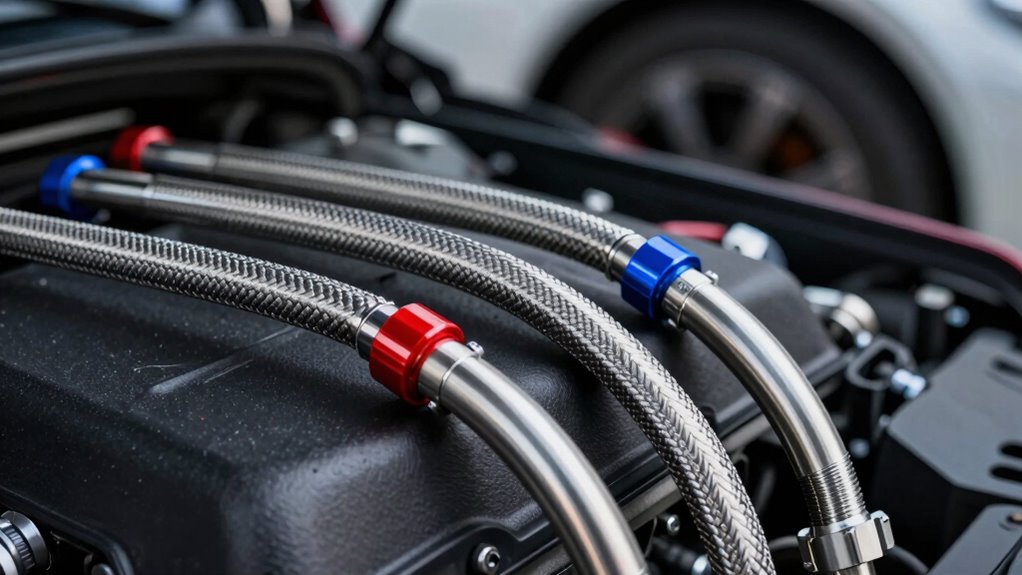
Stainless brake lines can really improve your braking feel by reducing line expansion under pressure, which means less pedal travel and quicker response. They resist swelling and maintain consistent firmness during heavy braking, making your stopping power more predictable. Plus, they’re more durable and less prone to leaks than rubber lines. If you want sharper, more responsive braking, these lines are worth considering. Keep exploring to discover how proper installation and maintenance enhance their benefits even further.
Key Takeaways
- Stainless brake lines reduce flex and expansion under pressure, leading to a more responsive brake pedal.
- They provide consistent braking feel by minimizing line expansion during hard braking.
- Proper installation and bleeding are essential to realize the improved braking performance.
- Compatibility with brake fluids ensures the lines maintain their integrity and performance.
- Overall, they enhance braking confidence and feel when correctly installed and maintained.

Stainless brake lines are a popular upgrade for vehicle enthusiasts seeking better braking performance and durability. When considering this modification, you’ll want to understand how they can impact your vehicle’s braking feel and what steps to take for proper installation. One of the key concerns is brake fluid compatibility. Stainless lines are typically made from braided stainless steel with a rubber or PTFE inner lining. Ensuring your brake fluid is compatible with the new lines is essential because some fluids, such as DOT 5 silicone-based fluids, may not work well with certain linings and could cause swelling or degradation over time. Most stainless brake lines are designed to work with DOT 3, DOT 4, and DOT 5.1 fluids, but always double-check the manufacturer’s specifications before installation. Using the right brake fluid maintains peak performance and prevents issues like leaks or reduced braking efficiency.
When installing stainless brake lines, you’ll want to follow some straightforward tips to guarantee safety and performance. First, always lift and secure your vehicle properly, using jack stands and wheel chocks. Before removing the old lines, take a photo or note their routing to make reinstallation easier. As you disconnect the brake lines, prepare for some brake fluid to leak out—have a container or rags ready to catch any drips. When installing the new stainless lines, make sure they’re routed correctly and avoid any contact with moving suspension parts or hot exhaust components, which could cause premature wear or damage. Tighten all fittings to the manufacturer’s torque specifications, because over-tightening can deform fittings, and under-tightening can lead to leaks. Bleeding the brake system thoroughly after installation is vital to remove air bubbles, which can compromise braking feel. Use the proper bleeding technique, whether that’s the traditional method or a pressure bleeder, to ensure a firm brake pedal. Additionally, stainless lines are less prone to expansion under pressure, which contributes to their improved responsiveness and consistency in braking performance.
Frequently Asked Questions
Are Stainless Brake Lines Compatible With All Vehicle Models?
Stainless brake lines aren’t compatible with all vehicle models, so you need to check your vehicle compatibility first. They typically require specific fittings and are designed for certain makes and models. Also, consider brake fluid compatibility, since some lines work better with particular brake fluids. Before installing, verify that the stainless lines match your vehicle’s specifications to make sure safe and effective braking performance.
How Long Do Stainless Brake Lines Typically Last?
Like a trusty knight’s armor, stainless brake lines usually last 10 to 15 years, thanks to their exceptional material durability. You’ll find that they resist corrosion and wear better than rubber hoses. Installation complexity varies—if you’re comfortable with basic tools, it’s manageable, but a professional can guarantee a perfect fit. With proper maintenance, you’ll enjoy their reliable performance and extended lifespan, keeping your brakes sharp for years ahead.
Do Stainless Brake Lines Require Special Maintenance?
Yes, stainless brake lines require some special maintenance. You should regularly check their material compatibility with brake fluid and avoid exposure to harsh chemicals that can corrode the material. Also, inspect them for any signs of wear or damage. Installation complexity is moderate, so if you’re unsure, it’s best to have a professional handle the upkeep to guarantee safety and peak performance.
Can Stainless Brake Lines Be Installed DIY?
Sure, you can install stainless brake lines yourself if you’re confident and cautious. Start with simple installation tips like securing the vehicle properly and bleeding the lines thoroughly. Remember, material differences mean stainless lines resist rust and corrosion, but require precise handling. Be patient, follow detailed instructions, and use the right tools. With dedication and diligence, DIY installation can deliver better braking benefits, boosting your confidence and control on the road.
Are Stainless Brake Lines More Resistant to Corrosion?
Yes, stainless brake lines are more resistant to corrosion because of their material durability. You’ll find that stainless steel resists rust and corrosion better than rubber or other materials, especially in harsh conditions. This enhanced corrosion resistance helps maintain brake line integrity over time, reducing leaks and failures. So, if you want longer-lasting, more durable brake lines, stainless steel is a smart choice that can improve your vehicle’s reliability.
Conclusion
Upgrading to stainless brake lines can genuinely enhance your braking feel, giving you more confidence on the road. Imagine hitting the brakes hard during an emergency — with stock lines, you might feel that spongy delay. But with stainless lines, you’ll notice a firmer, more responsive pedal, potentially making the difference between a close call and a safe stop. Don’t settle for less—trust in the upgrade to keep you safer and more in control every time you hit the brakes.