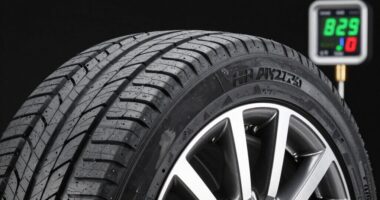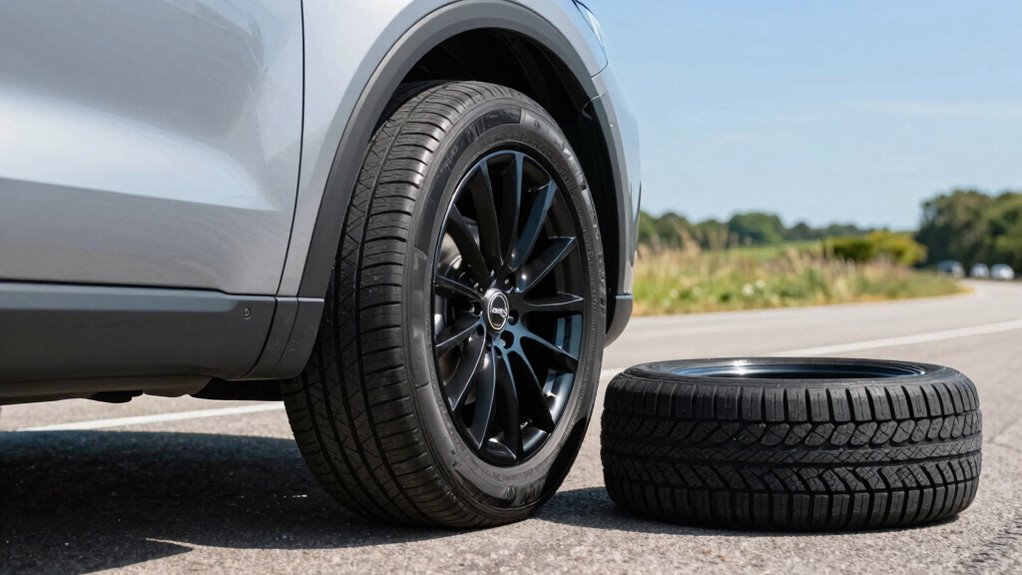

Summer tires deliver better grip, handling, and braking performance in warm weather, thanks to their softer rubber compounds. However, this focus on performance means they wear out faster and aren’t ideal in cold or snowy conditions. All-season tires provide a balanced mix of traction and durability across various weather, but they sacrifice some sharpness and responsiveness found in summer tires. To discover which option suits your driving style and climate, explore the details further.
Key Takeaways
- Summer tires provide superior grip, handling, and braking in warm weather compared to all-season tires.
- All-season tires offer moderate traction across various conditions but lack the high-performance grip of summer tires.
- The softer rubber compounds in summer tires enhance grip but wear out faster than all-season tires.
- All-season tires use tougher compounds, which reduce grip but improve durability and longevity.
- Using summer tires in cold or snowy conditions significantly diminishes grip and safety compared to all-season tires.
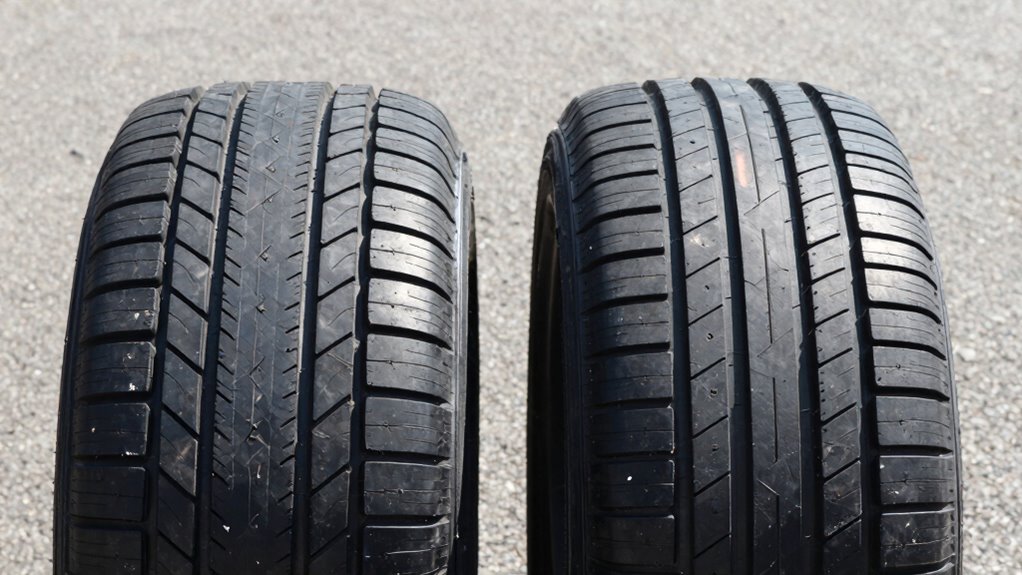
Are summer and all-season performance tires truly designed for different driving needs? The answer is yes, and understanding those differences can impact your driving experience markedly. Summer tires are engineered to maximize grip and handling in warm conditions, but that focus often comes at the expense of tire durability and comfort. These tires typically feature softer rubber compounds that provide excellent traction on dry and wet roads, giving you sharp steering response and quick acceleration. However, that same softness means they tend to wear out faster, especially if you drive aggressively or subject them to harsh conditions. You might find yourself replacing summer tires more often, which can add to your overall costs over time. Additionally, their specialized design often means they are less effective in colder or snowy weather, making seasonal changes an important consideration.
Summer tires deliver superior grip and handling in warm weather but wear out faster and can compromise comfort.
All-season tires, on the other hand, are built to offer a more balanced performance across different weather conditions. They usually incorporate tougher rubber compounds designed to withstand a variety of temperatures, which helps prolong tire durability. This means you won’t have to replace them as frequently, making them a convenient choice for year-round driving. But this durability can come with some trade-offs. For example, all-season tires often produce more road noise compared to their summer counterparts, especially on smooth pavement. The design and tread pattern that help them handle diverse conditions also tend to generate additional sound, which can be noticeable on longer drives or at highway speeds. If comfort and quietness matter a lot to you, this is an important factor to ponder.
When it comes to grip, summer tires usually outperform all-season tires because of their specialized rubber compounds and tread patterns tailored for warm weather. They give you superior handling, especially in dry conditions, and better braking distances. But this enhanced grip diminishes when temperatures drop, making summer tires less reliable in cold or snowy weather. All-season tires, while offering decent traction in a variety of conditions, don’t quite match the performance of summer tires in ideal conditions. They’re designed to be versatile rather than specialized, which means you’re giving up some of that peak grip to gain the comfort of a more durable, quieter tire.
Furthermore, advancements in European cloud servers and energy-efficient data center solutions are enabling manufacturers to develop tires with innovative compounds that aim to balance grip and longevity more effectively. Ultimately, your choice depends on your driving habits and climate. If you mostly drive in warm weather and prioritize sharp handling, summer tires are worth the trade-off. But if you prefer a set-it-and-forget-it approach and want tires that can handle a range of conditions with less frequent replacements, all-season tires are more practical. Just remember, with all-season tires, you might give up some grip and experience a bit more road noise, especially as they wear over time.
Frequently Asked Questions
How Do Tire Prices Compare Between Summer and All-Season Options?
You’ll find that summer tires usually cost more upfront than all-season tires because of their specialized grip and performance features. While summer tires may wear out faster, they often last longer if you’re diligent with seasonal tire storage and proper maintenance. All-season tires are more budget-friendly initially, but you might spend more over time due to their differing tire longevity. Consider your driving needs and storage options before choosing.
Can Switching Between Tire Types Affect Vehicle Warranty Coverage?
Switching between tire types can impact your vehicle warranty coverage. If you don’t maintain proper tire compatibility or ignore manufacturer guidelines, warranty implications could arise, especially if a tire failure occurs. Think of it as riding a bicycle with square wheels—your warranty might not cover damages caused by incompatible tires. Always check your warranty terms and consult your vehicle manual before changing tire types to avoid potential issues.
What Are the Environmental Impacts of Different Tire Materials?
The environmental impacts of different tire materials matter when you’re choosing tires. Opt for eco-friendly materials, which reduce harmful emissions during manufacturing and use. Recycling tires helps prevent landfill waste and recycles valuable materials. By selecting tires made with sustainable compounds, you’re supporting tire recycling efforts and lowering your carbon footprint. Ultimately, eco-conscious choices in tire materials benefit the environment and promote sustainability for future generations.
How Often Should I Rotate Summer Versus All-Season Tires?
You should rotate your tires every 5,000 to 7,500 miles, regardless of whether they’re summer or all-season tires. This Tire rotation frequency helps maintain even tread wear and prolongs tire life. When it’s time for seasonal tire changes, switch between summer and all-season tires to optimize performance and safety. Regular rotations guarantee your tires perform well in different weather conditions, giving you better grip and handling year-round.
Are There Specific Brands Known for Better Summer Performance Tires?
Think of your tires as a trusted partner on the road—some brands stand out for better summer performance. Michelin, Bridgestone, and Continental have strong reputations for tire durability and grip. These brands invest in advanced rubber compounds and tread designs that maximize summer traction. Choosing their tires means you’re prioritizing safety, control, and longevity, giving you confidence as you navigate warm-weather drives.
Conclusion
Choosing between summer and all-season performance tires is like picking the right dance partner—you need the right grip for the rhythm. Summer tires offer that fiery tango, delivering peak performance in warm weather. All-season tires, meanwhile, are like a steady waltz, reliable across conditions but not quite as spirited. Consider your driving style and climate to find your perfect match, so every drive feels like gliding smoothly on the dance floor, no matter the season.