Many new modders believe improving throttle response makes their car faster, louder, or more aggressive, but that’s a myth. Boosting response doesn’t automatically increase performance or sound; it’s more about tuning your engine management and smooth throttle application. Aggressive mods can even increase noise without real gains. To truly optimize your setup, understand how different modifications interact. Keep exploring to discover how to make smart choices that match your driving goals.

Get business pricing on garage and car supplies
- Business-only prices and quantity discounts
- Tax-exempt purchasing
- Multiple users, one account, clear invoices
Key Takeaways
- Improving throttle response doesn’t automatically improve fuel economy; smooth inputs often yield better efficiency.
- A more responsive throttle doesn’t necessarily make the engine louder or more aggressive sounding.
- Upgrades aimed at response may conflict with goals like fuel economy or quiet operation.
- Proper tuning and engine management are essential to achieve desired response and efficiency, avoiding unnecessary modifications.
- Throttle response, noise, and fuel economy are interconnected but not directly proportional or mutually exclusive.
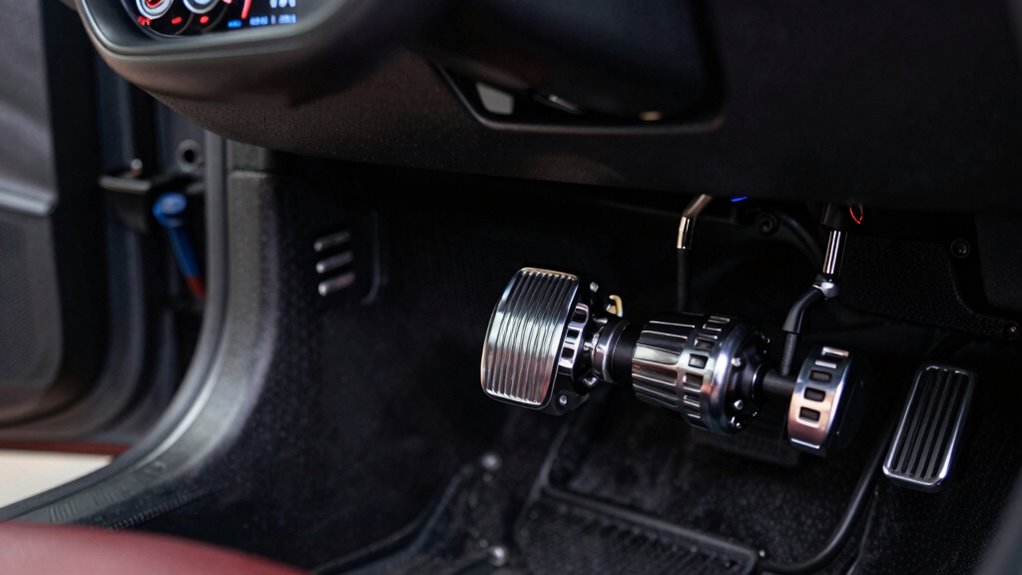
Have you ever wondered if your car’s throttle response is as good as it could be? Many new modders dive into upgrades, hoping to boost performance, but they often get caught up in myths that can lead to confusion. One common misconception is that improving throttle response always results in better fuel economy. While a snappier throttle can make your car feel more responsive, it doesn’t necessarily mean you’ll save fuel. In fact, aggressive throttle inputs, especially during spirited driving, can increase fuel consumption because you’re demanding more power from the engine. It’s tempting to think that a quicker throttle means your car is more efficient, but in reality, the connection between throttle response and fuel economy is more nuanced. Smooth, measured inputs often help optimize fuel use, even if they don’t produce the immediate thrill of a rapid throttle response. Additionally, engine management plays a crucial role in how your vehicle responds to modifications, influencing both efficiency and performance. Knowing how tuning interacts with your throttle response can help you better understand these effects and avoid unnecessary modifications. Proper mapping can fine-tune throttle behavior to match your driving style, further clarifying the relationship between response and efficiency. Moreover, understanding the impact of engine parameters can help you make more informed decisions about your upgrades, avoiding unnecessary or counterproductive changes.
Improving throttle response doesn’t always mean better fuel economy; smooth inputs often optimize efficiency.
Another myth that often circulates is that modifying the throttle or installing aftermarket parts will drastically reduce engine noise. Many believe that a more responsive throttle will make their engine sound louder or more aggressive, but that’s not always true. Engine noise depends on many factors—exhaust setup, tuning, and overall engine design—more than just how quickly your throttle responds. In some cases, upgrading the throttle system may even reduce noise because of better airflow or more precise control, leading to a smoother operation. Conversely, aggressive tuning or certain modifications can increase engine noise, but it’s not an automatic consequence of improved throttle response. Instead, it’s about how you set up your engine and exhaust system.
Understanding these myths helps you make smarter choices when modding your vehicle. You might be tempted to chase after quick throttle responses in hopes of transforming your driving experience, but keep in mind that improvements should align with your overall goals. If fuel economy is a priority, focus on tuning that promotes efficient combustion and smooth throttle application. If you’re after a louder, more aggressive sound, consider exhaust upgrades or tuning that emphasize that aspect. Remember, the relationship between throttle response, fuel economy, and engine noise isn’t one-size-fits-all. It’s complex and depends on how you approach modifications, not just the parts you install.
Additionally, knowing how engine tuning influences overall vehicle behavior can help prevent misguided modifications. Ultimately, avoiding these myths means you’ll spend less time chasing illusions and more on creating a setup that genuinely suits your driving style and goals. Take your time to understand what each upgrade does and how it impacts your car’s performance, fuel efficiency, and sound. By doing so, you’ll enjoy a more satisfying and informed modding experience that truly enhances your ride.
As an affiliate, we earn on qualifying purchases.
Frequently Asked Questions
Does Throttle Response Affect Fuel Efficiency?
Yes, throttle response can affect fuel efficiency. When you improve throttle response through modifications, you often experience better performance gains and smoother drivability improvements. However, aggressive throttle adjustments may lead to increased fuel consumption if you’re constantly pushing the engine harder. To balance performance and efficiency, fine-tune your throttle response carefully, ensuring you enjoy the drivability benefits without sacrificing too much fuel economy.
Can Throttle Response Be Improved Without Modifying the Engine?
You can improve throttle response without modifying the engine by addressing throttle lag through electronic calibration. Many modern vehicles allow you to adjust throttle sensitivity via software updates or recalibration, reducing delay between pedal input and engine response. This process enhances responsiveness without hardware changes, giving you a smoother, more immediate feel. Keep in mind, professional calibration ensures ideal results and prevents potential drivability issues.
Is a Quicker Throttle Response Always Better?
A quicker throttle response isn’t always better because it depends on your driving style and vehicle setup. Electronic throttle systems can provide faster, smoother responses, but too sensitive a setup might cause jerky acceleration. Mechanical linkage offers more direct control but may feel sluggish. Ultimately, the best throttle response balances responsiveness with drivability, so consider modifications that suit your needs without sacrificing comfort or safety.
How Does Throttle Response Differ Between Manual and Automatic Transmissions?
You’ll notice throttle response differs between manual and automatic transmissions mainly due to drive-by-wire systems and electronic throttles. In manuals, you have direct control, leading to more immediate response, while automatics rely on sensors and electronic signals, which can introduce slight delays. Statistics show modern automatics often respond within 100 milliseconds, slightly slower than manual responses, but advancements in electronic throttles are closing this gap for smoother, quicker reactions.
Does Aftermarket Tuning Guarantee Better Throttle Response?
Aftermarket tuning can improve throttle response, but it doesn’t guarantee perfect results. It adjusts electronic control settings and pedal sensitivity, making the throttle feel more responsive. However, your vehicle’s baseline setup and quality of the tune matter. If done correctly, you’ll notice quicker acceleration and a more direct feel, but poor tuning can cause lag or uneven response. So, choose a reputable tuner to get the best possible improvement.
Conclusion
Don’t let these myths hold you back from improving your ride. It’s easy to get caught up in misconceptions, but remember, tweaking throttle response is all about understanding your specific setup and goals. If you think you need super expensive mods, think again — small, well-chosen adjustments often make the biggest difference. So go ahead, experiment confidently, and enjoy the thrill of a more responsive ride. Your car’s potential is just waiting to be revealed!
Halloween Picks
halloween
As an affiliate, we earn on qualifying purchases.