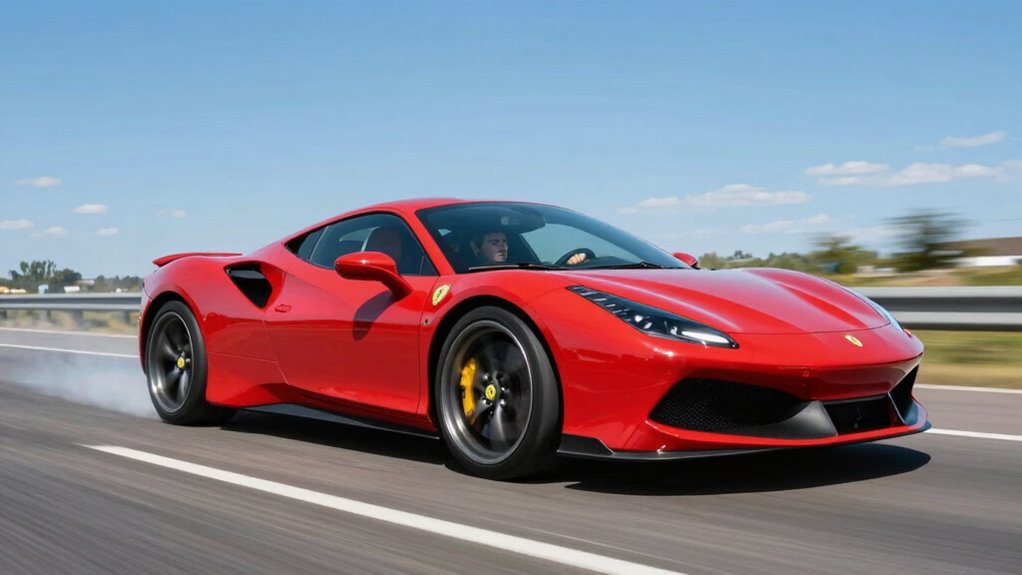

When you press the accelerator in a turbocharged car, you might feel a slight hesitation or dip in power—this is turbo lag. It’s not a flaw but a natural part of how turbo systems generate boost, relying on exhaust gases to spool up. Many drivers misinterpret this delay as poor responsiveness, but once the turbo spools, acceleration becomes more vigorous. Keep exploring, and you’ll discover how understanding this characteristic can improve your driving experience.

Get business pricing on garage and car supplies
- Business-only prices and quantity discounts
- Tax-exempt purchasing
- Multiple users, one account, clear invoices
Key Takeaways
- Turbo lag feels like a brief hesitation or dip in power during acceleration, not a weak engine flaw.
- Buyers often misinterpret turbo lag as poor responsiveness or engine failure.
- Modern turbo systems respond faster, but some delay remains at low RPMs due to spooling.
- Recognizing turbo lag helps drivers anticipate power delivery and drive more smoothly.
- Understanding turbo lag’s nature allows buyers to appreciate turbocharged engines’ efficiency and performance benefits.

Many buyers often misunderstand turbo lag, assuming it’s a flaw rather than a natural trait of turbocharged engines. When you press the accelerator, what you’re really waiting for is the engine’s response—how quickly it reacts and how smoothly it drives forward. Turbo lag is that brief delay between your foot’s action and the engine’s response, especially noticeable during vehicle acceleration. It’s not a sign of a weak engine but a characteristic of how turbochargers work, relying on exhaust gases to spool up and generate boost before delivering full power.
During this delay, you might feel a moment of hesitation or a slight dip in power, which can be mistaken for poor engine responsiveness. But in reality, turbo lag is just the engine’s way of building enough boost pressure to maximize performance. As you get used to it, you’ll learn to anticipate the delay and adjust your driving accordingly. For example, easing into the throttle when merging onto the highway or overtaking helps smooth out the shift and reduces the feeling of delay. Once the turbo spools up, you’ll notice a surge of power, making vehicle acceleration feel more vigorous and responsive than it initially seemed.
It’s important to recognize that turbo lag isn’t necessarily a flaw in the engine’s design. Many modern turbocharged vehicles have improved response times thanks to technology like twin-scroll turbines, electronic wastegates, and direct injection. These advancements help minimize the perceived delay, making engine responsiveness feel much quicker. Still, some degree of lag remains inherent, especially at lower RPMs, because the turbo needs time to spool up. Understanding turbocharger technology can help you better appreciate these limitations and the progress made in response times. Additionally, engine response times are continually improving as manufacturers develop more sophisticated systems to reduce delay and enhance driving experience, often incorporating advanced engineering principles. A deeper understanding of turbo system design can also assist drivers in managing expectations and optimizing their driving style. Recognizing that performance optimization involves managing inherent characteristics like turbo lag can help drivers utilize their vehicle’s full potential more effectively.
What you should focus on is how the turbocharged engine delivers power once it’s fully engaged. The initial hesitation might seem like a setback, but it’s actually a trade-off for the increased efficiency and potential for greater vehicle acceleration. When you understand this dynamic, you’ll find yourself more confident in managing turbo lag—using it to your advantage rather than viewing it as a flaw. With practice, you’ll learn to read the engine’s cues, modulate your throttle, and enjoy the exhilarating boost once the turbo is fully engaged.
In the end, turbo lag is simply part of the experience of driving a turbocharged vehicle. Recognizing it for what it is helps you appreciate how turbochargers enhance overall engine performance, giving you quicker acceleration and a more responsive drive once you get past that initial delay.
turbocharged engine response enhancer
As an affiliate, we earn on qualifying purchases.
As an affiliate, we earn on qualifying purchases.
Frequently Asked Questions
How Can I Reduce Turbo Lag in My Vehicle?
To reduce turbo lag, you should consider turbo tuning, which optimizes the boost response, making acceleration smoother. Additionally, exhaust modifications like installing a high-flow exhaust system can improve airflow, reducing lag. These upgrades guarantee the turbo spools faster, giving you more immediate power. Regular maintenance and upgrading your intercooler can also help maintain consistent boost pressure, resulting in a more responsive and enjoyable driving experience.
Does Turbo Lag Affect Fuel Efficiency Significantly?
Turbo lag can slightly affect fuel efficiency because turbo technology requires extra fuel to spool up quickly, especially during rapid acceleration. When you experience turbo lag, your engine might work harder to reach ideal boost, leading to increased fuel consumption. However, modern turbocharged engines are designed to minimize this effect, so if you’re mindful of driving habits, the impact on fuel efficiency remains relatively small.
Are Newer Turbocharged Engines Less Prone to Lag?
Yes, newer turbocharged engines are less prone to lag, thanks to advances in turbo technology. For instance, many modern turbo engines respond within 0.2 seconds, markedly faster than older models. This improved engine responsiveness means you’ll experience smoother acceleration and less delay when pressing the gas pedal. Manufacturers have integrated better sensors and variable geometry turbos, making turbo lag nearly negligible, so you get a more seamless driving experience.
How Does Turbo Lag Differ Between Gasoline and Diesel Engines?
Turbo lag tends to be less noticeable in diesel engines because they typically have higher torque at lower RPMs, offering quicker turbo responsiveness. Gasoline engines, however, often experience more noticeable turbo lag due to lower initial torque, making engine responsiveness feel delayed. You’ll notice this difference during acceleration, where diesel engines provide smoother, more immediate power delivery, while gasoline engines might feel a brief delay before the turbo kicks in.
Can Driving Habits Influence Perceived Turbo Lag?
Your driving style and engine tuning can definitely influence how you perceive turbo lag. Aggressive driving, quick throttle responses, and high engine speeds can amplify the lag, making it feel more noticeable. Conversely, smooth acceleration and proper engine tuning can minimize this sensation. By adjusting your driving habits and optimizing your engine setup, you can reduce perceived turbo lag, making your driving experience more seamless and responsive.
Conclusion
Now that you understand what turbo lag truly feels like, you might think it’s just a minor hiccup. But don’t be fooled—this delay can secretly influence your driving experience in ways you never expected. As you get behind the wheel of a turbocharged car, ask yourself: is it really a flaw, or is there more to discover? The truth might just surprise you, and your next ride could change how you see turbo lag forever.
Fall Picks
fall essentials
As an affiliate, we earn on qualifying purchases.