
Upgrading your radiator helps you better manage heat in modified cars by improving cooling efficiency and preventing overheating. High-quality radiators with advanced materials like aluminum or copper-brass, combined with optimized internal designs, promote better coolant flow and heat transfer. Thicker cores and enhanced fin arrangements boost performance even under demanding conditions, ensuring your engine stays at ideal temperatures. If you want to discover how these upgrades maximize your vehicle’s reliability and longevity, keep exploring more options.
Key Takeaways
- Upgraded radiators enhance cooling efficiency, preventing overheating during high-performance or modified vehicle operations.
- Material choices like aluminum improve heat transfer and reduce weight, benefiting overall heat management.
- Advanced internal designs increase coolant flow and turbulence, optimizing heat dissipation in modified engines.
- Thicker cores and fin configurations boost radiator capacity to handle increased heat output from modifications.
- Proper maintenance and quality radiators extend system durability, ensuring consistent heat management in modified cars.

Upgrading your radiator can considerably improve your vehicle’s cooling performance, especially during demanding drives or in hot climates. When you focus on enhancing coolant flow, you’re ensuring that the engine maintains ideal operating temperatures, preventing overheating and potential damage. The key to this lies in choosing the right radiator materials and understanding how they influence coolant flow. Different materials have unique thermal properties that affect heat dissipation, durability, and weight. For example, aluminum radiators are popular because they offer excellent heat transfer capabilities, lightweight construction, and corrosion resistance. Copper-brass radiators, on the other hand, excel at conducting heat due to copper’s superior thermal conductivity but tend to be heavier and more prone to corrosion if not properly maintained.
Upgrading your radiator improves coolant flow, heat dissipation, and overall engine performance.
When you select a radiator, pay close attention to how the material impacts coolant flow. A well-designed radiator made from high-quality materials will facilitate smooth, unrestricted coolant movement. This means fewer hot spots and more efficient heat transfer away from your engine. The internal design also matters—fins, tubes, and baffle arrangements can substantially influence coolant flow rate and overall cooling efficiency. If your radiator’s design promotes turbulence, it helps maximize heat exchange as coolant passes through, which is especially crucial when your car is heavily modified and producing more heat than stock setups. Additionally, selecting a radiator with optimized internal design can significantly enhance coolant flow and heat transfer efficiency.
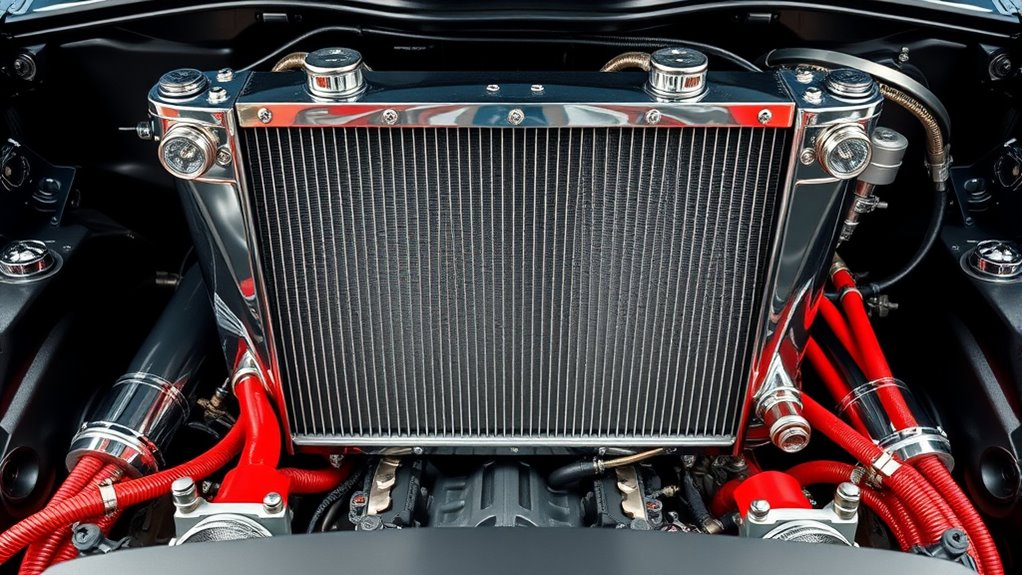
Upgrading to a radiator with better materials and design isn’t just about heat dissipation; it’s about creating a system that works seamlessly with your modifications. High-performance radiators often feature thicker cores and more advanced fin configurations to improve coolant flow and heat transfer. These enhancements work together to keep your engine at a safe temperature, even under stress. When you install a radiator made from premium materials, you also gain increased durability and resistance to corrosion, which extends the lifespan of your cooling system. Proper maintenance, including regular coolant changes and inspecting for leaks, complements these upgrades and guarantees consistent performance.
Ultimately, choosing the right radiator involves balancing material quality, internal design, and your vehicle’s specific needs. If you’re pushing your car hard or driving in extreme heat, investing in a radiator with superior materials and optimized coolant flow will pay off by keeping your engine cooler, more reliable, and ready for whatever challenges you throw at it. This upgrade isn’t just about managing heat; it’s about enhancing your car’s overall performance and longevity.
high performance aluminum radiator for cars
As an affiliate, we earn on qualifying purchases.
As an affiliate, we earn on qualifying purchases.
Frequently Asked Questions
How Do Upgraded Radiators Affect Fuel Efficiency?
Upgrading your radiator can improve fuel efficiency by maintaining ideal engine temperature, which helps your engine run smoothly. With better coolant compatibility, your new radiator prevents overheating and reduces strain on the engine. Regular radiator maintenance ensures it functions efficiently, saving fuel. When your cooling system works properly, your engine doesn’t have to work harder, ultimately boosting your car’s fuel economy and extending its lifespan.
Are There Specific Brands Recommended for Modified Cars?
Hold your horses, Sherlock! For your modified car, you should consider reputable radiator brands like Mishimoto, Denso, and Koyo, which offer reliable aftermarket options. These brands are well-regarded for their durability and cooling efficiency, making them ideal choices for high-performance setups. You’ll want to make certain of compatibility with your vehicle’s specs, but sticking to trusted names helps avoid headaches and keeps your engine running cool under pressure.
Can Upgraded Radiators Improve Engine Longevity?
Upgraded radiators can definitely improve engine longevity by better managing heat. When you choose one, verify coolant compatibility to prevent corrosion and overheating. Opt for a radiator made from durable materials like aluminum, which offers efficient heat transfer. Properly maintained, an upgraded radiator keeps your engine cooler, reducing wear and tear, and ultimately extending its lifespan. Regular checks and using the right coolant are key to maximizing these benefits.
What Is the Typical Lifespan of an Upgraded Radiator?
You’ll typically get around 5 to 10 years from an upgraded radiator, depending on coolant compatibility and radiator materials. If you choose a high-quality aluminum or brass unit, it’s more durable and resistant to corrosion. Regular maintenance, such as flushing and using the right coolant, helps prolong its lifespan. Coincidentally, staying on top of these factors guarantees your upgraded radiator keeps your engine cool and lasts longer.
Do Upgraded Radiators Require Special Installation Tools?
Yes, upgraded radiators may require special installation tools for your cooling system. During the installation process, you might need specific wrenches, clamps, or screwdrivers to guarantee a secure fit and proper connection. Using the right tools helps prevent damage and ensures peak performance. If you’re unfamiliar with the process, consider consulting a professional or following detailed instructions to make sure your upgraded radiator functions effectively and keeps your engine cool.
Conclusion
Upgrading your radiator isn’t just about boosting performance—it’s about keeping your engine cool under pressure. Did you know that a high-quality radiator can reduce engine temperatures by up to 20%? That means fewer overheating issues and longer-lasting components. When you invest in an upgraded radiator, you’re taking control of heat management, ensuring your modified car runs smoothly and reliably. Don’t let heat hold you back—upgrade today and experience the difference firsthand.