
Choosing the right exhaust diameter isn’t just about going bigger; it’s about finding the perfect balance for your engine and driving style. Too large a pipe can reduce backpressure and limit low-end torque, while too small increases backpressure and restricts top-end power. The ideal size improves performance, sound, and efficiency across the RPM range. If you keep exploring, you’ll discover how to optimize your exhaust setup for the best results.

Get business pricing on garage and car supplies
- Business-only prices and quantity discounts
- Tax-exempt purchasing
- Multiple users, one account, clear invoices
Key Takeaways
- Larger exhaust pipes can reduce backpressure, boosting high-RPM performance but potentially harming low-end torque.
- Oversized pipes may cause noise pollution and reduced efficiency at lower speeds.
- Smaller diameter exhausts increase backpressure, improving low-end torque but limiting top-end power.
- Proper exhaust sizing balances airflow, backpressure, and sound for optimal engine performance.
- Matching exhaust diameter to engine and driving style maximizes efficiency, power, and sound quality.

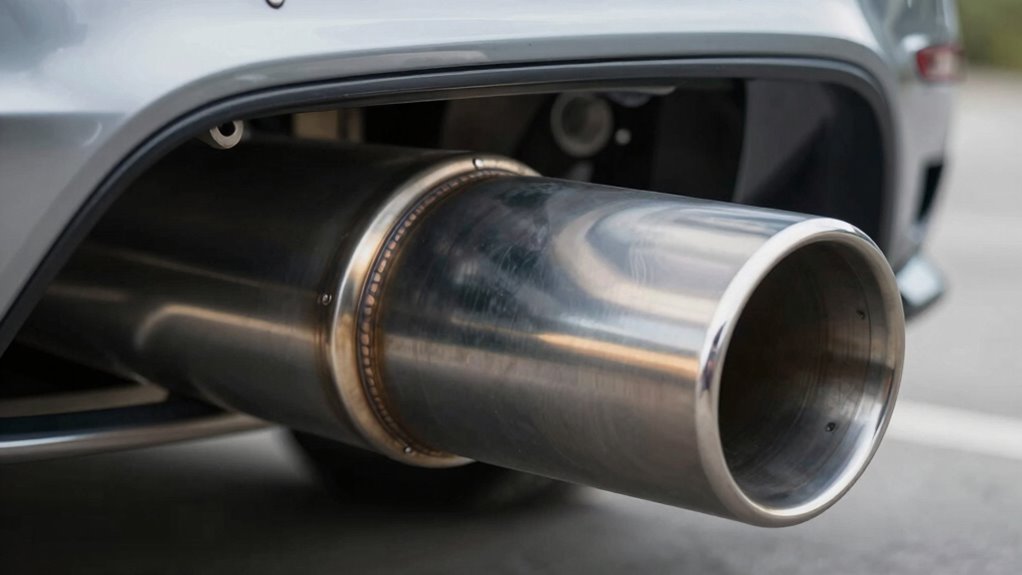
Have you ever wondered how the diameter of an exhaust pipe impacts your vehicle’s performance? It’s a common question among car enthusiasts and everyday drivers alike. The truth is, choosing the right exhaust diameter isn’t just about going bigger for the sake of it; it’s about understanding how headers and airflow work together. When you increase the pipe’s diameter, you’re giving exhaust gases more room to escape. This can reduce backpressure, which might boost horsepower and torque, especially at higher RPMs. But it’s not a simple rule of “bigger is better.” If the pipe is too large, you might actually hinder performance at lower speeds because your engine struggles to push exhaust out efficiently. Smaller pipes create more backpressure, which can boost low-end torque but limit top-end power. Finding the balance is key.
Choosing the right exhaust diameter balances airflow, backpressure, and performance at different engine speeds.
Another essential factor influenced by exhaust diameter is sound and noise. When you go bigger, your exhaust tends to sound deeper and more aggressive, which many drivers find appealing. But that louder, more resonant tone often comes with increased noise levels, which can be a nuisance, especially on long drives or in residential areas. Conversely, smaller pipes tend to produce a quieter, more subdued sound. So, if you want a sporty exhaust note without turning heads for the wrong reasons, you need to consider how diameter affects both sound and noise.
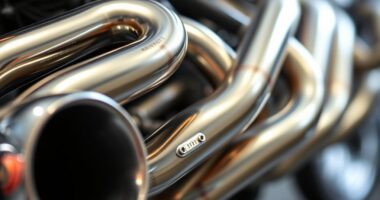
Headers also play a significant role in this equation. They’re designed to optimize airflow from the engine’s cylinders into the exhaust system. High-quality headers can improve airflow efficiency, making even a modestly sized exhaust pipe perform better. When headers are well-designed, they help maintain a steady flow of gases, reducing turbulence and improving overall engine performance. If your headers are restrictive or poorly designed, even a larger exhaust pipe won’t deliver the performance gains you’re seeking. That’s why selecting the right headers and matching them with an appropriately sized exhaust pipe is essential. Additionally, understanding airflow dynamics can help you make better modifications for your specific driving needs.
Ultimately, bigger isn’t always better when it comes to exhaust diameter. You need to take into account your driving style, engine setup, and what you want from your vehicle. If you go too large, you risk sacrificing low-end torque and increasing noise unnecessarily. If you go too small, you might limit top-end power and cause backpressure issues. The goal is to find that sweet spot where headers, airflow, and pipe diameter work harmoniously. That way, you’ll enjoy improved performance, a desirable sound, and a smoother overall driving experience.
performance exhaust system for cars
As an affiliate, we earn on qualifying purchases.
As an affiliate, we earn on qualifying purchases.
Frequently Asked Questions
How Does Exhaust Diameter Affect Fuel Economy?
A larger exhaust diameter can negatively impact your fuel efficiency because it may reduce exhaust flow velocity, hindering proper engine scavenging. When exhaust gases don’t flow smoothly, your engine works harder, consuming more fuel. Conversely, an appropriately sized exhaust improves flow and maximizes combustion, boosting fuel efficiency. You should choose an exhaust diameter tailored to your engine’s specifications to maintain ideal exhaust flow and conserve fuel.
What Materials Are Best for Exhaust Pipes?
Did you know stainless steel is the top choice for exhaust pipes? It offers excellent exhaust materials, combining corrosion resistance with high heat tolerance. You’ll find it highly durable, ensuring your pipe withstands harsh conditions and maintains its integrity over time. If you want long-lasting pipe durability, stainless steel is your best bet. It’s also easier to maintain and looks great, making it a popular choice for many vehicle enthusiasts.
Can an Oversized Exhaust Damage My Engine?
Yes, an oversized exhaust can harm your engine performance and emission control. When the diameter is too large, it reduces back pressure, which may cause a loss in power and efficiency. This can lead to incomplete combustion and increased emissions. You might also notice sluggish acceleration and lower fuel economy. To avoid damage, match your exhaust size to your engine’s specifications, ensuring ideal performance and proper emission regulation.
How Do I Measure My Exhaust Diameter Correctly?
Think of measuring your exhaust diameter like fitting a glove—you want it snug but not tight. To do this, use a tape measure or calipers to get the inside diameter of your exhaust pipe at the widest point. Check exhaust measurements at multiple spots along the pipe to guarantee consistency. Accurate pipe sizing is essential; too small restricts flow, too large creates turbulence. Always measure carefully for the best fit.
Does Exhaust Diameter Influence Vehicle Noise Levels?
Yes, exhaust diameter influences noise levels. A larger diameter can increase exhaust resonance, making your vehicle louder, while a smaller one tends to produce a more subdued sound. The diameter also affects sound modulation, altering tone and pitch. If you want a deeper, more aggressive sound, a bigger exhaust might help, but keep in mind it can also lead to excessive noise. Choose the right size for your desired sound profile.
Conclusion
Remember, bigger isn’t always better when it comes to exhaust diameters. Think of a narrow pipe versus a wide river—too wide, and the flow loses momentum, causing turbulence and sluggishness. Your engine’s exhaust works best like a smoothly flowing stream, not a flood. So, choose the right size, and let your engine breathe easy, like a gentle breeze through a narrow alley, ensuring performance, efficiency, and that satisfying roar without the chaos of an oversized pipe.
Fall Picks
fall essentials
As an affiliate, we earn on qualifying purchases.