
To improve how your car exits a corner, master the weight transfer trick by balancing aerodynamic setup, tire pressure, and suspension. Shift weight smoothly by applying the right amount of throttle and brake at the correct moments during turn-in and exit. Fine-tuning front and rear downforce and tire pressure helps control grip and stability, preventing oversteer or understeer. Keep adjusting and experimenting to discover smoother, faster exits—and if you keep exploring, you’ll discover even more ways to optimize your control.
Key Takeaways
- Properly managing weight transfer during corner exit enhances traction and accelerates smoothly out of turns.
- Adjusting aerodynamic downforce balances front and rear grip, optimizing weight shift for better exit performance.
- Fine-tuning tire pressures increases contact patch and grip, controlling weight transfer during acceleration.
- Suspension settings influence how weight shifts, improving stability and control during corner exit.
- Coordinating aerodynamic, tire pressure, and suspension tweaks maximizes grip and prevents oversteer or understeer.

Ever wonder how racers maintain control during sharp turns? It all comes down to a precise understanding of weight transfer and how to manipulate it to your advantage. One of the most effective tricks in your arsenal is mastering the weight transfer trick, which involves adjusting your car’s aerodynamic setup and tire pressure to optimize how your vehicle responds when leaving a corner. When you approach a turn, your goal is to keep the car planted and balanced, so it accelerates out smoothly and swiftly. To do this, you need to understand how weight shifts and how you can control it.
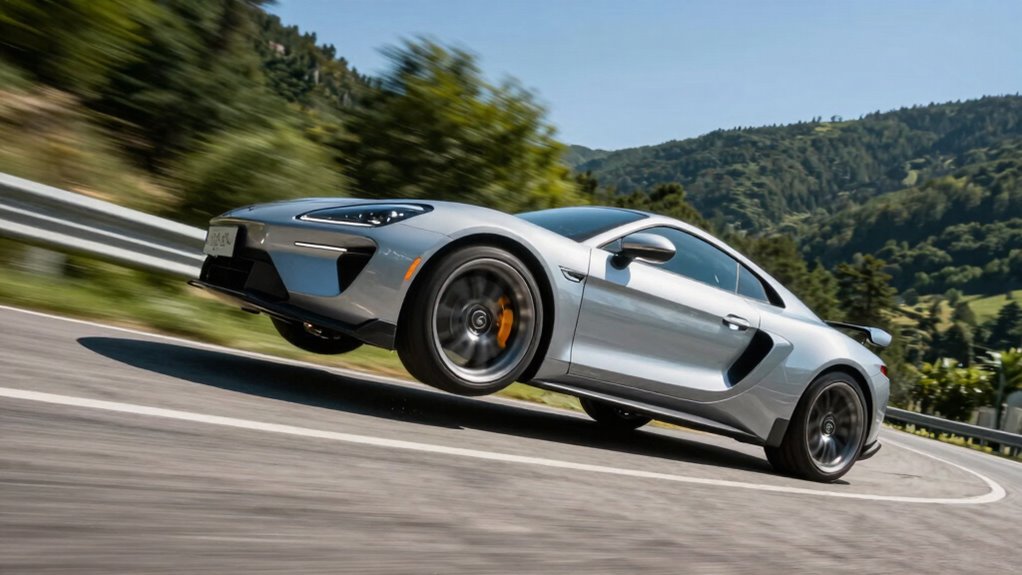
As you brake and turn into a corner, your car’s weight shifts to the front tires, increasing grip there but reducing it at the rear. Once you start to accelerate out, the weight transfer shifts back, and your car’s behavior depends on how well you’ve prepared for that shift. Adjusting your aerodynamic setup plays a crucial role here. By tweaking front and rear downforce, you can influence how your car responds during the transition from turn-in to exit. More front downforce helps in steering precision, while rear downforce prevents excessive oversteer as you accelerate out. This balance helps you control the car’s weight transfer, ensuring a smooth, predictable exit from the corner.
Tire pressure is another vital factor. Lowering rear tire pressure increases the contact patch, providing more grip during acceleration and helping to manage the weight transfer dynamically. Conversely, slightly higher front tire pressure can sharpen steering response, allowing you to better control the initial turn-in without unsettling the car. Finding the right tire pressure balance allows you to manipulate how weight shifts during corner exit, giving you more confidence and speed. Additionally, understanding how suspension settings influence weight transfer can further refine your control, making your adjustments more effective.
When you combine aerodynamic adjustments with proper tire pressure, you control how your car transfers weight during the critical moments of corner exit. This fine-tuning helps prevent oversteering or understeering, making your exit smoother and faster. The trick is to experiment with these variables until you understand how your specific car reacts. Once mastered, this approach transforms how your car leaves a corner, giving you a competitive edge by maximizing grip and stability.
In the end, it’s about understanding your car’s behavior during weight transfer and actively managing it through aerodynamic and tire pressure adjustments. Recognizing how weight transfer impacts vehicle handling is essential for fine-tuning your setup and gaining an advantage on the track. When you get this right, you’ll notice a significant difference in your corner exit speeds and overall control, turning a good lap into a great one.
As an affiliate, we earn on qualifying purchases.
Frequently Asked Questions
How Does Weight Transfer Differ Between Front-Wheel and Rear-Wheel Drive Cars?
In front-wheel drive cars, weight shifts forward during acceleration, affecting torque vectoring and making steering feel more responsive. Rear-wheel drive cars transfer weight to the rear during acceleration, enhancing traction and stability. Suspension tuning plays a key role in managing this transfer, optimizing handling. You’ll notice that front-wheel drive cars feel more predictable during cornering, while rear-wheel drive models offer more dynamic weight transfer, giving you better control and balance.
Can Weight Transfer Techniques Improve Fuel Efficiency During Cornering?
Did you know that proper weight transfer techniques can boost your car’s fuel economy during cornering by up to 15%? By managing how weight shifts during turns, you reduce unnecessary tire slip and engine load, improving cornering efficiency. This means smoother, more controlled turns that conserve fuel. Practicing these techniques helps you drive more economically, making your trips both safer and more efficient without sacrificing performance.
What Common Mistakes Do Beginners Make With Weight Transfer?
Beginners often mistake oversteer correction for sudden steering inputs, which can destabilize the car. They may ignore suspension tuning, leading to poor weight transfer control during cornering. To improve, focus on smooth, gradual adjustments and understand how proper suspension setup affects weight transfer. This helps maintain balance, prevents oversteer, and guarantees controlled corner exits. Practice these techniques to build confidence and develop better handling skills.
How Does Tire Pressure Affect Weight Transfer During a Turn?
Tire pressure profoundly impacts weight transfer during a turn by affecting grip balance. When you lower tire pressure, the tire’s contact patch expands, providing more grip but causing more weight transfer. Higher pressure reduces grip and limits weight transfer, making your car less responsive. To optimize handling, you should adjust tire pressure to achieve a balanced grip, ensuring smooth weight transfer and better control through corners.
Are There Specific Car Modifications That Enhance Weight Transfer?
You can enhance weight transfer with specific modifications like aerodynamic aids, which improve downforce and stability during cornering, and suspension tuning, which adjusts spring rates and damping to better manage weight shifts. These upgrades make your car respond more predictably, allowing you to control weight transfer more effectively. By optimizing aerodynamics and suspension, you’ll experience sharper, more confident handling that improves your overall driving performance.
Conclusion
By mastering the weight transfer trick, you can dramatically improve your cornering skills. Imagine you’re racing on a tight turn—shifting your weight correctly could mean the difference between a smooth exit and losing control. For example, a novice driver who applies this technique during a track day finds their lap times drop markedly. This simple yet powerful trick transforms your driving, giving you more confidence and control every time you hit the road or track.