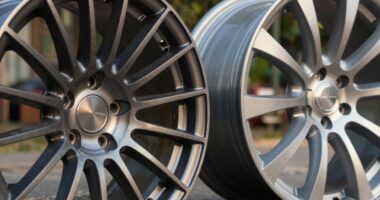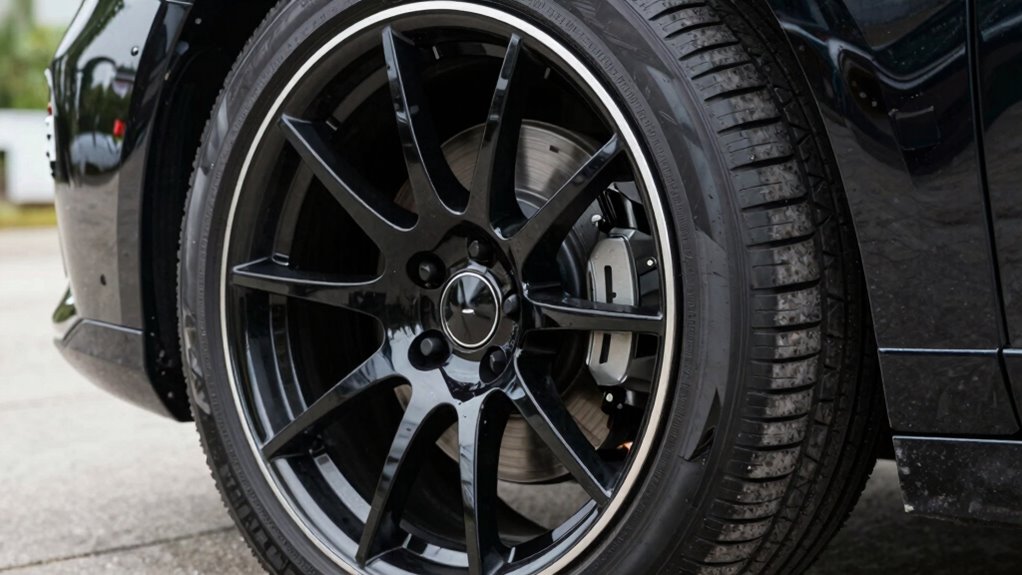

To prevent stretch mistakes, match your tire width to the appropriate wheel width; for example, a 7-inch wheel pairs best with tires around 205-215mm, while a 9-inch wheel suits 245-255mm tires. Avoid fitting narrower tires on wider wheels, as this causes sidewall bulging and safety issues. Proper fitment helps maintain tire contact, handling, and safety. Stay informed to guarantee your wheels and tires work together for maximum performance and safety.
Key Takeaways
- Match tire width to appropriate wheel width to prevent excessive stretch or bulging.
- Stick within recommended tire size ranges for your wheel width to ensure proper contact and safety.
- Wider wheels require wider tires; avoid fitting narrow tires on large wheels to maintain shape.
- Understand tire aspect ratio and section width to prevent sidewall stretch and maintain performance.
- Proper fitment maintains tire integrity, handling, and safety by avoiding overstretching or improper sizing.
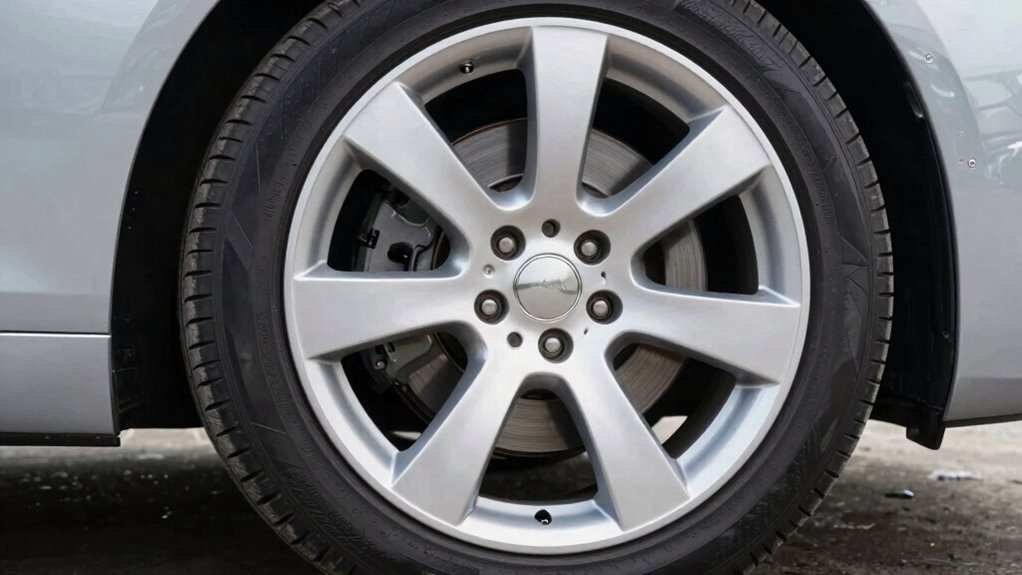
When it comes to upgrading your vehicle’s wheels and tires, understanding the fitment rules is essential to guarantee safety, legality, and peak performance. One critical aspect often overlooked is how wheel width and tire width interact, especially when it comes to avoiding “stretch” mistakes. Stretch refers to fitting a narrower tire onto a wider wheel, which can look stylish but compromises safety and handling. To prevent this, you need to pay attention to the appropriate wheel width for your tire size, ensuring that the tire’s sidewalls aren’t overly stretched or compressed. This balance is crucial because it affects how your tire contacts the road, influencing grip, handling, and wear.
Beyond just aesthetics, proper fitment involves considering offset compatibility, which determines how the wheel sits relative to your vehicle’s suspension and fenders. Incorrect offset can push wheels inward or outward, potentially causing clearance issues with suspension components or fenders, and impacting load ratings. Load ratings are equally important because they specify the maximum weight a tire can safely carry. If your tire’s load rating doesn’t match your vehicle’s weight demands, it could lead to premature tire failure or unsafe driving conditions. Always verify that both your wheels and tires meet or exceed your vehicle’s load specifications, especially if you’re running larger wheels or heavier-duty tires.
Ensure wheels and tires meet load ratings to maintain safety and prevent premature failure.
When selecting a wheel width, keep in mind that wider wheels generally require tires with a larger section width to maintain proper fitment. For example, a 7-inch wide wheel pairs well with a tire size around 205-215mm, while a 9-inch wheel might need a 245-255mm tire. Going outside these ranges can cause the sidewall to stretch or bulge excessively, negatively impacting handling and safety. Moreover, sticking within recommended width ranges preserves the integrity of the sidewall, ensuring that the tire maintains its designed shape and load capacity. Additionally, understanding how tire aspect ratio influences fitment helps prevent compatibility issues, especially with lower-profile tires that are less forgiving on wider wheels.
Additionally, the aspect ratio of the tire also influences fitment, as lower profiles are less forgiving with wider wheels. Always consult manufacturer guidelines or fitment charts to determine the ideal combination of wheel width and tire size. This careful matching not only prevents dangerous stretch but also maintains proper offset compatibility, ensuring that your wheels sit correctly without rubbing or undue stress on suspension components. Remember, the goal isn’t just to look good—it’s to maximize safety, performance, and longevity, keeping your driving experience smooth and secure.
Frequently Asked Questions
Can Aftermarket Wheels Affect Vehicle Handling and Safety?
Aftermarket wheels can indeed affect your vehicle’s handling and safety if not chosen properly. They influence tire pressure and wheel offset, which impact ride quality and stability. A wider or improperly offset wheel can cause uneven tire wear or rubbing, reducing safety. Always guarantee your aftermarket wheels match the recommended specifications and consider how they affect tire pressure and wheel offset to maintain ideal handling and safety.
How Does Wheel Width Impact Load Capacity?
Think of your wheels like a ship’s hull—wider wheels distribute weight more evenly, increasing load capacity. When you choose a wider wheel, it can handle more weight without risking damage or failure. Conversely, narrow wheels limit load capacity, making your vehicle less stable under heavy loads. So, pay attention to wheel width; it directly influences how much weight your wheels can safely support, impacting your vehicle’s performance and safety.
Are Wider Tires Always Better for Performance?
Wider tires aren’t always better for performance because they can cause unwanted tire stretch and reduce wheel clearance, which might lead to fitment issues. While they can improve grip in certain conditions, they also increase rolling resistance and can compromise safety if not properly matched to your wheel width. Always consider your vehicle’s specifications and verify the tire width aligns with your wheel to avoid stretching and maintain ideal performance.
What Tools Are Needed to Measure Wheel and Tire Fitment?
You’ll need a tape measure or calipers to measure tire and wheel dimensions accurately. Use a tire pressure gauge to check the tire’s pressure, ensuring proper fit and performance. To assess fitment, consider tools like a wheel offset gauge or a straightedge to verify wheel offset and clearance. These tools help prevent issues like rubbing, ensuring your tire width and wheel offset align with your vehicle’s specifications for safe, best fitment.
How Do I Choose the Right Wheel and Tire Size for My Car?
Choosing the perfect wheel and tire size transforms your car into a street beast. Measure your tire diameter and consider your wheel offset to guarantee a flawless fit. Too big, and you risk rubbing or rubbing off paint; too small, and you lose that aggressive look. Stick to the manufacturer’s specifications or consult a fitment expert. This way, your ride stays sleek, safe, and ready to dominate the road.
Conclusion
Understanding wheel width versus tire width is like mastering a delicate dance—each step must align perfectly to avoid missteps like stretch mistakes. When you abide by these fitment rules, your setup becomes a harmonious symphony of form and function, not a chaotic jigsaw. Think of it as tuning an instrument; the right fit guarantees your ride sings smoothly, turning heads with confidence rather than wobbling on a shaky foundation. Stay precise, and let your wheels tell a story of perfect craftsmanship.