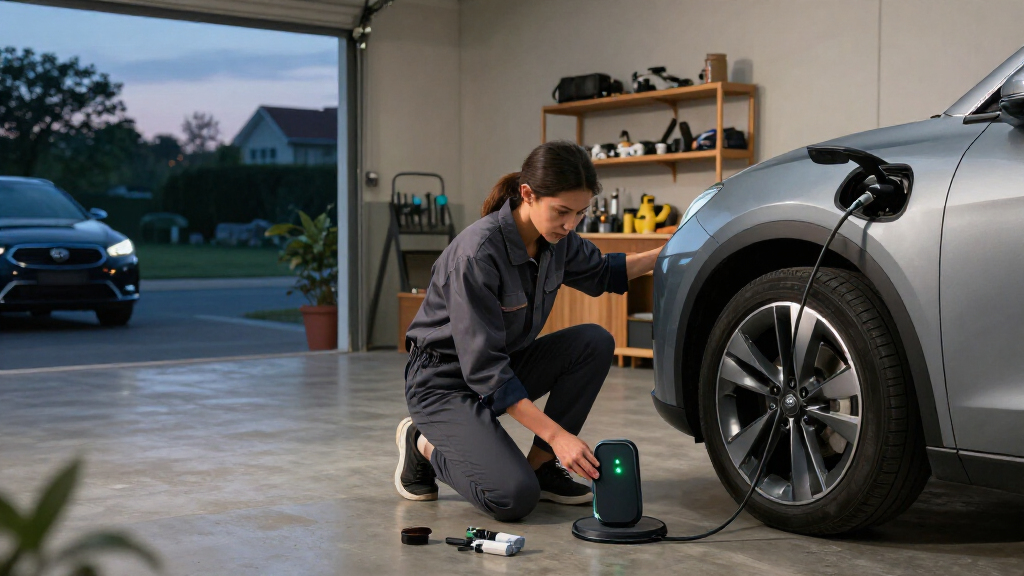
Wireless car battery chargers can mean different things: most units in this roundup are cordless in how they connect to a battery, not truly wireless chargers that work without a power cable. My best overall pick is the NOCO GENIUS5, whose 5A output and 6V/12V support offer a practical balance for routine charging and maintenance. For smaller batteries and long-term upkeep, the NOCO GENIUS1 is a lower-output alternative, while the TowerTop stands out for buyers who want multiple charge rates and an engine-start feature. The main tradeoffs are charging speed, battery and voltage compatibility, portability, and added functions that can make a unit more complex. Read on for the full breakdown and a guide to choosing a charger that fits your battery and use case.

Get business pricing on garage and car supplies
- Business-only prices and quantity discounts
- Tax-exempt purchasing
- Multiple users, one account, clear invoices
Complete the kit


Key Takeaways
- NOCO GENIUS5 leads as the balanced pick: its 5A output sits between the GENIUS1’s slow maintenance-oriented charging and the higher-output choices.
- Battery size should guide charge rate: the GENIUS1 suits smaller batteries and upkeep, while 15A and 25A models are better aimed at buyers who value faster charging.
- Voltage support is not interchangeable: several picks cover 12V and 24V systems, but the NOCO models and KASPARMP are listed for 6V/12V or 12V use, so match the unit to the battery.
- Extra repair and start features add complexity: TowerTop offers engine start, multiple charge rates, and repair functions; choose it for those specific needs rather than assuming extras improve everyday charging.
- Display-led models trade simplicity for information: KASPARMP and the 12V/24V LCD model suit buyers who want visible charging data, while simpler options may be easier to use for basic maintenance.
| NOCO GENIUS5 5A 6V/12V Smart Battery Charger and Maintainer |  | Best Overall | Supported battery voltages: 6V and 12V | Current: 5A | Battery capacity: Up to 120Ah | VIEW LATEST PRICE | See Our Full Breakdown |
| NOCO GENIUS1 1A 6V/12V Smart Battery Charger and Maintainer |  | Best for Long-Term Maintenance | Supported battery voltages: 6V and 12V | Current: 1A | Battery capacity: Up to 30Ah | VIEW LATEST PRICE | See Our Full Breakdown |
| KASPARMP 12V 6A Battery Charger and Maintainer with Pulse Repair and Digital Display |  | Best Display and Status Feedback | Output voltage: 12V | Motorcycle charging current: Maximum 2A | Compatible batteries: Lead-acid, AGM, LiFePO4, and maintenance-free | VIEW LATEST PRICE | See Our Full Breakdown |
| 12V 15A Smart Automatic Car Battery Charger and Maintainer |  | Best for Faster 12V Charging | Supported battery voltage: 12V | Current: 15A | Compatible batteries: 12V lead-acid (AGM, GEL, SLA, VRLA) and LiFePO4 | VIEW LATEST PRICE | See Our Full Breakdown |
| 12V/24V Smart Car Battery Charger with LCD Display |  | Best for AGM and Gel 12V/24V Systems | Supported battery systems: 12V and 24V | Compatible battery types: AGM and Gel | Incompatible battery type: LiFePO4 | VIEW LATEST PRICE | See Our Full Breakdown |
| E-FAST 25A Smart 12V/24V Battery Charger and Maintainer |  | Best for 12V/24V Flexibility | Output voltage: 12V and 24V | Input voltage: 110V | Maximum current: 25A at 12V; 15A at 24V | VIEW LATEST PRICE | See Our Full Breakdown |
| TowerTop 12V Smart Car Battery Charger and Maintainer, 2A/10A/25A, with Engine Start and Battery Repair |  | Best for 12V Lead-Acid Charging with Engine Start | Output voltage: 12V | Input voltage: 120V AC | Charging current settings: 2A, 10A, 25A, and automatic | VIEW LATEST PRICE | See Our Full Breakdown |
| wireless car battery charger | Compatible battery types | Input voltage |
|---|---|---|
| NOCO GENIUS5 5A 6V/12V Smart B | Lead-acid (AGM, gel, flooded, deep-cycle) and LiFePO4 | 120–240V AC |
| NOCO GENIUS1 1A 6V/12V Smart B | Lead-acid and LiFePO4 | 120V |
| KASPARMP 12V 6A Battery Charge | — | — |
| 12V 15A Smart Automatic Car Ba | — | — |
| 12V/24V Smart Car Battery Char | AGM and Gel | — |
| E-FAST 25A Smart 12V/24V Batte | Lead-acid (AGM, GEL, SLA, flooded, EFB) and LiFePO4 | 110V |
| TowerTop 12V Smart Car Battery | STD, AGM, GEL, wet, MF, EFB, calcium, and deep-cycle sealed lead-acid | 120V AC |
More Details on Our Top Picks
NOCO GENIUS5 5A 6V/12V Smart Battery Charger and Maintainer
I’d put the GENIUS5 first for owners who want one charger for regular upkeep and occasional recovery. Its 5A output is a practical middle ground: faster for larger batteries than the GENIUS1’s 1A trickle-focused output, without the higher current of the 15A charger. It also covers 6V and 12V lead-acid and LiFePO4 batteries, giving it broader battery-system range than the 12V-only options here.
Temperature adjustment and maintenance mode suit vehicles stored through changing seasons, while Force Mode can address a battery too depleted for ordinary charging detection. The tradeoff is that 5A still takes time on a large battery, and the listed charge time is eight hours. I’d skip it if rapid charging is the priority or if the battery exceeds its stated 120Ah capacity.
Pros:- Supports 6V and 12V lead-acid and LiFePO4 batteries.
- Temperature sensor adjusts charging for ambient conditions.
- Force Mode can charge batteries down to zero volts.
- Includes clamps, eyelet terminals, and mounting hardware.
Cons:- 5A output is slower than higher-current chargers for larger batteries.
- Listed charge time is eight hours.
Best for: Drivers maintaining cars, motorcycles, or seasonal vehicles with 6V or 12V lead-acid or LiFePO4 batteries up to 120Ah.
Not ideal for: People needing high-current charging for large batteries or a quick turnaround; its output is limited to 5A.
- Supported battery voltages:6V and 12V
- Current:5A
- Battery capacity:Up to 120Ah
- Compatible battery types:Lead-acid (AGM, gel, flooded, deep-cycle) and LiFePO4
- Input voltage:120–240V AC
- Listed battery charge time:8 hours
- Cables:72-inch AC cable; 80-inch DC cable
- Warranty:3 years
Our verdict“Choose the GENIUS5 for versatile 6V/12V battery care and recovery when moderate charging speed is enough.”
NOCO GENIUS1 1A 6V/12V Smart Battery Charger and Maintainer
The GENIUS1 is the maintenance-first choice in this group. Its 1A output is suited to keeping a compatible battery topped up rather than restoring a discharged car battery quickly. Compared with the GENIUS5, it gives up charging speed and capacity, but its support for 6V and 12V lead-acid and LiFePO4 batteries preserves useful flexibility for smaller vehicles and equipment.
Temperature adjustment, pulse charging, and Force Mode add functions often absent from simple maintainers, including support for batteries down to zero volts. The stated capacity limit is 30Ah, making this a poor match for many full-size car batteries if you expect prompt charging. Its listed ten-hour charge time also reflects its slower pace. I’d choose it for a small battery that spends long periods in storage, not as a general-purpose fast charger.
Pros:- Supports 6V and 12V lead-acid and LiFePO4 batteries.
- Temperature sensor adjusts charging to ambient conditions.
- Force Mode can charge a battery down to zero volts.
- Includes clamps and integrated eyelet terminals.
Cons:- 1A output makes charging slow compared with the GENIUS5 and higher-current options.
- Rated for batteries only up to 30Ah.
- Listed charge time is ten hours.
Best for: Owners maintaining motorcycles, lawn equipment, and other smaller 6V or 12V batteries up to 30Ah during storage.
Not ideal for: Drivers who need to recharge a discharged full-size car battery quickly or maintain batteries above 30Ah.
- Supported battery voltages:6V and 12V
- Current:1A
- Battery capacity:Up to 30Ah
- Compatible battery types:Lead-acid and LiFePO4
- Input voltage:120V
- Listed battery charge time:10 hours
- Cable length:110 inches
- Warranty:3 years
Our verdict“Pick the GENIUS1 for gentle, long-term care of smaller batteries rather than faster car-battery charging.”
KASPARMP 12V 6A Battery Charger and Maintainer with Pulse Repair and Digital Display
I’d favor the KASPARMP KP02 when seeing what the charger is doing matters as much as charging itself. Its display reports status, percentage, voltage, and current, giving more live feedback than the GENIUS5’s listed feature set. At 6A, it also edges past the GENIUS5’s 5A output, although it gives up the NOCO’s 6V support and is specified for 12V systems.
Compatibility includes lead-acid, AGM, and LiFePO4 batteries, with safety protections for issues such as reverse connection and overheating. The pulse-repair function is limited to mildly sulfated lead-acid batteries; it is not a lithium repair feature. This is a plug-in charger, not a jump starter, and its motorcycle charging current is capped at 2A. I’d choose it for a 12V owner who values clear charging information, but skip it if you need emergency starting or 6V coverage.
Pros:- Digital display shows charging status, percentage, voltage, and current.
- Supports 12V lead-acid, AGM, and LiFePO4 batteries.
- Protection features cover reverse connection, short circuits, overheating, overcurrent, and overcharging.
- Compact unit suits cars and smaller equipment such as motorcycles and lawn mowers.
Cons:- Requires AC power and cannot function as a jump starter or emergency power supply.
- Pulse repair applies only to mildly sulfated lead-acid batteries.
- Motorcycle charging current is limited to 2A.
Best for: 12V vehicle and equipment owners who want visible charging data and support for lead-acid or LiFePO4 batteries.
Not ideal for: Drivers needing a jump starter, 6V charging, or a repair mode for lithium batteries.
- Output voltage:12V
- Motorcycle charging current:Maximum 2A
- Compatible batteries:Lead-acid, AGM, LiFePO4, and maintenance-free
- Display information:Charging status, percentage, voltage, and current
- Dimensions:2.16 × 5.3 × 8.07 inches (D × W × H)
- Operating temperature:-10°C to +45°C
- Maximum operating altitude:Below 4,000m
- Model:KP02
Our verdict“Choose the KP02 if detailed display feedback and 12V versatility matter more than 6V support or jump-starting.”
12V 15A Smart Automatic Car Battery Charger and Maintainer
This 15A charger is the speed-oriented option among the products with a stated current. It has three times the output of the GENIUS5, which can mean a better fit when a compatible 12V battery needs charging sooner rather than simply staying topped up. Its LCD displays charging information, and it supports both lead-acid and LiFePO4 batteries, unlike the AGM-and-Gel-only 12V/24V model in this lineup.
Seasonal temperature compensation and several protective functions add useful safeguards, but this charger comes with a specific operating constraint: it should not run unattended for more than 12 hours. It also needs a power source before use, so it is not a cordless or emergency device. Compared with the GENIUS5, it gives up 6V support and requires closer attention during operation. I’d select it for faster 12V charging when its supervision limit fits the routine.
Pros:- 15A output provides more charging current than the GENIUS5 or GENIUS1.
- Supports 12V lead-acid and LiFePO4 batteries.
- LCD reports voltage, current, battery level, temperature, and seasonal mode.
- Includes temperature compensation and multiple safety protections.
Cons:- Should not be left operating unattended for more than 12 hours.
- Requires connection to a power source before use.
- Supports 12V systems only, unlike the GENIUS5’s 6V/12V coverage.
Best for: 12V battery owners who want higher charging current for compatible lead-acid or LiFePO4 batteries and can monitor operation.
Not ideal for: People seeking a set-and-forget maintainer, 6V compatibility, or a charger to use without AC power.
- Supported battery voltage:12V
- Current:15A
- Compatible batteries:12V lead-acid (AGM, GEL, SLA, VRLA) and LiFePO4
- Input:110–240V AC, 50–60Hz
- Input cable length:102cm
- Output cable length:60cm
- Safety protections:8-layer protection, including reverse connection, short circuit, overcurrent, and overheating protection
- Recommended unattended operating limit:Do not leave operating unattended for more than 12 hours
Our verdict“Choose this model for higher-current 12V charging if you can observe its operating time and do not need 6V support.”
12V/24V Smart Car Battery Charger with LCD Display
The main reason to pick this helloleiboo charger is its stated support for both 12V and 24V battery systems. That makes it a different fit from the 12V-only GENIUS5 and GENIUS1, particularly for buyers maintaining compatible vehicles or equipment with either system voltage. Its LCD shows voltage and charging status, then automatic charging switches to trickle maintenance when the battery is full.
The narrower battery chemistry support is the tradeoff: it is listed for AGM and Gel batteries and explicitly excludes LiFePO4, while the GENIUS5 and 15A charger support lithium batteries. Temperature compensation and protections for reverse polarity, overheating, and sparks are useful, but the product data lists both input and output as 12V despite claiming 24V system support. I’d verify compatibility and electrical details with the seller before relying on it for a 24V battery.
Pros:- Listed for both 12V and 24V battery systems.
- LCD displays voltage and charging status.
- Automatically switches to trickle maintenance when charging is complete.
- Temperature compensation and multiple safety protections are included.
Cons:- Not compatible with LiFePO4 batteries.
- Product data lists both input and output voltage as 12V despite claimed 24V system support.
- Compatibility is limited to AGM and Gel battery types.
Best for: Owners of AGM or Gel batteries who need a charger listed for both 12V and 24V vehicle systems.
Not ideal for: LiFePO4 battery owners, or buyers who need clearly specified electrical details before charging a 24V system.
- Supported battery systems:12V and 24V
- Compatible battery types:AGM and Gel
- Incompatible battery type:LiFePO4
- Listed output voltage:12V
- Listed input voltage:12V
- Display:LCD
- Charging modes:Automatic charging and trickle maintenance
- Safety protections:Overcharge, short-circuit, reverse-polarity, overheating, and spark-resistant protection
Our verdict“Consider this charger for AGM or Gel batteries across listed 12V/24V systems only after confirming its 24V specifications.”
E-FAST 25A Smart 12V/24V Battery Charger and Maintainer
The E-FAST is the stronger fit when one charger needs to handle both 12V and 24V batteries, including lead-acid types and LiFePO4. Its selectable current settings reach 25A on 12V and 15A on 24V, giving it more charging flexibility than the TowerTop, which is limited to 12V lead-acid batteries. Auto mode offers a simpler path when you do not want to choose a current manually, while the 12V booster can provide a short assist during a weak-battery situation. Repair and seasonal modes add options for battery care, but the 16-hour repair cycle requires patience and is not a quick fix. At 3.7 pounds, it is lighter than the TowerTop, though neither is a compact low-current maintainer like the NOCO GENIUS5.
Pros:- Supports 12V and 24V batteries, including LiFePO4 and several lead-acid types.
- Selectable current settings and auto mode suit different battery sizes and charging needs.
- 12V booster, repair, and temperature-based seasonal modes add specialized functions.
- Aluminum housing, cooling fan, and electrical protections support higher-current operation.
Cons:- Booster mode works only with 12V batteries.
- Repair mode takes 16 hours, so it is not suited to quick battery recovery.
- Its higher-current feature set is more than many buyers need for routine maintenance.
Best for: Drivers or workshop owners who maintain a mix of 12V and 24V lead-acid or LiFePO4 batteries and want selectable charging rates.
Not ideal for: People seeking a small, simple maintainer for occasional 12V upkeep, or anyone who needs a booster function for 24V batteries.
- Output voltage:12V and 24V
- Input voltage:110V
- Maximum current:25A at 12V; 15A at 24V
- Current settings:2A, 8A, 20A, 25A, and Auto
- Compatible battery types:Lead-acid (AGM, GEL, SLA, flooded, EFB) and LiFePO4
- Booster mode:12V only; 200 seconds
- Dimensions and weight:8.5 × 4.9 × 7.5 inches; 3.7 lb
- Housing and safety:Aluminum alloy; reverse-polarity, spark, short-circuit, and overcharge protections
- Certification:UL
Our verdict“Choose the E-FAST if you need one charger for varied 12V and 24V batteries; skip it if your needs are limited to basic 12V maintenance.”
TowerTop 12V Smart Car Battery Charger and Maintainer, 2A/10A/25A, with Engine Start and Battery Repair
The TowerTop pairs routine charging with a 100A engine-start function, making it the more relevant pick for drivers who want an emergency starting aid alongside a charger. Its 2A, 10A, and 25A settings cover slow maintenance through faster charging, while the LCD shows charging stages and parameters. Compared with the E-FAST, it gives up 24V and LiFePO4 support but adds a higher stated engine-start current and a display. Its eight-stage process includes desulfation, repair, and pulse maintenance for supported 12V sealed lead-acid batteries. The boundaries matter: it is not described as compatible with other battery chemistries, and repair mode cannot restore a completely drained battery. At five pounds, it is also heavier than the E-FAST.
Pros:- 100A engine-start function adds an emergency starting option beyond charging and maintenance.
- 2A, 10A, 25A, and automatic modes accommodate different charging needs.
- LCD displays the charging stage and parameters.
- Eight-stage charging includes desulfation, repair, and pulse maintenance.
Cons:- Designed for 12V sealed lead-acid batteries; support for LiFePO4 and 24V batteries is not specified.
- Repair mode cannot repair completely drained batteries.
- At 5 pounds, it is heavier than the E-FAST.
Best for: 12V vehicle owners with AGM, gel, wet, or other listed sealed lead-acid batteries who want an LCD charger with an engine-start function.
Not ideal for: Owners of 24V or LiFePO4 batteries, or drivers expecting repair mode to revive a completely drained battery.
- Output voltage:12V
- Input voltage:120V AC
- Charging current settings:2A, 10A, 25A, and automatic
- Maximum charging current:25A
- Engine-start current:100A
- Compatible battery types:STD, AGM, GEL, wet, MF, EFB, calcium, and deep-cycle sealed lead-acid
- Connector types and ports:NEMA 1-15 (Type A) and battery clamps; 1 port
- Dimensions and weight:7.68 × 10.04 × 4.92 inches; 5 lb
- Certifications:BC, ETL, FCC
Our verdict“Pick the TowerTop for supported 12V lead-acid batteries if engine-start capability and an informative display matter more than multi-voltage or lithium support.”
How We Picked
I compared these seven chargers by the factors that change the ownership experience: listed charging output, supported battery voltage, charging and maintenance functions, interface, and how well each feature matches a likely use. A higher amp rating can shorten charging time, but it does not make a charger a better fit for a small battery or routine maintenance. Voltage compatibility and the intended battery type come first; ease of use, useful safeguards, and practical flexibility shape the next comparisons.
The ranking favors useful balance over the longest feature list. The NOCO GENIUS5 takes the lead for its middle-ground 5A output and 6V/12V support, while the GENIUS1 ranks as a focused low-output maintenance choice. Higher-output and multi-function models rank well for buyers who need faster charging, 24V support, repair modes, or engine-start capability, but those extras do not suit every owner. The product names and supplied specifications do not establish that these units charge without a mains connection, so I treat “wireless” as a search term rather than a verified cordless operating feature.
| wireless car battery charger | Compatible battery types |
|---|---|
| NOCO GENIUS5 5A 6V/12V Smart B | Lead-acid (AGM, gel, flooded, deep-cycle) and LiFePO4 |
| NOCO GENIUS1 1A 6V/12V Smart B | Lead-acid and LiFePO4 |
| KASPARMP 12V 6A Battery Charge | — |
| 12V 15A Smart Automatic Car Ba | — |
| 12V/24V Smart Car Battery Char | AGM and Gel |
| E-FAST 25A Smart 12V/24V Batte | Lead-acid (AGM, GEL, SLA, flooded, EFB) and LiFePO4 |
| TowerTop 12V Smart Car Battery | STD, AGM, GEL, wet, MF, EFB, calcium, and deep-cycle sealed lead-acid |
Factors to Consider When Choosing Wireless Car Battery Chargers
Before choosing among wireless car battery chargers, check what “wireless” means in the listing and start with the battery itself. A charger can have convenient clamps or a compact design yet still need a wall outlet during use. These broader checks can help prevent a mismatch that output numbers alone will not reveal.
Match Voltage and Battery Chemistry Before Comparing Amps
Start by reading the battery label and vehicle or equipment manual, then confirm that the charger supports the battery’s voltage and chemistry. A 12V charger is not a substitute for a 24V unit, and a charger that supports multiple voltages still needs the correct mode selected. Battery chemistry matters too: lead-acid, AGM, and lithium batteries can require different charging profiles. Do not infer chemistry support from a product’s “smart” label alone. When the listing does not clearly name your battery type, check the manufacturer’s specifications before buying. This compatibility check matters more than choosing the highest output in the group.
Choose Charging Output for Battery Size and Routine
Higher amperage can reduce charging time, but the useful rate depends on battery capacity, condition, and the charger’s supported modes. For a vehicle that sits between occasional drives, a lower-output maintainer may be a sensible match; a depleted larger battery may call for more output. Avoid treating a charger’s maximum amp figure as a promise of constant delivery, since smart units may adjust charging as the battery fills. If you mainly need seasonal upkeep, paying extra for the fastest mode may bring little benefit. If downtime matters, a higher-output model can be more convenient, provided it is suitable for the battery.
Separate Battery Maintenance From Jump-Starting
A maintainer helps keep a compatible battery charged over time, while an engine-start function is meant to assist with starting under specific conditions. Those jobs are not interchangeable: a charger should not be treated as a jump starter unless its instructions explicitly support that use. Repair or pulse modes also do not promise to restore a battery that has reached the end of its service life. Read the manual for the conditions and limits of any recovery or start feature. If you only want to prevent discharge during storage, a basic maintenance function may be more useful than a bundle of seldom-used modes.
Check Power and Placement for a Truly Wireless Setup
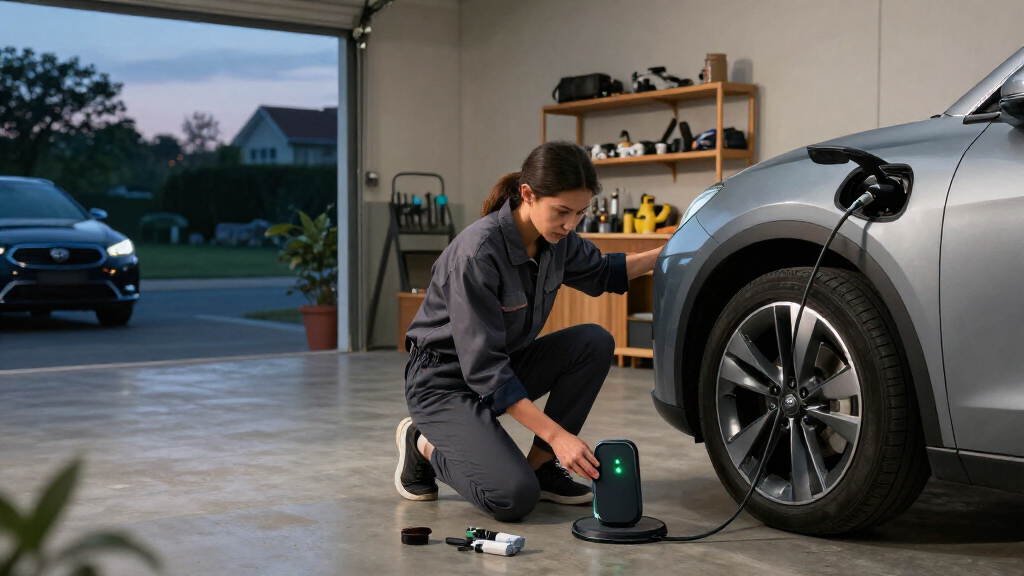
Many products described as wireless car battery chargers still need a mains outlet and a cable running to the battery. Confirm the power source, cable length, and installation instructions before assuming a unit can operate untethered. A charger without an outlet nearby may require a suitable extension arrangement or a different kind of power solution, not simply a more compact charger. Keep charging equipment positioned according to its manual, away from moisture, heat, and moving parts. This is especially relevant for maintenance charging in a garage or on a vehicle parked outdoors.
Decide Whether a Display or Extra Modes Will Help
An LCD or digital display can make charging status easier to read, especially when you are diagnosing a battery or checking progress from a distance. It can also add controls and information that a first-time owner may not need for routine charging. Repair modes, selectable charge rates, and engine-start functions make a unit more versatile, but each feature should solve a real problem in your garage. Check how the mode is selected and whether the device returns to a safe default after power loss. Buyers who want simple upkeep may be better served by clear basic indicators than by a crowded feature set.
Frequently Asked Questions
Are these wireless car battery chargers truly cordless?
Not based on the product details provided for this roundup. The listed models are battery chargers and maintainers, but their names and specifications do not confirm operation without a mains power cable. Check each manufacturer’s instructions for its required power source and cable setup before buying. If you need charging away from an outlet, look specifically for a unit designed with a verified portable power source. Do not assume that “wireless” in a search phrase means the charger transfers power wirelessly.
Can I use a 12V/24V charger on a regular 12V car battery?
A dual-voltage model may support a 12V car battery, but confirm that the product explicitly lists 12V operation and follow its selection procedure. Do not connect a 24V mode to a 12V battery. Check battery chemistry support and the charger’s manual as well, since voltage alone does not establish compatibility. If the vehicle uses a standard 12V battery and you do not need 24V support, a simpler 12V-only model may be easier to operate. Confirm the correct mode before connecting power.
Should I pick the highest-amp charger available?
Not automatically. A higher output can be useful when you want to charge a suitable battery more quickly, but it may be unnecessary for a small battery or ongoing maintenance. The charger must support the battery’s voltage and chemistry, and its instructions should match your intended use. Compare charging rate with battery capacity and how often you need to recharge rather than choosing by the largest number alone. For a vehicle stored between drives, a lower-output maintainer may be a more fitting choice.
Can a battery repair mode fix a battery that no longer holds a charge?
A repair or pulse mode may be intended to address some battery conditions, but it cannot be treated as a guaranteed fix. Results depend on the battery’s chemistry, condition, and the limits set out by the charger maker. A physically damaged, deeply degraded, or end-of-life battery may need replacement instead. Read the manual to learn which battery types and conditions qualify for the mode, and do not use it as a substitute for diagnosis. If the battery repeatedly loses charge, check for a vehicle drain or charging-system problem too.
Do I need an engine-start function if I already own a charger?
Only if you expect to use that function and the product is explicitly rated for the job. A charger’s maintenance and charging features do not automatically make it a jump starter or engine-start device. TowerTop is the listed option in this group with an engine-start feature, but you should check its operating limits and instructions before relying on it. If your priority is keeping a parked vehicle’s battery charged, a standard maintainer may meet that need with fewer controls. For emergency starting, compare dedicated jump starters as well as chargers.
Conclusion
For most buyers, I recommend the NOCO GENIUS5 as the best overall because its 5A output and 6V/12V support make a useful middle ground within this lineup. For best value, I’d look at the KASPARMP if its 12V rating, 6A output, and digital display fit your battery and you want visible status information. For a premium, feature-heavy choice, TowerTop is the better match for buyers who specifically want selectable charge rates, repair functions, and engine-start capability. Beginners who want a straightforward low-output maintainer can choose the NOCO GENIUS1, while owners who need 24V support or faster charging should compare the E-FAST 25A, 12V 15A, and 12V/24V LCD models against their battery requirements. Before ordering any of them, verify battery chemistry, voltage, and the actual power connection—especially if you expect a truly cordless charger.