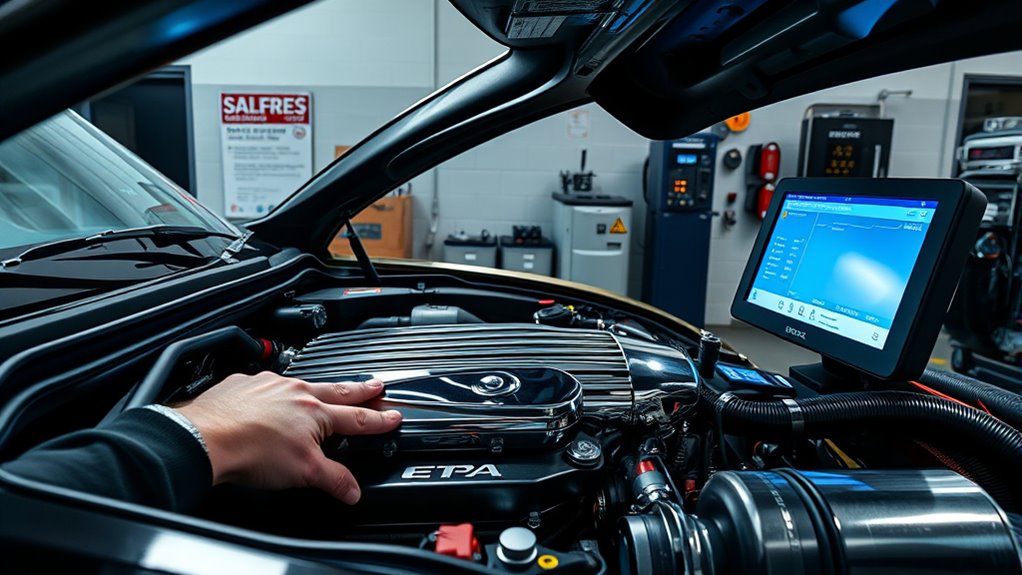

The EPA strictly enforces the Clean Air Act, meaning any tuning or modifications to your vehicle must meet specific emission standards. If you disable or bypass emission control systems like catalytic converters or reprogram your engine to increase emissions, you risk fines, inspections, or vehicle confiscation. Using certified, EPA-compliant parts and staying within legal limits helps you avoid penalties. To learn more about how to stay compliant while tuning, keep exploring this important topic.
Get ready for Prime Big Deal Days — try Prime free
Exclusive member deals on October 6–7, plus fast free delivery. Cancel anytime.
As an affiliate, we earn on qualifying purchases.
Key Takeaways
- The EPA enforces emission standards under the Clean Air Act, regulating vehicle modifications to prevent illegal emissions.
- Using non-compliant aftermarket parts or disabling emission control devices can lead to legal penalties and vehicle confiscation.
- Proper reprogramming must not increase emissions beyond legal limits; certified tuners help ensure compliance.
- Vehicles are subject to emissions testing, and failing tests may result in fines or mandated reversion to stock parts.
- Staying informed about EPA regulations and using EPA-compliant parts reduces legal risks for tuners and vehicle owners.

If you’re a car tuner modifying engines for better performance, it’s vital to understand that the EPA actively enforces the Clean Air Act to regulate emissions. This means that any modifications you make must adhere to specific emission standards designed to limit pollutants released into the atmosphere. These standards are put in place to protect air quality and public health, and the EPA closely monitors vehicle emissions to guarantee compliance. When you alter your vehicle’s engine or exhaust system, you risk unintentionally violating these standards, which can lead to serious legal consequences.
Legal compliance with the Clean Air Act isn’t just about avoiding fines; it’s about making sure your modifications don’t contribute to environmental harm. The EPA has strict regulations on aftermarket parts and engine modifications, especially those that affect emissions control devices like catalytic converters, oxygen sensors, and exhaust systems. If your modifications bypass or disable these components, you’re likely to fall out of compliance with federal law. This can result in penalties, vehicle inspections, or even the confiscation of your vehicle if found to be non-compliant.
Compliance with the Clean Air Act is essential to avoid penalties and protect the environment.
To stay within the legal boundaries, you need to be aware of the certification status of any aftermarket parts you install. Many manufacturers produce parts that are specifically designed to meet emission standards, and these are often labeled as “EPA-compliant.” Using certified parts helps guarantee your vehicle remains in legal compliance, reducing the risk of enforcement actions. Additionally, if you plan to tune your engine software or ECU, you should verify that any remapping or reprogramming doesn’t lead to increased emissions beyond the allowed thresholds. Many tuners overlook this aspect, but it’s vital to avoid potential violations.
The EPA also conducts emissions testing and inspections, especially for vehicles that have undergone modifications. If your vehicle fails an emissions test, you could face fines, be required to revert to a stock setup, or face other penalties. To avoid this, it’s a good idea to keep documentation proving your modifications are compliant and to work with reputable tuners who understand the legal landscape. Staying informed about emission standards and how they impact vehicle modifications can help you maintain compliance and avoid costly legal issues.
As an affiliate, we earn on qualifying purchases.
Frequently Asked Questions
How Can Tuners Legally Modify Vehicle Emissions?
You can legally modify your vehicle’s emissions by ensuring it meets all emissions standards and obtaining proper vehicle certification. This involves working with certified tuners who adhere to EPA regulations, using approved modifications, and passing necessary inspections. Staying within legal limits means your modifications won’t violate emissions laws, helping you stay compliant. Always verify that your tuner follows EPA guidelines, so your vehicle remains street-legal and environmentally friendly.
What Are Common Penalties for Non-Compliance?
If you don’t comply with emission standards, you could face significant penalty fines and other enforcement actions. The EPA enforces strict regulations, and non-compliance may result in hefty fines, vehicle recalls, or restrictions on your vehicle’s use. Staying within emission standards helps you avoid these penalties. Always make sure your modifications meet legal requirements to prevent costly consequences and help protect the environment.
Are Aftermarket Parts Exempt From EPA Regulations?
You might wonder if aftermarket parts are exempt from EPA regulations. While some legal exemptions exist for certain aftermarket parts, most are still subject to EPA rules because they can affect emissions. As a tuner, you should know that using non-compliant aftermarket parts can lead to penalties, fines, or failed inspections. Always verify if your parts meet EPA standards to avoid legal issues and guarantee your vehicle remains compliant.
How Does the EPA Detect Unauthorized Modifications?
You might wonder how the EPA detects unauthorized modifications. They use engine calibration data and emissions testing to spot discrepancies. During inspections, inspectors compare factory settings with your vehicle’s current engine calibration. If emissions tests reveal higher emissions than allowed, it signals possible unauthorized modifications. The EPA also monitors vehicle diagnostics and inspection reports, making it harder to evade detection when you alter your vehicle’s emissions system without proper authorization.
Can Tuners Appeal EPA Enforcement Actions?
If you’re facing EPA enforcement actions, you can file legal challenges to contest the agency’s decisions. It’s vital to develop strong compliance strategies beforehand, showing your effort to meet regulations. You may appeal through administrative processes or court systems, but acting promptly is essential. Understanding your rights and gathering relevant evidence can help strengthen your case, so consider consulting legal professionals experienced in Clean Air Act enforcement to navigate this process effectively.
Conclusion
As a tuner, it’s crucial to stay informed about the EPA’s enforcement efforts under the Clean Air Act. Did you know that over 3,000 vehicles were flagged for emissions violations last year? Staying compliant not only protects you from hefty fines but also helps reduce harmful pollution. By understanding and respecting these regulations, you contribute to cleaner air and guarantee your builds are both powerful and lawful. Keep these facts in mind as you tweak and tune your rides.
Flea & tick season Picks
flea and tick prevention
As an affiliate, we earn on qualifying purchases.