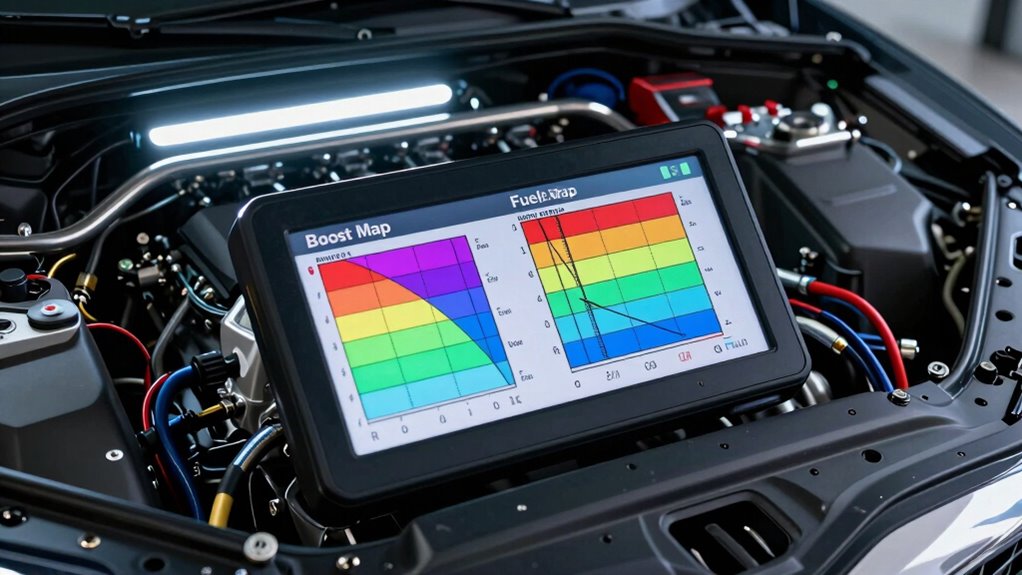
Boost maps and fuel maps work together like a finely tuned orchestra to create a smooth powerband. As a tuner, you adjust the boost pressure and fuel delivery simultaneously to maintain consistent airflow and combustion across all RPM ranges. This coordination prevents harsh surges or dips in power, ensuring your vehicle responds smoothly and reliably. If you want to learn how skilled tuners achieve this balance, keep exploring how these maps are built and optimized.
Key Takeaways
- Tuners coordinate boost and fuel maps to manage airflow and fuel delivery for a consistent powerband.
- Precise calibration prevents sudden power surges, ensuring smooth acceleration across RPM ranges.
- Adjusting boost pressure and fuel injection optimizes engine efficiency and responsiveness.
- Upgrading intake and exhaust systems enhances airflow, requiring maps to be tailored accordingly.
- Advanced remote tuning technologies enable continuous map refinement for a seamless driving experience.
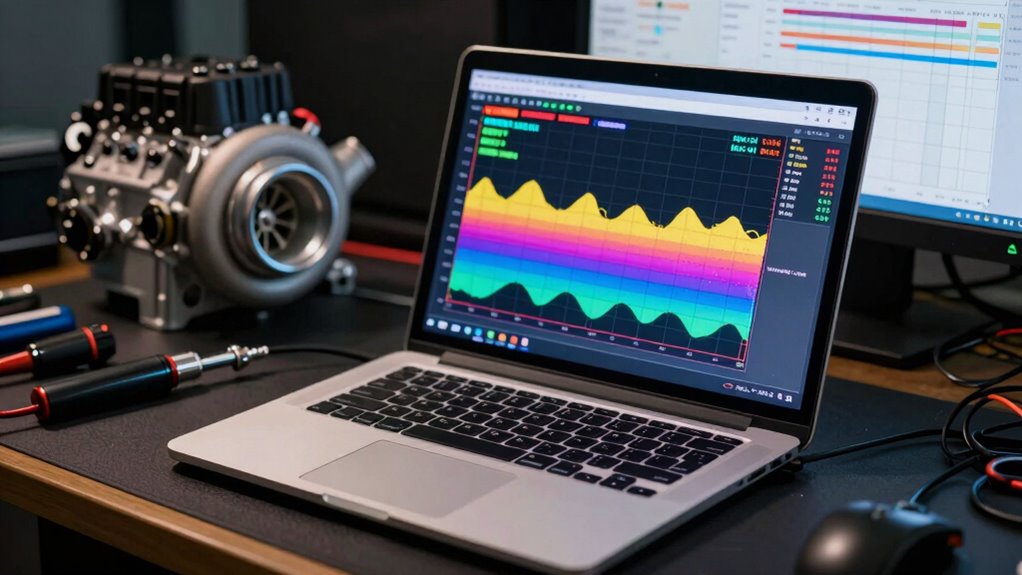
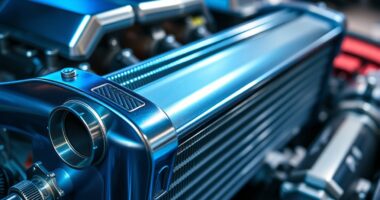
Boost maps and fuel maps are vital tools for optimizing your vehicle’s performance. When you’re tuning your car, understanding how these maps influence power delivery can make all the difference in creating a smooth, responsive driving experience. One of the first areas you’ll want to focus on is the air intake. Upgrading your air intake system allows more air to flow into the engine, which can increase horsepower and improve throttle response. However, to truly harness this potential, your boost and fuel maps need to be adjusted accordingly. Proper mapping ensures that the increased airflow results in efficient combustion, avoiding issues like detonation or excessive emissions. Your tuner will craft these maps to match the new air intake setup, ensuring that boost levels are optimized to produce consistent power without stressing the engine.
Optimizing air intake, boost, and fuel maps creates smoother, more efficient power delivery and enhances overall vehicle performance.
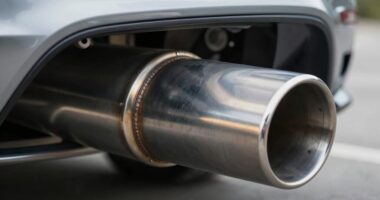
The exhaust system also plays a vital role in tuning your vehicle’s powerband. A high-performance exhaust reduces backpressure, allowing exhaust gases to exit more freely. When combined with a well-calibrated boost map, this setup can greatly enhance overall engine efficiency. The key is to balance the boost pressure and fuel delivery so that the engine runs smoothly across different RPM ranges. Your fuel map will be tailored to match the increased airflow and exhaust flow, preventing lean or rich conditions that could harm the engine or compromise performance. By fine-tuning these maps, your tuner ensures the engine maintains a steady powerband, avoiding sudden spikes or dips that can make driving feel choppy or unpredictable.
Building a smooth powerband isn’t just about increasing power; it’s about controlling it. A well-calibrated boost map manages the amount of compressed air entering the engine, while the fuel map precisely adjusts fuel injection to match that air volume. This coordination results in a seamless delivery of power, making acceleration feel smooth and predictable. When adjustments are made correctly, you won’t experience abrupt power surges or lag; instead, you’ll notice consistent torque throughout the RPM range. This smoothness enhances drivability, whether you’re cruising on the highway or pushing your car at the track.
Additionally, European cloud innovation can support data analysis and tuning adjustments remotely, ensuring your vehicle’s maps are optimized with the latest developments in performance technology.
In essence, tuning boost maps and fuel maps isn’t just about making more power—it’s about making that power usable and dependable. By carefully matching your air intake and exhaust system upgrades with optimized maps, you create a vehicle that performs better, runs cleaner, and feels more responsive. The result is a balanced, enjoyable driving experience that’s tailored precisely to your modifications and driving style.
Frequently Asked Questions
How Do Boost Maps Affect Engine Longevity?
Boost maps can impact your engine’s longevity by influencing engine wear and maintenance frequency. Aggressive boost settings may increase stress on engine components, leading to faster wear and potentially more frequent repairs. To keep your engine healthy, you should monitor boost levels closely and perform regular maintenance. Proper tuning helps balance performance gains with durability, ensuring your engine remains reliable and efficient over time.
Can Factory Fuel Maps Be Safely Modified?
You can safely modify factory fuel maps if you understand your vehicle’s factory calibration and stay within stock settings. Tuners adjust these maps to optimize performance, but pushing beyond the recommended limits risks engine damage. Always verify modifications are done by experienced professionals who know how to preserve reliability. Proper tuning balances increased power with longevity, so don’t ignore the importance of respecting the factory calibration limits.
What Tools Are Needed for Tuning Boost and Fuel Maps?
To tune boost and fuel maps, you’ll need a handheld or laptop-based ECU programmer, like a Cobb or HP Tuners device. For example, a tuner reduced turbo lag and improved fuel economy by adjusting these maps precisely. This process involves data logging tools to monitor real-time performance, ensuring you optimize boost pressure and fuel delivery safely, resulting in a smoother powerband and better driving experience.
How Do Ambient Conditions Influence Tuning Adjustments?
Ambient temperature and atmospheric pressure considerably influence your tuning adjustments. When it’s hot outside, the air’s less dense, so you’ll need to enrich your fuel maps and reduce boost pressure to prevent detonation. Conversely, cooler, denser air allows for more aggressive tuning. Always monitor these conditions closely and adapt your boost and fuel maps accordingly to maintain peak performance, safety, and a smooth powerband.
Are There Legal Considerations for Aftermarket Tuning?
Yes, there are legal considerations for aftermarket tuning. You need to guarantee your modifications comply with emissions laws, as non-compliance can lead to hefty fines or vehicle confiscation. Additionally, aftermarket tuning may void your vehicle’s warranty, especially if issues arise that are linked to the modifications. Always research local regulations and manufacturer policies before tuning, so you avoid legal trouble and maintain your vehicle’s warranty coverage.
Conclusion
Understanding how boost maps and fuel maps work lets you craft a smoother powerband for your ride. Did you know that properly tuned maps can improve throttle response by up to 30%? By fine-tuning these parameters, you get not only better performance but also enhanced driving comfort. So, whether you’re chasing more power or just smoother acceleration, mastering these maps puts you in control of your engine’s potential. Happy tuning!