Brake bias might seem simple, but it plays a bigger role in your vehicle’s safety and handling than you realize. When properly calibrated, it keeps your car balanced during braking, preventing skids and loss of control. An imbalance can cause your car to dive or slide, especially in emergencies or on slippery surfaces. If you want to understand how to optimize your braking and stay safer on the road, keep exploring this important topic.

Get garage and car supplies delivered free — and shop member deals
- Fast, free delivery on millions of items
- Access to Prime Big Deal Days deals on October 6–7
- Prime Video, Amazon Music and more included
Key Takeaways
- Proper brake bias ensures balanced braking, preventing skids and maintaining steering control during sudden stops.
- Small adjustments in brake bias significantly affect vehicle stability and safety, often unnoticed by drivers.
- Incorrect bias can cause uneven tire wear and increase stopping distances, risking accidents.
- Weight transfer during braking requires precise bias to optimize grip and prevent rear or front wheel lock-up.
- Mastering brake bias adjustment enhances vehicle responsiveness and safety during dynamic driving conditions.
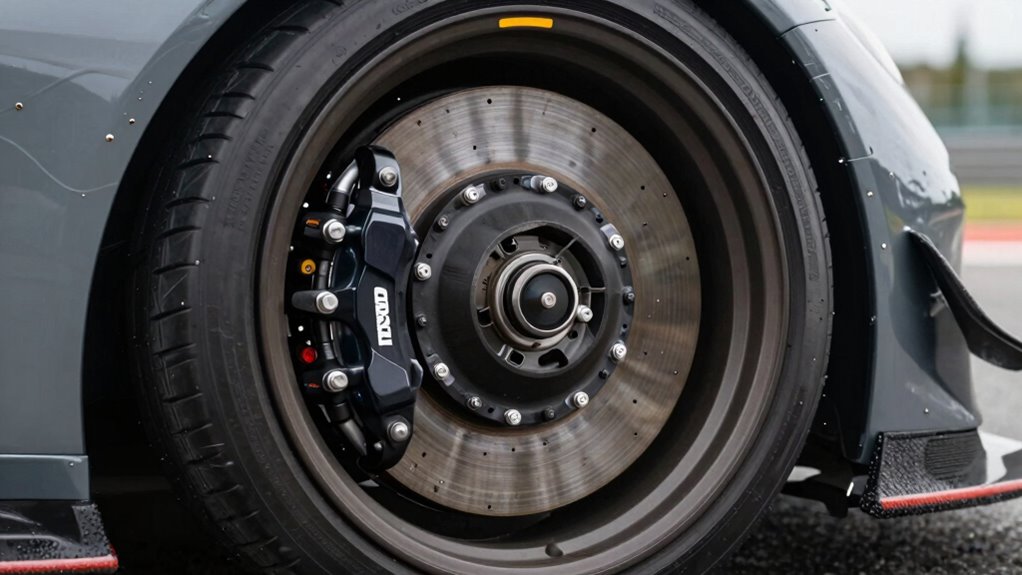
Most drivers don’t realize how vital brake bias truly is, even though it considerably impacts a car’s handling and safety during braking. When you press the brake pedal, your car doesn’t just slow down evenly; instead, weight shifts forward, a phenomenon known as weight transfer. This shift dramatically influences how the front and rear tires grip the road, making brake bias a critical factor in controlling your vehicle. Proper brake bias guarantees that the front and rear brakes work in harmony, maintaining ideal front-rear balance and preventing dangerous skids or lock-ups.
Brake bias is crucial for safe, balanced stopping by ensuring front and rear brakes work harmoniously during weight transfer.
If the brake bias favors the front too much, you might notice your car diving forward under heavy braking, with the front tires doing most of the work. While this can provide strong stopping power, it also raises the risk of the rear wheels losing traction, especially on slippery surfaces or during abrupt stops. Conversely, if the bias leans too much toward the rear, the rear wheels may lock up first, causing instability and a potential spinout. An imbalance like this can be especially dangerous because it reduces your ability to steer and control the car during critical moments.
Understanding weight transfer helps you grasp why front-rear balance is so important. During braking, as weight shifts forward, the front tires gain more load, increasing their grip. This means the front brakes need to be proportioned accordingly to handle this increased load without overpowering the rear brakes. When brake bias is correctly calibrated, it manages this transfer efficiently, ensuring that both sets of tires work together seamlessly. This balance minimizes stopping distances and preserves steering control, giving you confidence that your car will behave predictably when it matters most.
If you ignore brake bias, your vehicle’s handling can become unpredictable, especially in high-pressure situations like emergency stops or racing. Properly adjusting the front-rear balance of braking force helps you manage the effects of weight transfer, reducing the chances of skidding or losing control. It also allows for smoother deceleration, which is easier on the car’s suspension and tires, prolonging their lifespan. Additionally, understanding brake bias adjustment can help you optimize your vehicle’s performance for different driving conditions. Recognizing how brake balance influences overall vehicle dynamics ensures that you’re better prepared for various scenarios on the road or track.
Lastly, mastering the concept of brake bias can make a significant difference in your ability to respond effectively in emergency situations, ensuring your safety and that of others. Proper brake bias adjustment also helps in maintaining better control during cornering and uneven road surfaces, further enhancing overall driving safety. Ultimately, understanding how weight transfer affects front-rear balance and brake bias allows you to refine your braking system. It’s not just a technical detail; it’s a fundamental aspect of how your car responds during critical moments. When you fine-tune this balance, you’re better equipped to control your vehicle, stop efficiently, and stay safe on the road or track.
As an affiliate, we earn on qualifying purchases.
Frequently Asked Questions
How Does Brake Bias Affect Overall Vehicle Handling?
Brake bias influences your vehicle’s handling by affecting braking stability and cornering balance. When properly adjusted, it helps distribute braking force evenly, preventing lock-ups and skidding. If too front-heavy, you might experience understeer; too rearward, oversteer occurs. Adjusting brake bias allows you to optimize handling during cornering and braking, ensuring your vehicle remains stable and predictable, especially in high-speed or emergency situations.
Can Brake Bias Adjustments Improve Lap Times?
Yes, brake bias adjustments can definitely improve your lap times. Think of brake bias calibration as tuning a musical instrument—you need the right balance to hit the perfect note. By paying attention to driver feedback and fine-tuning brake distribution, you optimize handling and reduce braking distances. Small tweaks make a big difference, helping you corner faster and brake more confidently, ultimately shaving seconds off your lap times.
What Are Signs of Incorrect Brake Bias During a Race?
If you notice your car pulling to one side under braking or the pedal feeling uneven, you’re experiencing signs of incorrect brake bias. You might also feel a lack of stability during deceleration or uneven tire wear. These issues indicate your brake balance needs adjustment. Pay attention to pedal feel and how the car responds; proper brake bias guarantees balanced braking and better control during a race.
How Do Different Racing Conditions Influence Brake Bias Needs?
You’ll find that racing conditions subtly shift brake bias needs, especially as tire grip and weight transfer change. When grip diminishes, you might lean the bias forward to prevent lock-ups, while during heavy weight transfer, adjusting rear bias helps maintain stability. These fine-tuned tweaks guarantee your brakes perform at their best, allowing you to adapt seamlessly to conditions like rain or track surface variations, keeping your control sharp and consistent.
Is Brake Bias Adjustment Possible on All Types of Vehicles?
Not all vehicles allow for brake bias adjustment because they lack specific adjustment options in their brake system. Performance cars and race vehicles generally have adjustable brake bias, enabling you to fine-tune the front and rear braking force. However, standard cars often don’t provide this feature, relying on fixed brake systems. If you’re interested in adjusting brake bias, check your vehicle’s brake system for adjustment options or consider aftermarket solutions.
Conclusion
So, next time you’re behind the wheel, remember that brake bias plays a bigger role in your car’s performance than you might realize. Adjusting it properly can improve cornering and stability, especially in high-speed situations. Did you know that skilled drivers who optimize brake bias can shave seconds off their lap times? Paying attention to this often-overlooked detail could make all the difference on race day or even your daily drive. Don’t underestimate the power of proper brake balance.
Fall Picks
fall essentials
As an affiliate, we earn on qualifying purchases.