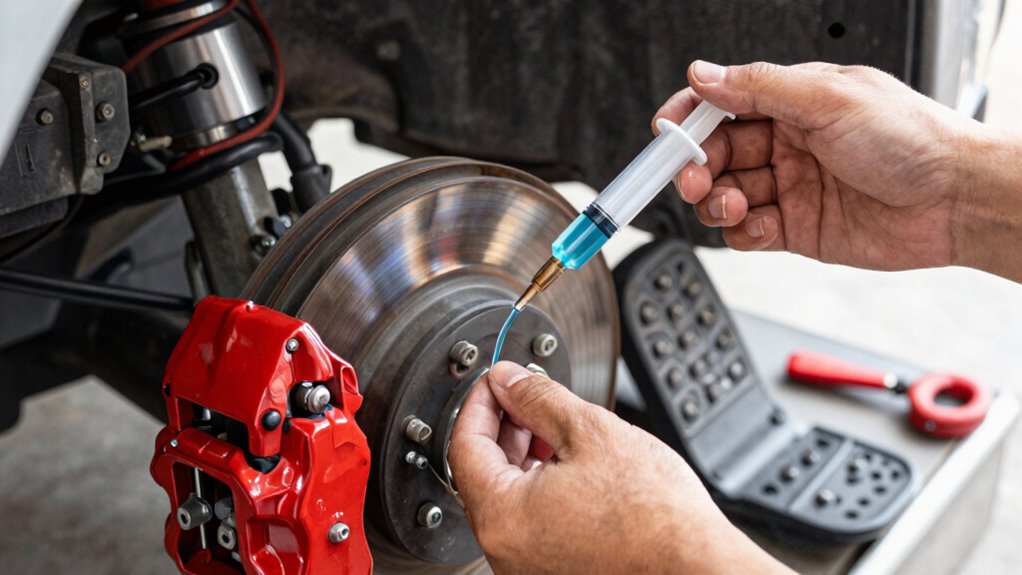

To save time and improve pedal feel, start bleeding your brakes from the wheel farthest from the master cylinder—usually the passenger rear—and work your way to the closest front. This order helps push air out of the system efficiently. Make sure to keep the reservoir topped up and use proper tools for easy air removal. If you want to get the most effective results, there’s more to know about perfecting this process.

Get business pricing on garage and car supplies
- Business-only prices and quantity discounts
- Tax-exempt purchasing
- Multiple users, one account, clear invoices
Key Takeaways
- Start bleeding from the wheel farthest from the master cylinder to efficiently remove air.
- Follow the specific sequence: passenger rear, driver rear, passenger front, then driver front.
- Use pressure or vacuum tools to speed up bleeding and ensure consistent flow.
- Keep the brake fluid reservoir topped up to prevent air from re-entering the system.
- Verify pedal firmness and check for leaks after bleeding to ensure optimal brake feel and safety.
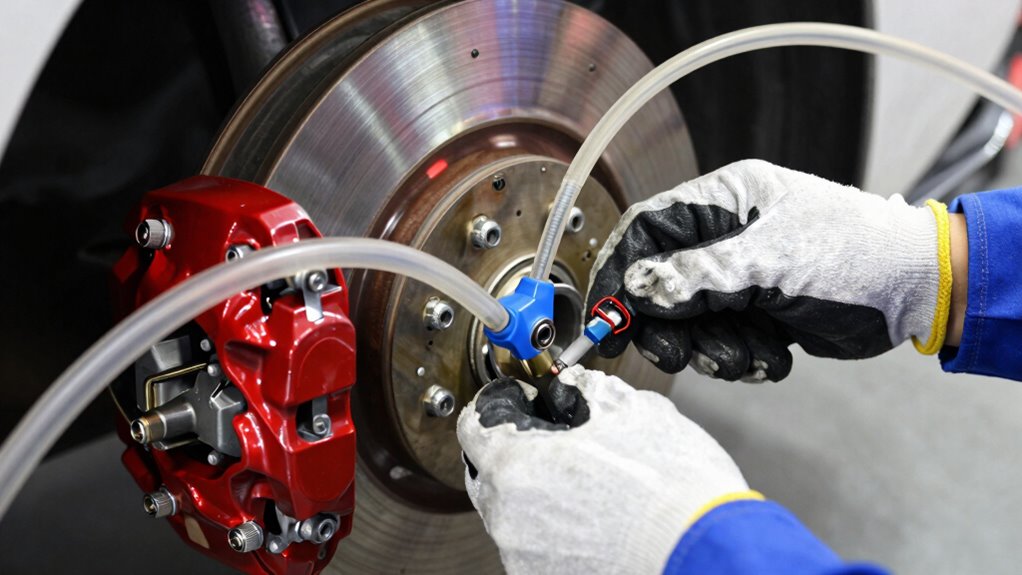
Have you ever wondered why a proper brake bleeding order is essential for your vehicle’s safety? When you’re working on your brakes, following the correct sequence ensures that air gets out of the system efficiently, restoring that firm pedal feel you depend on. Skipping or mixing up the order can lead to incomplete bleeding, leaving you with a spongy pedal or compromised braking performance. To do the job right, you need to understand the importance of brake fluid types and the right bleeding tools for the task. Different brake systems may require specific brake fluid types, such as DOT 3, DOT 4, or DOT 5.1, and using the wrong fluid can compromise system integrity or cause damage. Before starting, double-check your vehicle’s specifications to ensure you’re using the correct brake fluid. Choosing the right bleeding tools, like a vacuum bleeder, pressure bleeder, or simple brake bleeding kit, makes the process smoother and more efficient. These tools help you eliminate air bubbles quickly and reduce the risk of introducing new air into the system.
Using appropriate maintenance procedures can further prevent common issues such as residual air or fluid contamination during bleeding. The most common bleeding order starts with the wheel farthest from the master cylinder, usually the passenger side rear, then moves to the driver side rear, followed by the passenger side front, and finally the driver side front. This sequence ensures that air trapped in the system is pushed toward the master cylinder and expelled effectively. Proper understanding of the brake fluid types is crucial to avoid system damage, especially since different DOT fluids have varying boiling points and compatibility. As you proceed, keep the brake fluid reservoir topped up to prevent air from being drawn back into the system. Using bleeding tools helps maintain a steady flow and makes it easier to monitor the process. When you attach a pressure or vacuum tool, it applies consistent force, reducing the manual effort and minimizing errors. Be attentive to the pedal feel throughout the process; if it remains soft or spongy, you might need to repeat the bleeding process or check for leaks. Additionally, understanding the proper bleeding techniques can help you achieve a more thorough and effective brake bleed.
Incorporating correct technique ensures that the process is both safe and effective, reducing the likelihood of needing to redo the work. Following the correct order not only saves you time but also guarantees a safe, responsive brake pedal. When you’re finished, make sure to properly dispose of any old brake fluid, and double-check all connections for leaks. Remember, a well-bleeded brake system enhances your safety on the road, providing predictable and reliable braking performance. By understanding the significance of brake fluid types and utilizing the right bleeding tools, you set yourself up for a successful, efficient brake maintenance session that leaves your vehicle’s braking system operating at its best.
brake bleeding kit with vacuum pump
As an affiliate, we earn on qualifying purchases.
As an affiliate, we earn on qualifying purchases.
Frequently Asked Questions
Can I Bleed Brakes Without a Helper?
Yes, you can bleed brakes without a helper using techniques like the pump and master cylinder method. Start by removing contaminated brake fluid and following proper bleeding sequence techniques to prevent brake fluid contamination. Keep the master cylinder topped off and use a clear tube to monitor air bubbles. This approach helps maintain pedal feel and guarantees effective brake system bleeding, even without assistance, saving you time and effort.
What’s the Best Brake Fluid Type for My Vehicle?
You should choose the brake fluid that matches your vehicle’s requirements, typically DOT 3, DOT 4, or DOT 5.1, ensuring compatibility with your brake system’s materials. Consider fluid absorption properties—some fluids absorb moisture better, preventing corrosion and maintaining performance. Always check your owner’s manual for the recommended type to guarantee ideal brake performance, safety, and longevity. Using the correct brake fluid helps maintain reliable braking and prevents damage.
How Often Should I Bleed My Brakes?
Think of your brakes like a trusted friend—regular care keeps them reliable. You should bleed your brakes every 2-3 years or when you notice spongy pedal feel, which indicates brake fluid contamination. Follow a consistent bleeding frequency schedule, especially after brake fluid changes or repairs. This routine prevents moisture buildup, maintains ideal brake performance, and guarantees your safety on the road. Don’t wait; proactive maintenance is key.
Can I Reuse Old Brake Fluid?
You shouldn’t reuse old brake fluid because it can become contaminated over time, reducing braking performance. Always dispose of brake fluid properly after bleeding your brakes, following local brake fluid disposal regulations. Reusing contaminated fluid risks brake failure due to brake fluid contamination, which can lead to unsafe driving conditions. Fresh brake fluid guarantees ideal hydraulic pressure, so always replace it with new fluid rather than reusing old, potentially compromised fluid.
What Tools Are Essential for Brake Bleeding?
You need essential tools like a clear container, a wrench, and a bleed kit to master brake bleeding. Don’t forget to choose the right brake fluid types—DOT 3, DOT 4, or DOT 5.1—matching your vehicle’s specifications. Mastering bleeding techniques requires patience, but with these tools, you’ll quickly eliminate air bubbles, restore perfect pedal feel, and prevent dangerous brake failure. Prepare yourself for a safe, smooth ride ahead!
Conclusion
Follow the correct brake bleeding order, and you’ll save time, guarantee safety, and improve pedal feel. Prioritize efficiency, focus on accuracy, and maintain consistency. Keep your work organized, stay patient, and double-check your steps. When you follow these principles, you’ll prevent air from lingering, optimize brake performance, and enjoy a confident, responsive pedal. Remember, a proper bleed isn’t just a task—it’s an essential step toward safer, smoother braking. Keep these tips in mind, and you’ll always get it right.
Halloween Picks
halloween
As an affiliate, we earn on qualifying purchases.