During dyno testing, you can expect your vehicle to be securely mounted while the process measures horsepower and torque at different speeds. Technicians will monitor the vehicle closely, making calibration adjustments if needed to guarantee ideal performance and safety. You’ll notice the vehicle’s engine revving through various RPMs, and multiple runs help verify data accuracy. Keep in mind, proper preparation and understanding what’s involved will make the experience smoother—if you keep exploring, you’ll discover more details.
Key Takeaways
- Ensure vehicle is properly prepared, including fluid checks and mechanical inspection, for accurate and safe testing results.
- The vehicle is securely mounted on the dynamometer, which simulates driving conditions across various RPMs.
- Technicians perform engine calibration adjustments, like fuel maps and ignition timing, to optimize performance and data accuracy.
- Strict safety protocols are followed, including protective gear and secured testing areas, to prevent accidents during high-RPM runs.
- Post-test, technicians analyze data, verify consistency, and communicate results to determine if further calibration or modifications are needed.
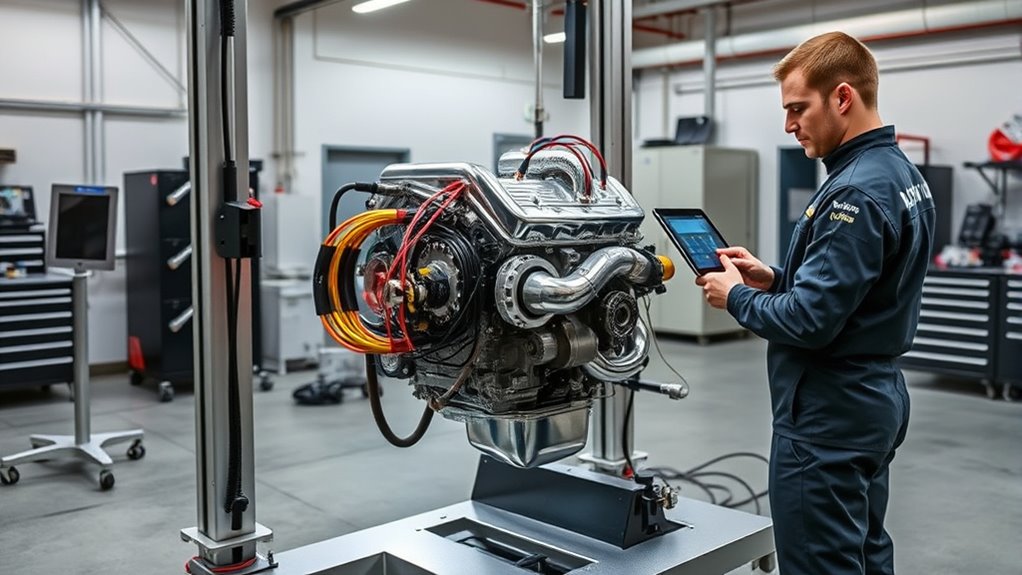
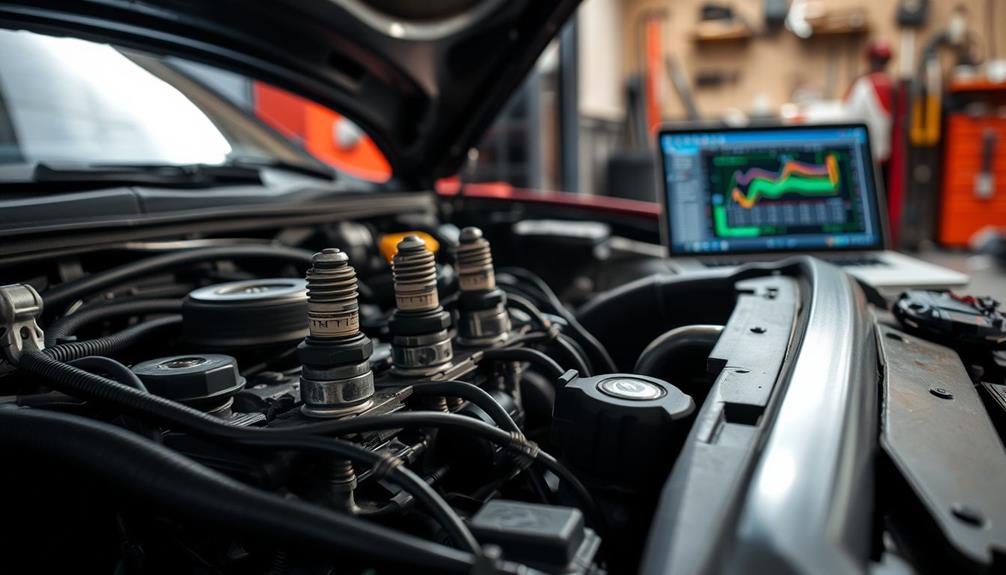
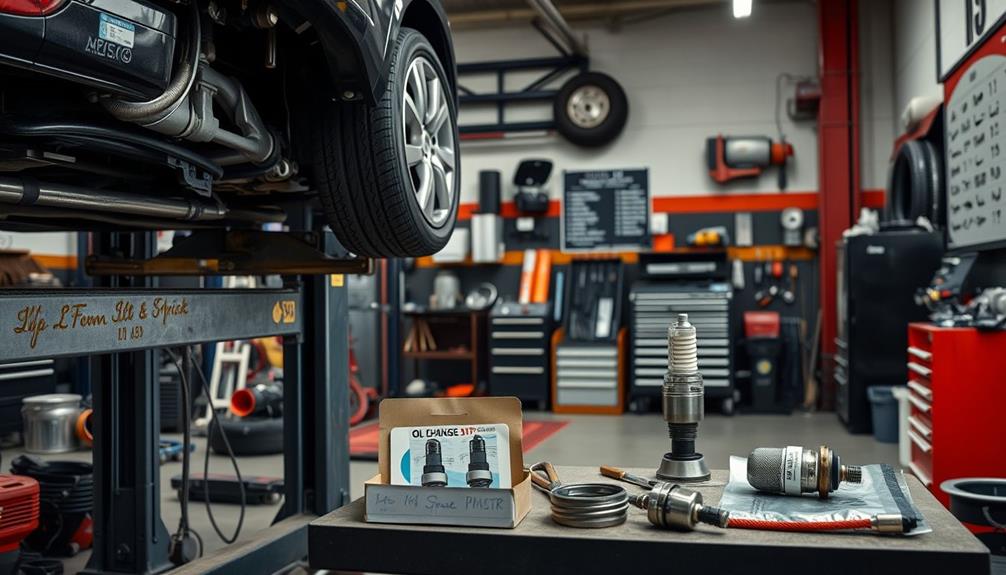
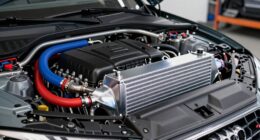
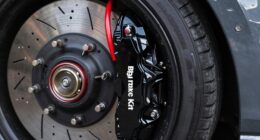
If you’re looking to accurately measure your vehicle’s performance, understanding how to conduct dyno testing is crucial. Dyno testing provides valuable insights into your engine’s power output, torque, and overall health. To get reliable results, it’s important to know what to expect during the process, especially regarding engine calibration and safety precautions. As you prepare for a dyno session, make sure your vehicle is in good condition—check fluid levels, tire pressure, and make sure there are no leaks or mechanical issues. Proper preparation guarantees accurate readings and minimizes risks.
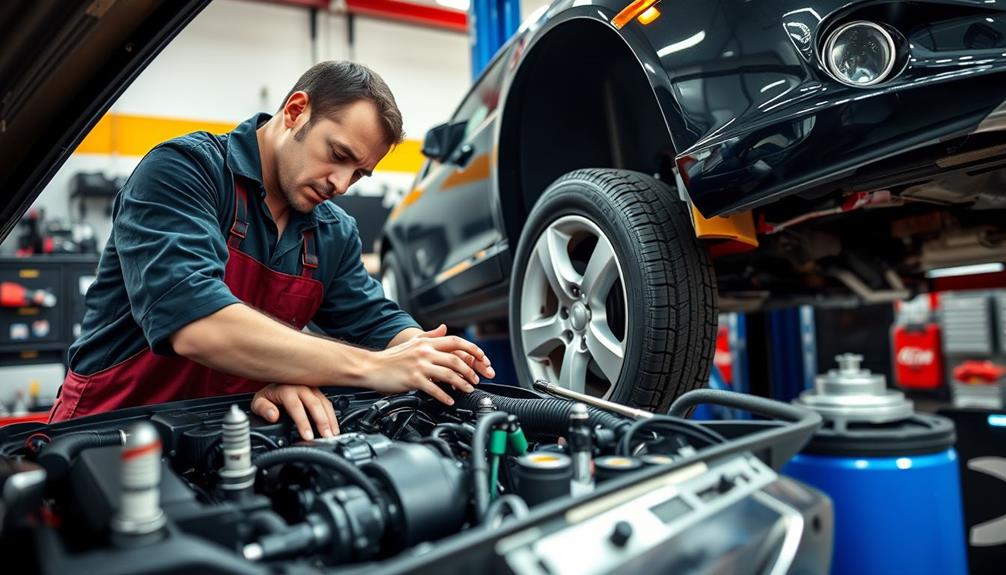
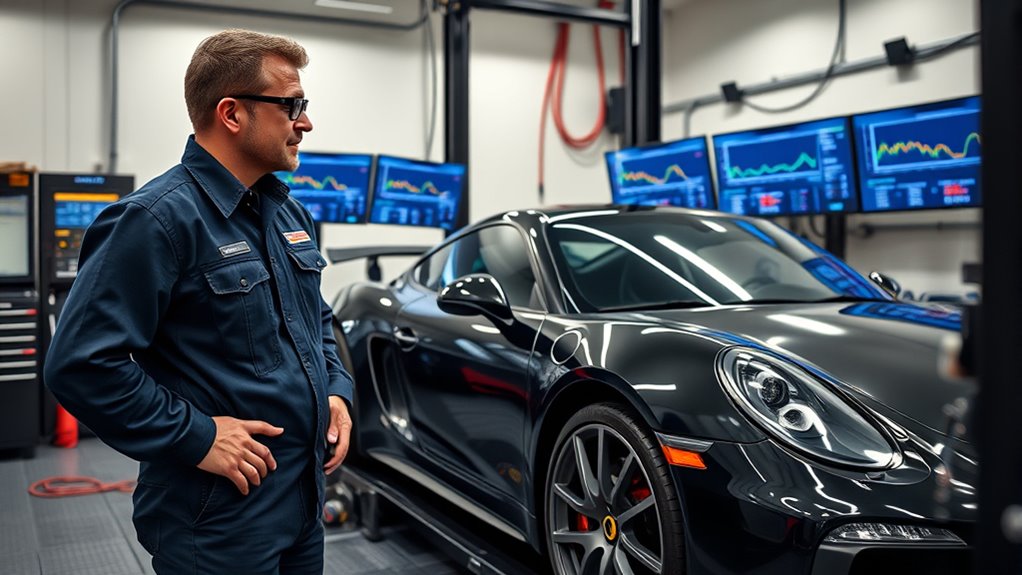
During the test, the technician will securely mount your vehicle on the dynamometer, which simulates driving conditions by rotating your wheels while the engine runs at different RPMs. This setup allows for precise measurement of horsepower and torque across various speeds. As you go through the testing process, they may adjust your engine calibration to optimize performance or diagnose issues. Engine calibration is a critical step because it ensures your engine runs efficiently and safely at different power levels. Skilled technicians fine-tune fuel maps, ignition timing, and other parameters to match your vehicle’s specific setup, ensuring you get the most accurate data without risking damage to your engine. Additionally, mammography guidelines emphasize the importance of proper calibration and safety measures to ensure accurate results while minimizing risks.
During dyno testing, technicians securely mount your vehicle and adjust calibration for optimal, safe performance.
Safety precautions are a crucial part of the entire process. Expect the technicians to follow strict protocols, such as wearing protective gear and ensuring the testing area is secure. They might also use barriers or shields to contain any debris or parts that could accidentally come loose during high-RPM runs. As a vehicle owner, you should stay at a safe distance and avoid interfering during the test. It’s essential to communicate with the technician if you notice anything unusual—like strange noises or vibrations—so they can halt the test immediately. Remember, dyno testing involves high forces and moving parts, so adhering to safety guidelines protects both you and the equipment.
Throughout the process, expect the technician to explain each step and what the data means. They’ll record performance metrics and may perform multiple runs to ensure consistency. Afterward, they’ll analyze the results, which can help you decide if further engine calibration or modifications are necessary. Overall, understanding what to anticipate during dyno testing—especially regarding engine calibration adjustments and safety precautions—gives you confidence and control over the process. It’s a powerful tool for optimizing your vehicle’s performance while maintaining safety and longevity, so knowing what to expect makes the experience smoother and more informative.
Frequently Asked Questions
How Often Should I Schedule a Dyno Test for My Vehicle?
You should schedule a dyno test every 6 to 12 months as part of your maintenance schedule, especially if you’re involved in performance tuning. Regular testing helps monitor your vehicle’s performance, identify issues early, and optimize tuning adjustments. If you’ve made significant modifications or notice a drop in power, it’s wise to conduct a dyno test sooner. Consistent testing ensures your vehicle performs at its best and maintains reliability.
Can Dyno Testing Damage My Engine or Vehicle?
Like a careful surgeon, you need to trust that dyno testing won’t harm your engine if done correctly. When performed by professionals, engine safety is prioritized, and the test is designed to guarantee accurate testing results without risking damage. Proper calibration and adherence to safety protocols protect your vehicle, so you can confidently learn about your engine’s performance without worry. Rest assured, a well-conducted dyno test is both safe and precise.
What Are the Costs Associated With Professional Dyno Testing?
You can expect the cost of professional dyno testing to range from $50 to $150 per session. A typical cost breakdown includes equipment fees, technician labor, and additional services like data analysis. To find the best deal, do a price comparison among local providers, checking for package deals or discounts. Keep in mind, investing in quality testing can save you money in the long run by optimizing your vehicle’s performance.
How Long Does a Typical Dyno Testing Session Take?
You can expect a typical dyno testing session to last around 2 to 4 hours, depending on various session factors. The test duration varies based on the complexity of the setup, the number of runs, and any adjustments needed along the way. It’s not a race, so take your time; good results come from thorough testing. Be prepared to stay patient—sometimes, the best data takes a little longer to gather.
Do I Need to Prepare My Vehicle Before a Dyno Test?
Yes, you should prepare your vehicle before a dyno test. Make certain your vehicle is properly tuned, with fresh fluids, correct tire pressure, and no leaks. Follow safety precautions, like disconnecting unnecessary electronics and securing loose parts. This helps achieve accurate results and keeps you safe during vehicle tuning. Proper preparation minimizes risks and ensures a smooth dyno testing session, giving you reliable data for maximum performance improvements.
Conclusion
Now that you understand what to expect from dyno testing, you’re ready to embrace the process with confidence. Think of it as revealing a hidden symphony within your engine—each test a note, each result a new melody. With preparation and knowledge in hand, you’ll not only improve your vehicle’s performance but also master the art of precision tuning. Remember, every run brings you closer to harmony—where power, efficiency, and perfection meet in perfect rhythm.