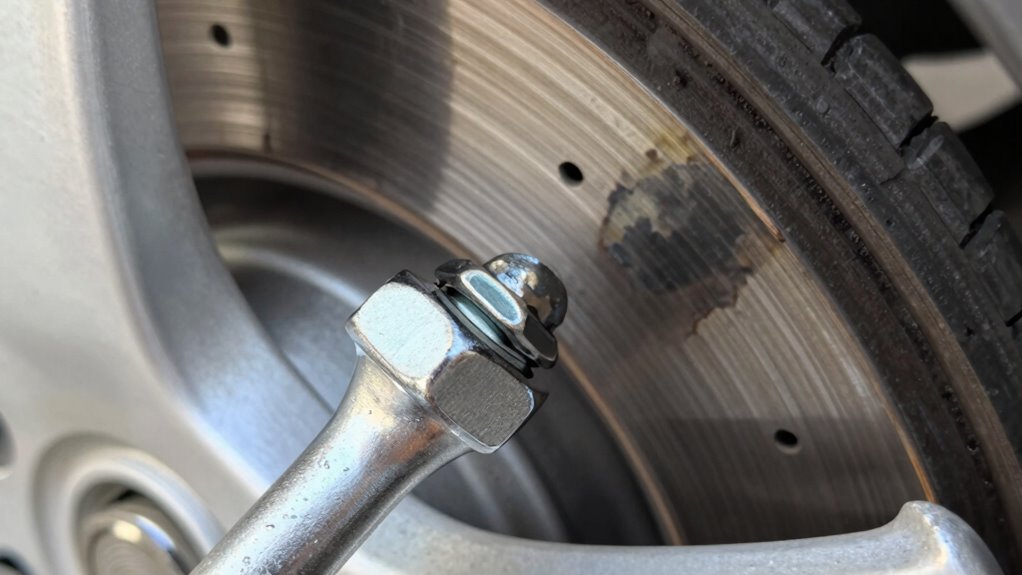

Over-tightening your lug nuts can cause your rotors to warp by creating uneven pressure on the wheel assembly, which leads to excessive heat and stress during braking. This stress weakens the rotors and can distort their shape, resulting in vibrations and reduced braking effectiveness. Too much torque also risks damaging wheel studs and mounting surfaces. To prevent this, it’s essential to use the correct torque and understand how over-tightening impacts your vehicle’s safety—more details await you.

Get business pricing on garage and car supplies
- Business-only prices and quantity discounts
- Tax-exempt purchasing
- Multiple users, one account, clear invoices
Key Takeaways
- Over-tightening lug nuts causes uneven pressure, leading to rotor warping over time.
- Excessive torque increases heat during braking, accelerating rotor metal fatigue and warping.
- Tightening beyond manufacturer specs distorts mounting surfaces, resulting in rotor wobble and vibrations.
- Over-tightened lug nuts stress brake components, contributing to uneven caliper pressure and rotor deformation.
- Proper torque maintains even contact between wheel and rotor, preventing heat buildup and rotor warping.

Have you ever wondered why proper lug nut torque is essential for vehicle safety? When you tighten your lug nuts correctly, you ensure that your wheels stay securely attached and your vehicle handles as it should. Over-tightening, however, can lead to serious problems like warped rotors, which ultimately compromise your braking performance. One often-overlooked aspect related to lug nut torque is how it affects your wheel alignment and brake calipers. When lug nuts are over-tightened, they can cause uneven pressure on the wheel assembly, throwing off your wheel alignment. This misalignment can lead to uneven tire wear, steering issues, and a rougher ride. Additionally, excessive torque can stress the brake calipers, which clamp down on the rotors to slow or stop your vehicle. If the calipers are pressed unevenly or too tightly, they can cause the rotors to warp over time, especially when combined with the heat generated from braking. Proper torque specifications are usually provided by your vehicle’s manufacturer and should be followed precisely. Using a torque wrench ensures you apply the correct amount of force, preventing over-tightening. When lug nuts are too tight, you not only risk warping the rotors but also make future wheel removal difficult, potentially damaging the studs or the wheel itself. This damage can affect your vehicle’s overall safety and performance. Furthermore, over-tightening can distort the mounting surface, affecting the contact between the rotor and the wheel, which may cause vibrations or wobbling during driving. These vibrations are often mistaken for wheel balance issues but are actually a sign of warped rotors caused by improper lug nut torque. Maintaining proper lug nut torque also helps keep your wheel alignment intact. If your wheel isn’t mounted evenly due to over-tightening or uneven tightening, your steering will become less predictable, and your tires will wear unevenly. On the safety front, uneven stress on brake calipers caused by improper lug nut torque can lead to uneven braking force, increased heat, and faster wear of brake components. Over time, this can result in warped rotors, which diminish braking efficiency and pose a safety risk. Additionally, understanding the effects of heat generated during braking can help explain why over-tightening accelerates rotor warping, as excessive heat causes metal fatigue and deformation.
digital torque wrench for lug nuts
As an affiliate, we earn on qualifying purchases.
As an affiliate, we earn on qualifying purchases.
Frequently Asked Questions
How Often Should I Check Lug Nut Torque?
You should check your lug nut torque at least once a month or every 1,000 miles, especially after tire rotations or wheel alignments. Proper torque guarantees your wheels stay secure without over-tightening, which can warp rotors. Also, regularly check your tire pressure and wheel alignment to prevent uneven wear. Keeping these in check helps maintain safe driving, prolongs your brake system’s life, and avoids costly repairs.
Can Uneven Torque Cause Brake Issues?
Uneven torque can definitely cause brake issues, and it might surprise you how quickly problems develop. When lug nuts aren’t tightened properly, it can lead to misaligned wheels and uneven brake pad wear, compromising your vehicle’s safety. This misalignment stresses your brake components, reducing braking efficiency and increasing wear. Regularly check your lug nut torque to prevent these issues, ensuring your wheel alignment stays true and your brakes perform reliably.
What’s the Best Tool for Tightening Lug Nuts?
The best tool for tightening lug nuts is a torque wrench, because it guarantees you apply the correct torque without over-tightening. Avoid using an impact driver for this task, as it can easily over-tighten and damage the nuts or rotors. A torque wrench gives you precise control, helping you tighten lug nuts safely and evenly, which prevents warping and ensures your wheels stay secure.
Do All Vehicles Require the Same Torque Specifications?
You can’t paint all vehicles with the same brush, as each one has different needs. Torque specifications vary based on vehicle compatibility and manufacturer guidelines, so it’s essential to follow the manual. Ignoring these differences can cause damage or safety issues. Always use the correct torque for your specific vehicle, and don’t take shortcuts—your car’s health depends on it. It’s better to be safe than sorry.
How Does Temperature Affect Lug Nut Torque?
Temperature impact plays a significant role in lug nut torque, as it can affect torque stability. When it’s hot, metal expands, which may cause your torque to decrease if you don’t tighten properly. Conversely, in cold weather, metal contracts, leading to over-tightening if you ignore temperature variations. Always check your lug nut torque when temperatures are different from the time of installation to guarantee proper, safe tightening and maintain ideal performance.
Conclusion
So, next time you’re tightening those lug nuts, remember that over-tightening can cause warped rotors, leading to costly repairs. I get it—you’re enthusiastic to finish quickly, but taking a moment to torque them properly saves you time and money later. Don’t worry, it’s simple: tighten in stages and follow the recommended torque specs. Trust me, your brakes will thank you, and you’ll avoid the hassle of warped rotors down the road.
Fall Picks
fall essentials
As an affiliate, we earn on qualifying purchases.