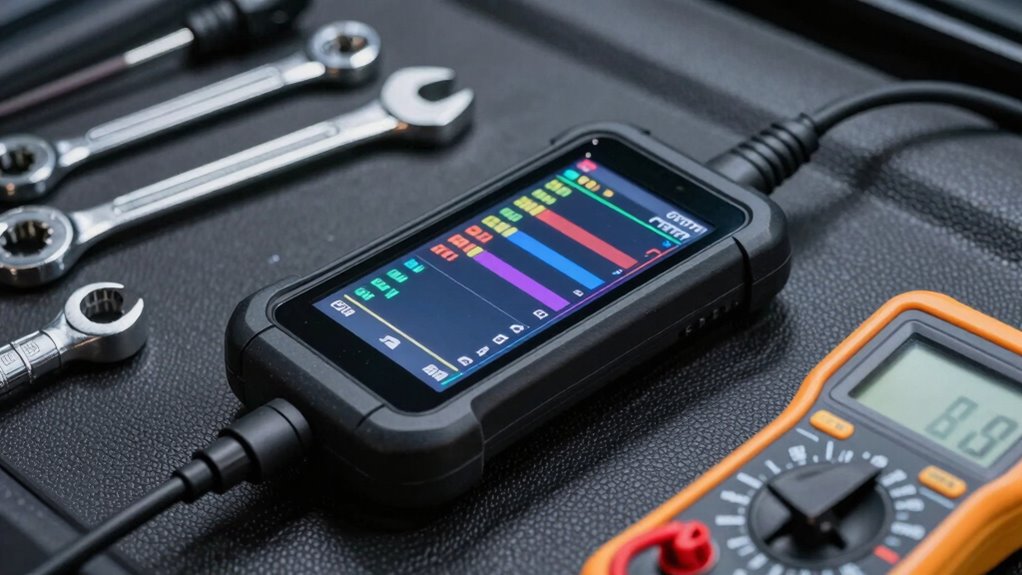

As an enthusiast, you’ll find yourself using features like real-time sensor diagnostics to quickly identify abnormal readings and troubleshoot issues efficiently. Data logging is essential for monitoring vehicle performance over time and spotting patterns in intermittent problems. Quick access to diagnostic trouble codes (DTCs) helps you pinpoint specific issues fast, saving time and avoiding guesswork. Mastering these tools makes vehicle DIY maintenance more effective—keep exploring to discover even more ways your OBD2 scanner can help.

Get business pricing on garage and car supplies
- Business-only prices and quantity discounts
- Tax-exempt purchasing
- Multiple users, one account, clear invoices
Key Takeaways
- Reading and clearing Diagnostic Trouble Codes (DTCs) for quick issue identification.
- Monitoring real-time sensor data to diagnose engine performance problems.
- Recording and analyzing data logs to detect intermittent issues and driving patterns.
- Using sensor diagnostics to verify sensor health and troubleshoot sensor-related faults.
- Accessing vehicle health insights via remote monitoring and integration with smart devices.
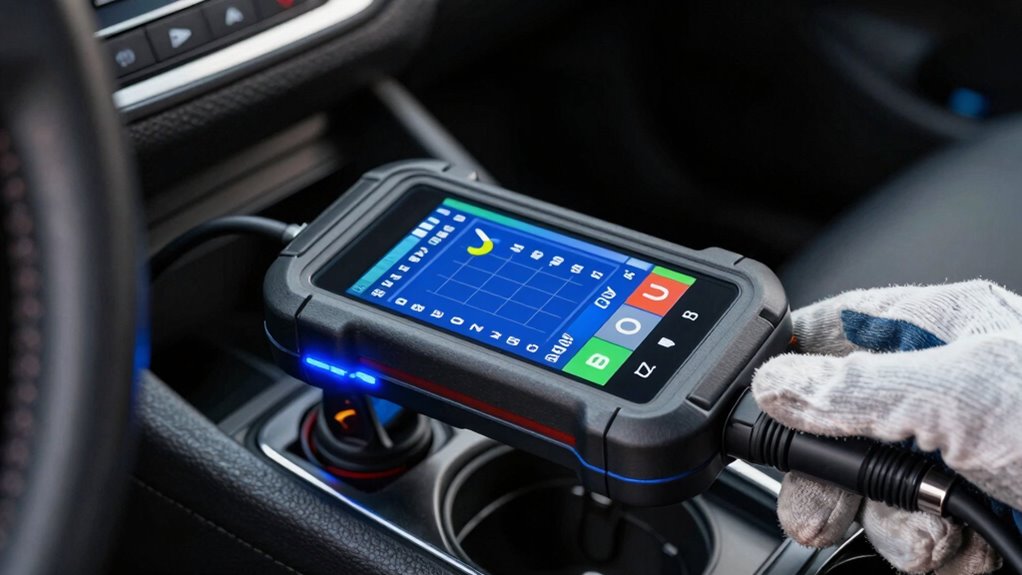
When it comes to diagnosing vehicle issues quickly and accurately, certain features of an OBD2 scanner stand out as the most essential. Two of these features are sensor diagnostics and data logging, both of which play a crucial role in helping you pinpoint problems and monitor your vehicle’s health over time. Sensor diagnostics allows you to read real-time data from various sensors throughout your car, giving you insight into how different systems are functioning. For instance, if your engine is running rough or if there’s a hesitation during acceleration, sensor diagnostics can help identify which sensors are providing abnormal readings. This feature saves you time by narrowing down potential causes without the need for extensive manual checks or guesswork. You can quickly see if your oxygen sensors, mass airflow sensor, or throttle position sensor are operating within normal parameters, making it easier to determine whether a sensor needs replacement or further investigation. Additionally, home automation integration can enhance your diagnostic process by allowing remote monitoring and control of your vehicle’s data through smart home devices. Data logging, on the other hand, is a feature that enables you to record and save vehicle data over a period of time. This is particularly useful if you’re troubleshooting intermittent issues or trying to understand how certain driving conditions affect your vehicle’s performance. With data logging, you can capture valuable information such as engine temperature, RPM, vehicle speed, and sensor outputs during a drive. Later, you can review this data to identify patterns or anomalies that might not be apparent during a single test drive. It helps you build an extensive picture of what’s happening under different conditions, which can be invaluable when working with a mechanic or making maintenance decisions yourself. Many enthusiasts find data logging useful for tracking the effectiveness of repairs or modifications, giving them a record of performance changes over time. Recognizing diagnostic trouble codes can further streamline troubleshooting by quickly pointing you toward specific issues needing attention. Both sensor diagnostics and data logging are features that elevate your ability to understand and maintain your vehicle. They’re tools that turn raw data into actionable insights, saving you money and reducing downtime. These features are often the most used because they provide immediate, practical value—whether you’re trying to diagnose a check engine light or monitor ongoing performance issues. By leveraging sensor diagnostics, you get quick answers about sensor health, while data logging gives you the historical context needed to make informed decisions. Additionally, understanding how to interpret sensor outputs can significantly improve your troubleshooting efficiency, especially for complex issues. For example, sensor calibration knowledge can be crucial when diagnosing sensor-related problems. A deeper understanding of vehicle diagnostics can help you become more self-sufficient in maintaining your car, reducing dependence on professional diagnostics. Together, they make your OBD2 scanner not just a diagnostic device, but an extensive vehicle monitoring system that helps you stay ahead of potential problems.
Products Worth Considering

Autel MaxiCheck MX808S Bidirectional OBD2 Diagnostic Scanner

Autel MaxiCOM MK900BT Bidirectional Diagnostic Scanner

VIOFO A229 Plus 2K Front and Rear Dash Cam with Dual STARVIS 2 Sensors and HDR
As an affiliate, we earn on qualifying purchases.
Frequently Asked Questions
Can OBD2 Scanners Diagnose All Car Issues?
OBD2 scanners can’t diagnose all car issues, but they’re great for identifying problems affecting fuel efficiency and emission control. You can quickly read error codes related to engine performance, helping you pinpoint issues that impact emissions or fuel economy. However, they don’t replace a mechanic’s expertise for complex problems like transmission or suspension issues. Use them as a helpful tool to narrow down concerns before seeking professional repairs.
Are There Any Compatibility Issues With Specific Vehicle Models?
Think of your scanner as a key, but some doors (vehicle models) have different locks. Vehicle compatibility varies, and certain models may not fully support all scanner features. Scanner limitations can cause compatibility issues, especially with older or specialized vehicles. Always check if your scanner works with your specific car make and model to avoid surprises. Doing your homework guarantees your scanner grants the full potential of your vehicle’s diagnostics.
How Accurate Are the Readings From Basic OBD2 Scanners?
Basic OBD2 scanners provide fairly accurate readings for emission testing and fuel efficiency, but they might not be as precise as professional-grade tools. You can rely on them to identify major issues affecting your vehicle’s performance. However, for detailed diagnostics or complex problems, upgrading to a more advanced scanner is advisable. Keep in mind, regular use helps you better understand your vehicle’s health and optimize fuel efficiency.
Do Premium Scanners Provide More Features Than Basic Ones?
Premium scanners definitely offer more features than basic ones. They enable advanced diagnostics, helping you identify complex issues more accurately, and often come with a more intuitive user interface, making them easier to navigate. With these enhanced tools, you can access a wider range of data and perform deeper analyses. While they might cost more, they’re valuable for enthusiasts who want thorough insights and a smoother experience.
Can an OBD2 Scanner Reset Maintenance Lights Automatically?
With an OBD2 scanner, you can easily execute an automatic clearing of maintenance lights. Most scanners support maintenance reset functions, allowing you to quickly and conveniently perform maintenance reset tasks. This feature simplifies the process by automatically clearing the maintenance light, saving you time and hassle. So, whether you’re a DIY enthusiast or just want quick fixes, an OBD2 scanner makes maintenance reset and automatic clearing straightforward and stress-free.
Conclusion
In the end, you’ll find yourself using the OBD2 scanner’s features most often for quick diagnostics and resetting codes. Did you know nearly 60% of enthusiasts rely on their scanner for immediate issue identification? This tool becomes your go-to for saving time and avoiding costly trips to the mechanic. With its user-friendly features, you’ll gain confidence in maintaining your vehicle and troubleshooting problems efficiently—making it an essential part of your auto toolkit.