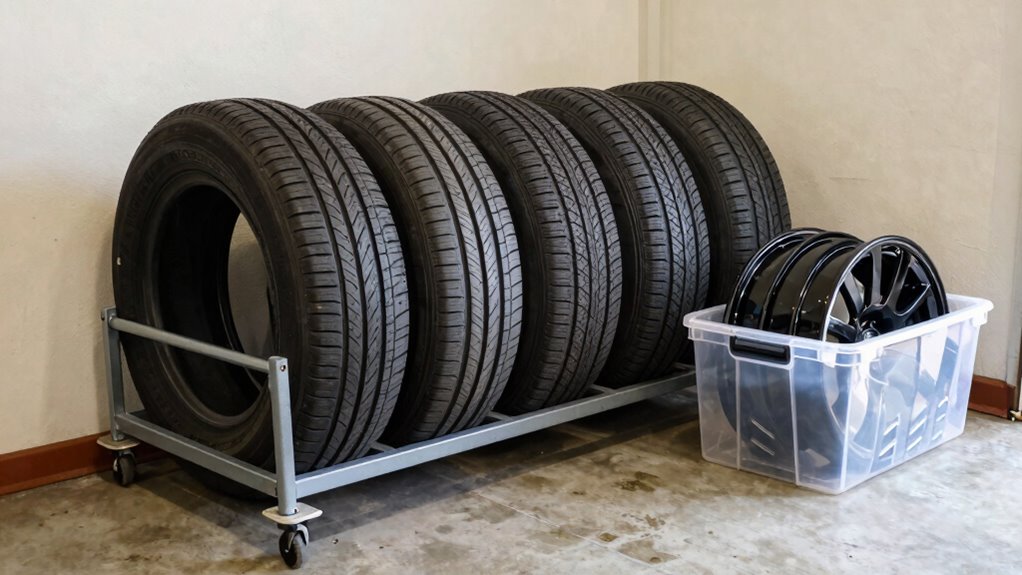

To store extra wheels and tires properly, clean them thoroughly and inspect for damage before storage. Keep tires upright in a cool, dry place away from sunlight and ozone sources, and avoid plastic covers—use breathable ones instead. Remove tires from rims for long-term storage to prevent flat spots and check regularly for signs of deterioration. Proper positioning and periodic rotation help preserve their condition. Want to learn more tips to keep your wheels in top shape?

Get garage and car supplies delivered free — and shop member deals
- Fast, free delivery on millions of items
- Access to Prime Big Deal Days deals on October 6–7
- Prime Video, Amazon Music and more included
Key Takeaways
- Store tires upright in a cool, dry, and shaded environment to prevent deformation and rubber aging.
- Remove tires from rims for long-term storage to avoid flat spots and facilitate inspection.
- Use breathable covers like cloth or tire covers, avoiding plastic to allow air circulation and prevent moisture buildup.
- Elevate tires off the ground using proper stands or racks to prevent contact with moisture and deformation.
- Regularly inspect stored tires and wheels for signs of damage or deterioration, and rotate their position periodically.

Storing extra wheels and tires properly is essential to keep them in good condition and extend their lifespan. When you take the time to do it right, you prevent unnecessary wear and tear that can compromise their performance later. The first step is to guarantee you’re practicing good tire maintenance even during storage. Clean the tires thoroughly, removing dirt, grime, and brake dust with soap and water. Once dry, inspect them carefully for any signs of damage, such as cuts, punctures, or cracks. Address any issues before storing, because leaving damaged tires in storage can lead to further deterioration over time. Proper tire maintenance also includes checking the tire pressure and adjusting it to the recommended levels. Underinflated or overinflated tires are more susceptible to damage, especially if they sit for long periods.
Next, consider wheel alignment. If your wheels are misaligned before storage, it could cause uneven wear or damage to the tires over time. Take the opportunity to have your wheels aligned professionally if you notice uneven tread wear or if the tires were subjected to rough driving conditions. Correct wheel alignment ensures that when you’re ready to use the tires again, they’ll perform safely and efficiently. When storing your wheels, keep them in a cool, dry environment away from direct sunlight, heat sources, or ozone-producing appliances—these elements can accelerate rubber deterioration. If possible, store tires upright, stacking them can cause deformation or flat spots, especially if they’re heavy or if the storage space is cramped. For wheels with tires mounted, consider removing the tires from the rims if you’re storing them long-term. This prevents the tires from developing flat spots and makes it easier to check for damage or deterioration over time. Additionally, proper storage conditions play a critical role in maintaining rubber elasticity and preventing premature aging. Protecting tires from ozone exposure is also crucial, as ozone can weaken rubber compounds over time. An additional tip is to avoid exposing stored tires to extreme temperatures, which can accelerate aging and compromise rubber integrity. Regularly rotating and repositioning stored tires can help distribute pressure evenly and prevent flat spots, ensuring they remain in optimal condition. Using proper storage techniques such as elevating the tires off the ground can also help avoid deformation and moisture accumulation. Cover your tires with a breathable material, such as a cloth or tire cover, to prevent dust, dirt, and exposure to sunlight. Avoid plastic covers, as they can trap moisture and promote mold or rubber degradation. When storing wheels without tires, keep them in a secure, upright position, and consider using wheel racks or stands to prevent unnecessary stress or warping. Regularly check on your stored wheels and tires to ensure they remain in good condition. If you notice any changes in appearance or feel, address issues promptly. Proper storage is not just about saving space—it’s about maintaining the integrity of your tires and wheels, so they’re ready for safe use whenever you need them again.
As an affiliate, we earn on qualifying purchases.
Frequently Asked Questions
Can I Store Tires Outside Year-Round?
Storing tires outside year-round isn’t ideal, but if you must, make sure to clean them thoroughly first, removing dirt and brake dust with tire cleaning products. Use sturdy storage containers or airtight bags to protect them from moisture and UV rays. Keep them in a cool, dry, shaded area away from direct sunlight, chemicals, and extreme temperatures. Proper storage extends their lifespan and maintains their quality.
How Often Should I Rotate Stored Tires?
Did you know that tires can degrade by up to 10% in just five years? You should rotate your stored tires every six months to prevent flat spots and uneven wear. Proper tire maintenance is essential, so use quality storage accessories like tire racks or covers to safeguard them. Regular rotation ensures even pressure distribution, extending tire life and maintaining safety when you need to switch them back on your vehicle.
Is It Safe to Stack Tires Vertically?
Yes, stacking tires vertically is generally safe if done correctly, but it’s not the best method for storage safety. Proper tire stacking involves laying tires flat on a surface to prevent deformation over time. When stacking vertically, guarantee tires are in a cool, dry place, and avoid excessive weight on top. Always check for signs of damage and rotate tires periodically to maintain ideal condition during storage.
Do Tires Need to Be Inflated During Storage?
Tires don’t need to be inflated during storage if they’re clean and properly stored. Before storing, do some tire cleaning to remove dirt and brake dust, then put them in storage containers that protect against moisture and UV rays. If you plan to store tires for an extended period, slightly inflate them to about 10 psi above the recommended pressure to prevent deformation, but avoid over-inflating.
What Temperature Range Is Best for Tire Storage?
You should store tires at a temperature between 45°F and 70°F, following proper storage temperature guidelines. Extreme heat or cold can negatively affect their rubber and tire chemical composition, leading to deterioration. Keep tires in a cool, dry place away from direct sunlight and sources of heat or ozone. Maintaining this temperature range helps preserve tire integrity and prolongs their lifespan, ensuring they stay in good condition until you’re ready to use them again.
Conclusion
Storing your extra wheels and tires properly keeps them safe and ready for use, much like preserving a valuable piece of equipment. While neglect can lead to cracks and deterioration, proper storage guarantees longevity and performance. Think of your tires as a secret weapon—hidden away but powerful when needed. By treating your wheels with care, you turn a simple storage task into an investment in safety and convenience, making sure they’re always ready to roll when you need them most.
Fall Picks
fall essentials
As an affiliate, we earn on qualifying purchases.