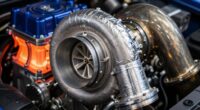
To keep your turbo running smoothly, guarantee your feed lines deliver clean, pressurized oil without leaks or kinks, and check return lines for proper drainage and free flow. Regularly inspect vacuum lines and the oil cooler to prevent overheating and pressure drops. Look out for smoke, especially during acceleration, as it signals seal or oil flow issues. Maintaining these components is key—stay tuned to learn more about avoiding common turbo oiling problems.
Key Takeaways
- Ensure oil feed lines are free of leaks, kinks, and blockages for consistent oil delivery to the turbo.
- Regularly inspect oil return lines for obstructions, proper slope, and clear flow to prevent oil pooling.
- Maintain adequate oil pressure and replace worn seals to prevent smoke and oil leaks during turbo operation.
- Check and clean the oil cooler to prevent overheating, which can impair oil flow and cause smoke issues.
- Monitor for blue or gray smoke during acceleration or deceleration, indicating potential seal failure or oil flow problems.

Turbo oiling is a essential factor in guaranteeing your turbocharger performs reliably and lasts longer. Proper oiling depends heavily on maintaining adequate oil pressure and guaranteeing the oil reaches all critical components. When oil pressure drops, it can lead to insufficient lubrication, causing increased wear, overheating, and even turbo failure. To prevent this, you need to regularly check your oil pressure gauge, especially during high-stress driving or heavy loads. If you notice a decline in pressure, it could indicate a problem with your oil pump, clogged oil passages, or oil cooler restrictions. Guaranteeing your oil cooler is functioning properly is indispensable because it helps regulate oil temperature, preventing it from becoming too hot and losing its lubricating properties. An overworked or clogged oil cooler can cause oil to overheat, reducing its viscosity and impairing oil flow to the turbocharger. Regular maintenance and inspection of vacuum lines and connections are also crucial, as these components help ensure proper turbo operation and prevent leaks that could compromise oil pressure. When it comes to oil feed lines, they are responsible for delivering clean, pressurized oil from your engine to the turbo. These lines need to be free of leaks, blockages, or kinks, as any disruption can cause a drop in oil pressure at the turbo, leading to insufficient lubrication and potential damage. Use high-quality, heat-resistant lines and fittings designed specifically for turbo applications. Regular inspection is essential because oil feed lines are exposed to extreme heat and pressure, which can cause deterioration over time. If you notice oil leaks around these lines, it’s indispensable to replace or tighten fittings immediately to avoid oil starvation. The oil return lines are equally important—they carry oil away from the turbo back to the oil pan. Properly functioning return lines prevent oil from pooling in the turbo housing, which can cause smoke, increased oil consumption, or turbo seal failure. Ensure these lines are clear and free of obstructions, and that they have a proper downward slope to facilitate gravity drainage. Any restriction or blockage can lead to oil backup, which often manifests as smoke from the exhaust or excessive oil consumption. Finally, if you see blue or gray smoke during acceleration or deceleration, it often indicates oil is leaking into the combustion chamber, possibly due to turbo seal failure or improper oil flow. This highlights the importance of maintaining correct oil pressure, guaranteeing your oil cooler works efficiently, and inspecting your feed and return lines regularly. Staying on top of these aspects will help you avoid costly turbo repairs and keep your engine running smoothly for miles to come.
Frequently Asked Questions
How Often Should I Replace Turbo Feed and Return Lines?
You should replace turbo feed and return lines every 50,000 to 75,000 miles, depending on your oil line materials and driving conditions. Regular turbo maintenance schedule includes inspecting these lines for cracks or leaks and replacing them if needed. Using high-quality, heat-resistant hoses helps extend their lifespan. Staying vigilant guarantees proper oil flow, prevents smoke issues, and maintains turbo efficiency, saving you from costly repairs down the road.
Can Incorrect Oil Pressure Cause Turbo Smoke Issues?
Yes, incorrect oil pressure can cause turbo smoke issues. If your oil pressure is too low, the turbo may not receive enough lubrication, leading to increased wear and oil leakage into the exhaust, which creates smoke. Conversely, excessive oil pressure can force oil past seals. Maintaining proper oil pressure guarantees your turbo operates smoothly, preventing smoke and prolonging its lifespan. Regular checks help avoid costly repairs down the line.
What Are Signs of a Failing Turbo Oil Seal?
You’ll notice turbo seal failure through oil leak symptoms like oil spots under your vehicle, excessive smoke from the exhaust, or a decrease in engine power. If the turbo’s seal fails, oil can seep into the intake or exhaust, causing smoke and potential engine damage. Keep an eye out for these signs, and address the issue promptly to prevent further damage and maintain turbo performance.
Is Synthetic Oil Better for Turbo Longevity?
Synthetic oil offers better protection, cleaner engine parts, and improved temperature stability, making it ideal for turbo longevity. You’ll notice smoother operation, less wear, and fewer deposits building up, all thanks to synthetic oil benefits. It meets turbo oil specifications more effectively, ensuring your turbo runs cooler and lasts longer. By choosing synthetic, you’re actively helping prevent premature turbo failure and maintaining peak performance under demanding conditions.
How Do I Troubleshoot Excessive Turbo Smoke?
If you’re seeing excessive turbo smoke, start by checking for oil contamination in the intake or intercooler, which can cause smoke. Next, monitor your boost pressure; if it’s too high, it could be pushing oil into the exhaust. Also, inspect your feed and return lines for leaks or blockages. Addressing these issues promptly helps reduce smoke and prolong your turbo’s life.
Conclusion
Now that you understand the basics of turbo oiling—feed lines, returns, and smoke issues—you’re better equipped to troubleshoot and maintain your turbocharged engine. For example, imagine noticing smoke after a long drive; checking the oil lines might reveal a clog or leak, saving you costly repairs later. Stay vigilant with your oil system, and your turbo will perform smoothly and reliably, keeping your engine running at its best for miles to come.