To enhance your turbo build, using wraps, shields, and coatings is key. Wraps trap heat, keeping exhaust temperatures in check and boosting performance, while shields and reflective coatings help protect essential components from radiant heat damage. Choosing high-temperature materials and integrating these methods can considerably improve heat management, leading to longer-lasting parts and better power. Want to see how these techniques truly perform? Keep exploring to discover the real results you can achieve.

Get garage and car supplies delivered free — and shop member deals
- Fast, free delivery on millions of items
- Access to Prime Big Deal Days deals on October 6–7
- Prime Video, Amazon Music and more included
Key Takeaways
- Turbo wraps and blankets significantly reduce under-hood temperatures, improving intake efficiency and overall power output.
- Heat shields and reflective coatings deflect radiant heat, protecting vital components like wiring and intercoolers from damage.
- Combining high-temperature wraps with ceramic coatings enhances thermal insulation and prolongs turbo and engine lifespan.
- Proper material selection, such as stainless steel or Inconel, ensures durability under extreme heat conditions.
- Integrated heat management techniques lead to measurable performance gains and increased reliability in turbo builds.
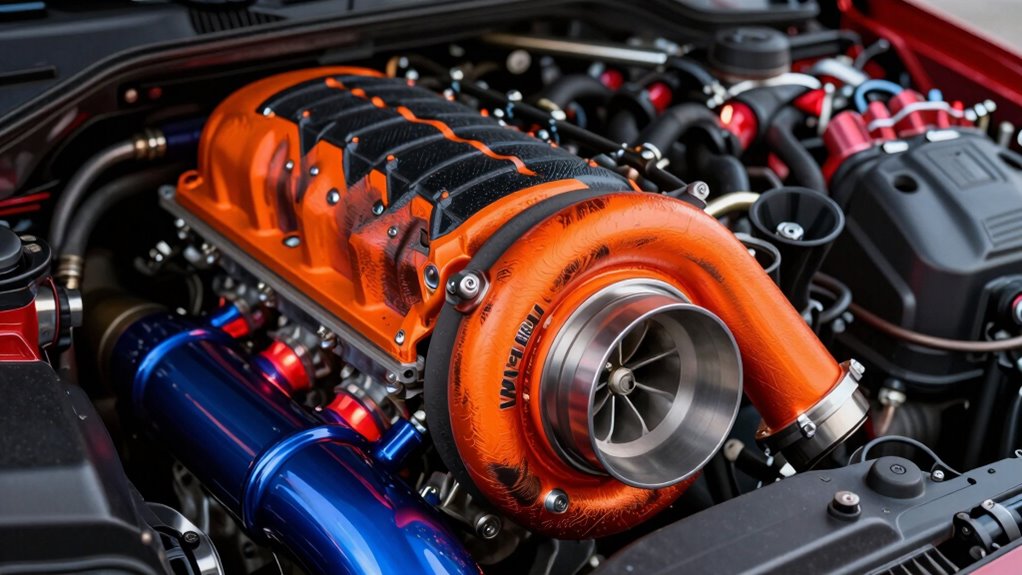
When building a turbocharged engine, effectively managing heat is vital to ensuring ideal performance and longevity. Turbo systems generate immense heat, which can lead to reduced efficiency, component damage, or even engine failure. To combat this, understanding cooling techniques and making smart material selections are essential steps. Your goal should be to keep temperatures within safe limits while maximizing power output.
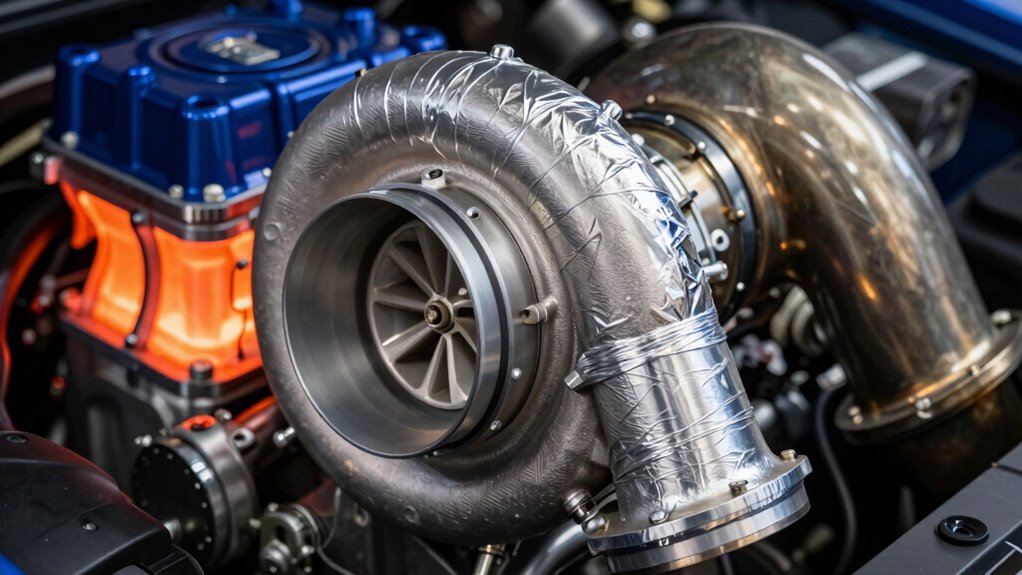
Cooling techniques are your first line of defense against excessive heat. One of the most effective methods is installing turbo blankets or wraps around the exhaust manifold and turbo housing. These wraps serve as insulators, trapping heat within the components and preventing it from radiating to surrounding parts. As a result, they help maintain lower intake air temperatures, which boosts power and improves overall efficiency. Additionally, you can utilize heat shields or reflective coatings to deflect radiant heat away from critical components like wiring, intercoolers, or intake systems. Incorporating upgraded cooling systems, such as high-capacity intercoolers or oil coolers, further helps dissipate heat efficiently. These techniques work synergistically to keep temperatures in check, ensuring your turbo system operates at peak performance without risking damage.
Use turbo blankets, heat shields, and upgraded cooling systems to effectively manage heat and boost turbo performance.
Material selection is equally important because choosing the right materials can substantially impact heat management. When selecting components, opt for high-temperature resistant alloys, such as stainless steel or Inconel, which withstand extreme heat without deforming or degrading. These materials maintain structural integrity under intense conditions, prolonging the lifespan of your turbo components. For seals, gaskets, and other wear parts, use heat-resistant composites designed to handle thermal stress. If you’re considering turbo coatings, ceramic or thermal barrier coatings can provide an extra layer of insulation, reflecting heat away from critical areas and reducing heat transfer. Proper material choices not only improve durability but also enhance heat retention within the turbo, enabling more consistent performance and reducing the risk of heat-related failures.
Integrating these cooling techniques with strategic material selection creates a thorough approach to heat management. It allows you to push your turbo build harder, knowing that heat is under control. By insuring your components against high temperatures through wraps, shields, and high-quality materials, you minimize the chances of thermal fatigue and maintain ideal performance over time. Remember, managing heat isn’t just about avoiding damage—it’s about unlocking the full potential of your turbocharged engine while ensuring it remains reliable and efficient for countless miles.
As an affiliate, we earn on qualifying purchases.
Frequently Asked Questions
How Do Heat Management Methods Affect Turbocharger Lifespan?
Proper heat management methods directly impact your turbocharger’s lifespan by improving turbo longevity and heat dissipation. Using wraps or coatings reduces excess heat, preventing thermal stress and wear. This keeps components cooler and functioning efficiently longer. When you effectively manage heat, your turbo’s performance stays consistent, and you avoid costly repairs or replacements, ensuring your build remains reliable and durable over time.
Can Wraps and Coatings Be Used Together Effectively?
Think of your turbo as a fiery steed—using wraps and coatings together can be like armor and a shield, effectively enhancing thermal insulation. They can be used jointly if you guarantee material compatibility, preventing chemical reactions or damage. When combined correctly, these methods work synergistically, reducing heat, protecting components, and extending your turbo’s lifespan, much like a well-prepared warrior ready for battle.
Are There Specific Heat Management Strategies for Different Turbo Sizes?
Yes, you should customize heat management strategies based on turbo sizing. For larger turbos, focus on enhanced heat dissipation methods like high-quality wraps and coatings to prevent heat soak. Smaller turbos generate less heat, so lighter wraps may suffice. Always consider the turbo size to optimize heat control, ensuring maximum performance and durability. Proper heat management tailored to turbo sizing helps maintain efficiency and prolongs component life.
How Often Should Heat Wraps and Coatings Be Inspected or Replaced?
You should inspect heat wraps and coatings regularly, ideally every 3 to 6 months, depending on driving conditions. While some might think they last forever, neglecting maintenance can lead to damage or failure. Your maintenance schedule should include visual checks for cracks, wear, or moisture. Replace or recoat when you notice deterioration to guarantee ideal heat management, prevent heat soak, and maintain turbo performance and longevity.
What Are the Costs Versus Benefits of Advanced Heat Management Options?
Advanced heat management options like ceramic coatings and high-quality wraps cost more upfront, but they offer significant benefits. You’ll get better thermal insulation, which improves engine performance and longevity. The cost comparison shows that durable materials last longer, reducing replacement frequency and labor costs. Ultimately, investing in superior materials pays off by protecting your turbo components, lowering maintenance costs, and enhancing overall reliability.
Conclusion
If you think managing heat with wraps and coatings is just a small tweak, think again—it’s the difference between a turbo that lasts forever and one that burns out in seconds! Mastering heat control transforms your build into an unstoppable beast, releasing unreal power and reliability. Don’t settle for mediocrity; harness the full potential of your turbo, crush heat-related problems, and dominate the streets like a legend. Your engine’s future depends on it—gear up and take control now!
Fall Picks
fall essentials
As an affiliate, we earn on qualifying purchases.