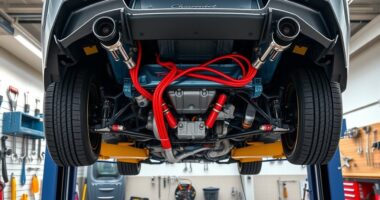
To boost your ZL1 Camaro’s high-speed stability, focus on balancing your aero components. Adjust or add front splitters to optimize front downforce without increasing drag, and set your rear wing or spoiler for maximum rear stability. Underbody panels and diffusers can smooth airflow and reduce turbulence, while fine-tuning the angle of your wings ensures a personal balance between grip and speed. Keep these tweaks in mind, and you’ll find more tips to elevate your car’s performance as you go.
Key Takeaways
- Adjust front splitter height and angle to increase front downforce without adding excessive drag.
- Fine-tune rear wing angle and endplate settings to optimize rear downforce balance.
- Add or modify diffusers to improve airflow under the car for better stability at high speeds.
- Ensure aero components are properly sealed and clean to maintain consistent airflow and reduce turbulence.
- Use adjustable aero elements to find the optimal balance between front and rear downforce for high-speed cornering.

If you’re looking to improve your ZL1 Camaro’s performance on the track or the street, tweaking its aerodynamics can make a noticeable difference. One of the most effective ways to do this is by focusing on aero balance and downforce optimization. When your Camaro’s aero balance is dialed in, you achieve a better distribution of aerodynamic forces, which directly impacts high-speed stability. Properly balanced aero elements ensure that your car remains planted without excessive lift or drag, allowing you to push harder into corners and accelerate more confidently on straightaways.
Downforce optimization is central to enhancing your ZL1’s handling at high speeds. By increasing downforce, you press the car closer to the road, improving grip and reducing body roll. This can be achieved through strategic modifications like front splitters, rear spoilers, and diffusers. A well-designed front splitter directs airflow to generate additional downforce on the front end, preventing understeer and enhancing steering responsiveness. Meanwhile, a rear spoiler or wing can be adjusted for optimal downforce without creating excessive drag that would slow you down. The goal is to find that sweet spot where downforce increases stability without sacrificing top speed.
Adjusting the aero balance involves fine-tuning these components so that front and rear forces complement each other. Too much front downforce can cause excessive drag and slow you down, while too little can result in understeer and instability. Conversely, rear downforce must be balanced to prevent oversteering or loss of control at high speeds. Experimentation with adjustable wings or splitters allows you to modify aero balance based on your specific driving conditions or track layout.
You also want to guarantee that your modifications don’t introduce unwanted turbulence or drag. Aerodynamic tweaks should enhance flow efficiency, reducing lift and improving high-speed stability. This often involves smoothing out airflow with underbody panels or diffusers, which help manage vortex formation and airflow separation. The more aerodynamic efficiency you achieve, the more predictable and stable your Camaro feels when tearing down the straightaways or maneuvering sharp curves at high speed.
Achieving proper aero balance is essential for maximizing high-speed stability and handling performance. Ultimately, refining aero balance and downforce isn’t just about outright speed; it’s about creating a more controlled, confident driving experience. With these tweaks, you’ll notice your ZL1 Camaro feels more responsive and stable, giving you the edge whether you’re on the track or cruising on the street. Proper aerodynamics elevate your car’s performance by ensuring that every ounce of speed is matched with exceptional handling and high-speed confidence.
Frequently Asked Questions
Can Aero Tweaks Improve Fuel Efficiency?
Aero tweaks can improve fuel efficiency by reducing drag, which helps your vehicle move more smoothly through the air. When you optimize airflow and minimize unnecessary airflow resistance, your engine doesn’t have to work as hard, saving fuel. Even small adjustments, like adding a front splitter or rear spoiler, can make a noticeable difference in drag reduction, leading to better fuel economy during highway driving.
Are There Legal Restrictions on Aero Modifications?
Like rules are the road signs guiding your journey, legal restrictions shape your aero modifications. You need to verify local laws and modification regulations for your area to stay compliant. Many regions have strict rules about adding aero parts, especially if they affect safety or emissions. Always research and guarantee your upgrades meet legal standards to avoid fines or penalties, keeping your car both high-performing and within the law.
How Do Aero Tweaks Affect Tire Wear?
Aero tweaks influence tire wear by altering downforce adjustments, which affect how your tires contact the road. Increased downforce can improve grip but also increase stress on the tire contact patch, leading to faster wear. Conversely, reducing downforce lessens strain but may compromise stability. You should balance aero modifications carefully to optimize high-speed stability without markedly accelerating tire wear, ensuring even distribution across the contact patch.
Do Aero Modifications Void the Warranty?
While it might seem tempting to personalize your car, beware of warranty implications and legal restrictions. Modifying your aero components could potentially void parts of your warranty if perceived as aftermarket changes, even if they enhance performance. Always check your manufacturer’s policies before making adjustments, as some modifications may be considered non-compliant with warranty terms. Staying informed helps protect your investment and ensures you enjoy your upgrades worry-free.
Can Aero Tweaks Be Reversed Easily?
Yes, aero tweaks can usually be reversed easily. If you decide to revert to your car’s factory restoration, you can remove the aero modifications and restore the original parts. This process often involves unbolting or detaching the aero components and reinstalling factory panels. Just keep track of all fasteners and parts during installation, making the aero removal straightforward and ensuring your vehicle maintains its original condition if you choose to revert later.
Conclusion
Now that you know how small aero tweaks can boost your ZL1 Camaro’s high-speed stability, are you ready to take your ride to the next level? These simple upgrades can make a real difference on the track or open road, giving you more confidence and control at top speeds. Don’t wait—why settle for less when you can optimize your Camaro’s performance today? Get out there and experience the thrill of enhanced stability firsthand!