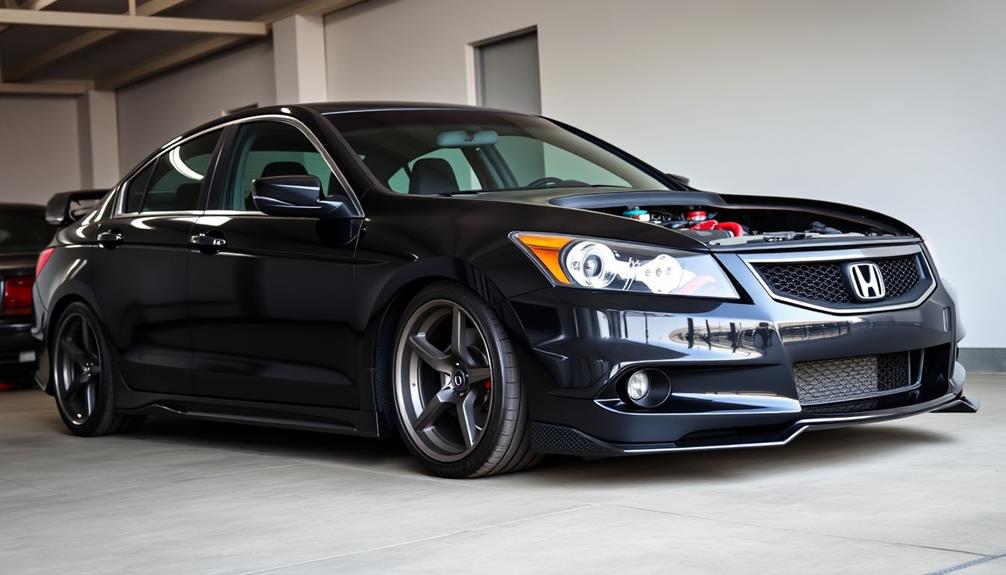
Choosing between VTEC Killer and VTEC Retain in all-motor builds depends on your goals. VTEC Killer locks the engine into a single cam profile, offering more predictability and simpler tuning, but sacrifices some flexibility. VTEC Retain keeps variable valve timing active, maximizing power, efficiency, and turbo capabilities across different speeds. If you want a straightforward setup with reliable performance, VTEC Killer might suit you. For more control and peak potential, VTEC Retain could be better. Keep exploring to find out which fits your build best.

Get garage and car supplies delivered free — and shop member deals
- Fast, free delivery on millions of items
- Access to Prime Big Deal Days deals on October 6–7
- Prime Video, Amazon Music and more included
Key Takeaways
- VTEC Killer locks the cam profile for predictable power, while VTEC Retain allows variable cam switching for versatile performance.
- VTEC Killer simplifies tuning and may improve low-end torque but reduces high-RPM power potential.
- VTEC Retain enhances engine flexibility, optimizing airflow and fuel efficiency across different driving conditions.
- Locking VTEC can reduce mechanical wear and maintenance, whereas VTEC Retain supports maximum power at high RPMs.
- The choice depends on whether stability and simplicity (Killer) or versatility and peak performance (Retain) are prioritized.

When choosing between VTEC Killer and VTEC Retain, understanding their core functions can considerably impact your engine’s performance and longevity. Both options influence how your engine manages valve operation, but they serve very different purposes. Knowing which one aligns with your build goals helps you maximize benefits like turbocharging advantages and fuel efficiency benefits. VTEC Killer essentially disables the VTEC system, locking the engine into a single cam profile. This can be advantageous if you’re aiming for increased torque at lower RPMs or want to simplify tuning. By eliminating VTEC engagement, you avoid the complexity of switching between cam profiles, which can sometimes cause fluctuations in power delivery or reliability issues. This lock-in approach often results in a more predictable power curve, making it easier to tune for specific performance parameters. Additionally, removing the VTEC mechanism can reduce mechanical wear and maintenance, potentially extending your engine’s lifespan. However, it’s important to recognize that disabling VTEC also means sacrificing some of the turbocharging advantages, particularly in terms of variable valve timing that optimizes airflow at different RPMs. Without VTEC, you might lose some of the fuel efficiency benefits that come from precise valve operation, especially under light load or cruising conditions. This could lead to slightly higher fuel consumption, as the engine operates in a less adaptable mode. Conversely, VTEC Retain keeps the VTEC system active, allowing your engine to switch between cam profiles based on RPM and load. This flexibility delivers significant turbocharging advantages because it optimizes airflow and combustion efficiency across a broader range of speeds. When VTEC engages at higher RPMs, it maximizes power output, while at lower speeds, it conserves fuel and reduces emissions. The retention of VTEC promotes better fuel efficiency benefits, especially during daily driving, by adjusting valve timing to suit driving conditions. It also helps improve turbo performance by enabling better exhaust gas flow management, which supports turbo spool-up and reduces lag. The active VTEC system, in fact, provides a good balance between power and economy, making it a preferred choice for those who want versatility and efficiency. In brief, if your goal is a straightforward, reliable setup with predictable torque and minimal maintenance, VTEC Killer offers simplicity and durability. But if you prioritize maximizing turbocharging advantages and fuel efficiency benefits, keeping VTEC active through VTEC Retain is the smarter choice. Your decision should align with your specific performance goals, driving style, and the overall intent of your all-motor build. Additionally, considering the application of high-quality projectors can enhance your understanding of how different systems optimize performance in various contexts.
VTEC Killer lock kit for Honda engines
As an affiliate, we earn on qualifying purchases.
As an affiliate, we earn on qualifying purchases.
Frequently Asked Questions
How Does VTEC Killer Affect Engine Longevity?
VTEC Killer can negatively impact your engine longevity by increasing engine wear, as it prevents the VTEC system from engaging properly, leading to uneven stress and potential damage. This may result in higher maintenance costs over time due to accelerated wear on components. You might find yourself spending more on repairs and replacements, reducing your engine’s overall lifespan. To keep your engine healthy, consider maintaining or retaining the VTEC system.
Can VTEC Retain Be Used With Forced Induction Setups?
You can use VTEC retain in forced induction setups, but it requires careful VTEC tuning to prevent engine damage. Upgrading your air intake helps improve airflow and supports the VTEC system’s efficiency. Keep in mind that maintaining proper boost levels and monitoring engine parameters are essential. VTEC retain allows you to enjoy the benefits of VTEC, even with forced induction, but always prioritize proper tuning and upgrades for reliability.
Which Setup Offers Better Fuel Efficiency in Daily Driving?
Imagine your car as a wise owl, choosing its path wisely. For daily driving, VTEC retain setups often offer better fuel efficiency and eco-friendly modifications, reducing emissions impact. They optimize engine performance without sacrificing economy. VTEC killers, while powerful, tend to increase fuel consumption and emissions. So, if you’re aiming for a balance of power and economy, retaining VTEC is the smarter, greener choice for your daily ride.
Are There Cost Differences Between VTEC Killer and VTEC Retain?
When considering cost differences, you’ll find that VTEC Killer setups generally have a lower cost comparison due to simpler installation, which reduces labor expenses. VTEC Retain systems tend to be more expensive because they require more complex installation and potentially additional parts to maintain VTEC functionality. If you’re on a budget, VTEC Killer might save you money upfront, but keep in mind the long-term performance goals when making your decision.
How Do These Modifications Impact Insurance Premiums?
You might notice that modifications like VTEC Killer or VTEC Retain can impact your insurance premiums. Insurance companies often view these upgrades as increases in risk, which can lead to higher premiums. While the modification costs vary, it’s essential to think about how these changes could raise your insurance expenses over time. Always check with your insurer beforehand to understand how your specific modifications might affect your rates.
Conclusion
So, whether you opt for the VTEC Killer or decide to keep your VTEC Retain, remember that in the end, it’s all about what makes you smile on the street. Ironically, the “winner” might just be the setup that suits your style—no matter how much tech jargon tries to convince you otherwise. After all, isn’t the real victory in enjoying the ride, not just chasing numbers? Choose wisely, and keep the thrill alive.
Fall Picks
fall essentials
As an affiliate, we earn on qualifying purchases.