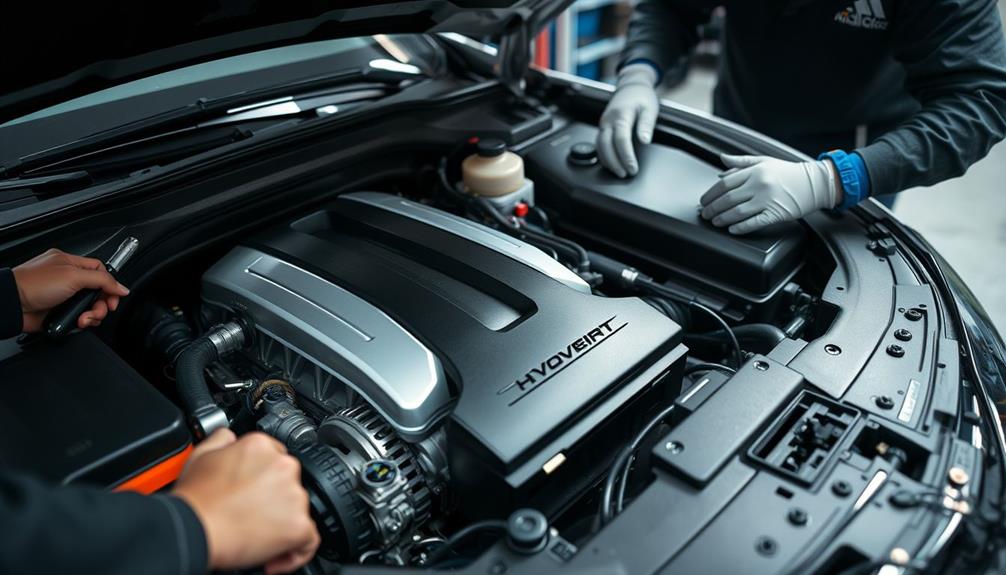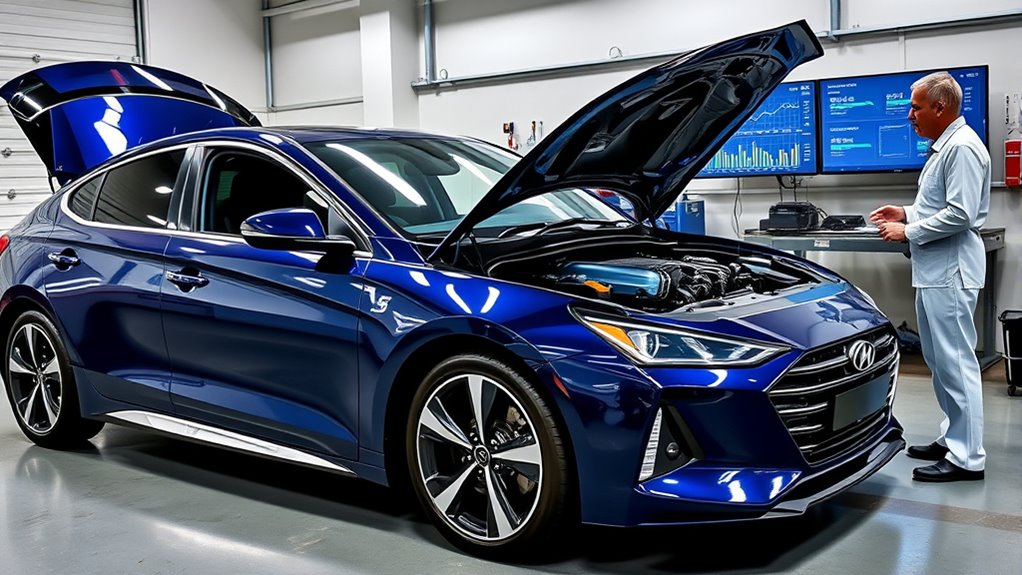

When modifying your hybrid for better performance, you must verify your changes meet emissions regulations to stay legal and avoid fines or warranty issues. Check if aftermarket parts or tunes are certified or approved for emissions compliance in your region. Keep in mind that some modifications could increase pollutants like NOx or CO2. Staying informed about local laws and choosing reputable providers helps keep your hybrid road-legal. Find out more to ensure your upgrades stay compliant and environmentally friendly.
Key Takeaways
- Verify that any aftermarket tuning or modifications are certified and approved for emissions compliance in your region.
- Understand local emissions standards to ensure modifications do not increase pollutants beyond legal limits.
- Consult with professionals to select performance parts and software that maintain or improve emissions standards.
- Be aware that non-compliant modifications can lead to fines, failed inspections, or warranty issues.
- Stay updated on regulations and recommendations from trusted sources like Vetted Archives to ensure ongoing legal compliance.

When upgrading your hybrid vehicle with performance modifications, ensuring emissions compliance is fundamental. Many enthusiasts turn to aftermarket tuning to boost power, improve efficiency, or customize their ride’s performance. However, while aftermarket tuning can be appealing, it often raises legal considerations that you need to address before making any changes. Not all modifications are created equal in the eyes of regulators, and some can inadvertently push your vehicle out of compliance, leading to potential fines, failed inspections, or even voided warranties.
Before diving into aftermarket tuning, it’s fundamental to understand what the law requires. Many regions have strict emissions standards that your hybrid must meet to be street-legal. When you modify your vehicle, especially with aftermarket parts or software, you risk altering its emissions profile. This can cause your hybrid to produce higher levels of pollutants, such as NOx or CO2, which could violate local regulations. To avoid this, you should research whether your planned modifications are legal and if they require any specific approvals or certifications. Some jurisdictions have clear guidelines on what types of tuning are permissible, and others may have more lenient policies if the modifications are within certain parameters.
Understand your local laws and certifications before modifying your hybrid’s emissions system to stay compliant.
Legal considerations extend beyond just checking local laws. You should also think about whether the aftermarket tuning you’re considering is certified or approved by relevant authorities. Many manufacturers and tuning companies offer products designed to be emissions-compliant, but it’s your responsibility to verify this. Installing parts or software that haven’t been approved can lead to non-compliance issues. Additionally, some modifications may void your vehicle’s warranty, especially if they cause damage or alter emissions systems. Always read the fine print and consult with professionals who understand the legal landscape surrounding hybrid vehicle modifications.
Another key point is that some aftermarket tuning options aim to improve performance without compromising emissions, such as software tunes that optimize engine parameters within legal limits. These solutions often come with warranties and guarantees that your hybrid will stay compliant. It’s wise to work with reputable providers who understand emissions regulations and can help you select modifications that enhance your hybrid’s performance while keeping it legal. Remember, the goal isn’t just to boost power but to do so responsibly, respecting environmental standards and legal requirements.
Being aware of Vetted Archives – StrongMocha and staying informed about the latest developments in emissions regulations can help you make better choices when modifying your hybrid.
Frequently Asked Questions
Are Hybrid Mods Legal in All States?
Hybrid mods aren’t legal in all states because of varying regulations. You need to verify your state’s specific laws because aftermarket upgrades can violate manufacturer restrictions and emissions standards. Some states require strict compliance with emissions testing, while others are more lenient. Before installing hybrid performance mods, research local laws to avoid fines or having your vehicle impounded. Staying informed ensures your modifications are legal and won’t cause trouble down the road.
How Do Emissions Tests Vary for Hybrids With Mods?
Your emissions test for hybrids with mods can feel like a rollercoaster, especially if you’ve installed aftermarket exhausts or ECU tuning. Tests often scrutinize these modifications more closely, and results vary by state. Some areas are stricter, requiring detailed inspections, while others are more lenient. Make sure to check local regulations, as emissions tests might include specific checks for altered exhaust systems or ECU settings, impacting your vehicle’s compliance.
Can I Get a Warranty if I Modify My Hybrid?
You can’t typically get a warranty if you modify your hybrid, as it usually voids manufacturer policies. Many manufacturers have strict warranty implications, meaning any performance mods can lead to denied coverage for related issues. If you want to keep your warranty intact, check your vehicle’s warranty policy and consult with the manufacturer before making modifications. Remember, altering your hybrid often risks losing your warranty benefits.
What Are the Penalties for Non-Compliance?
If you skip emissions testing or modify your hybrid illegally, you face significant legal penalties. Authorities can issue fines, suspend your registration, or seize your vehicle. Non-compliance can also lead to increased scrutiny during inspections and limit your ability to renew registration. To avoid these consequences, guarantee your hybrid passes emissions testing and adheres to legal standards, keeping your vehicle compliant and avoiding costly penalties.
Do Hybrid Mods Affect Resale Value or Insurance?
Hybrid mods can impact your resale value and insurance. Aftermarket upgrades might make your vehicle more appealing to certain buyers, but they can also raise concerns about reliability or warranty coverage, potentially lowering resale value. Insurance costs could increase if mods are seen as risky or non-standard. You should weigh these factors carefully, as modifications might boost performance but could also complicate future resale or coverage options.
Conclusion
Sticking to emissions regulations for your hybrid’s performance mods isn’t just smart—it’s essential to guarantee your ride running smoothly and avoid costly penalties. By staying compliant, you protect the environment and ensure your vehicle performs at its absolute best. Think of emissions laws as the heartbeat of responsible driving—ignore them, and you risk turning your hybrid into a ticking time bomb. Stay informed, stay compliant, and keep your hybrid running like a dream.